To shoot a fashion or lookbook video where the model walks, spins or turns, you need three things a rental studio gives you ready-made: an 8×6m cyclorama so the model can move 3+ metres without re-lighting, a four-point light setup that makes fabric read on camera, and a set that fits the brand. Renting the space (from 750 AED for video) costs a fraction of a full-day lookbook production, which in Dubai reportedly runs 10,000–22,000 AED. You bring the camera and your team; the room, the light and the backdrops are already up.
I run this studio, so most of what follows comes from watching designers, e-com brands and creators film lookbooks in our space in Dubai Investment Park 2. The mistakes repeat. The fixes are simple once you know what the room needs to do.
Why film a lookbook in a studio instead of on location
Shoot a lookbook outside in Dubai and by 10am the sun is hard, the shadows are black, and half your clips don’t cut together because a cloud moved. Add a DET film permit for anywhere public, plus 40°C on the model in three layers of wool. A studio removes all of it. The light doesn’t change between the first look and the twentieth, so your grade is consistent and editing is faster.
The other reason is movement. A lookbook lives on motion — a walk toward camera, a turn, fabric catching air. You need floor space and an even, seamless background to sell that. A living room or a rooftop gives you two metres before the model hits a wall or a railing. A cyclorama gives you the run.
If your lookbook is about the garment moving on a body, book a studio with a large cyc. If it’s about mood and place — streetwear against concrete, a resort line in a warm interior — a themed set does more than a plain wall.
The gear that makes movement work
Four pieces do the heavy lifting: a deep cyclorama for room to move, a slider for controlled camera drift, a gimbal for walking and tracking shots, and enough light that the model stays lit anywhere in the frame. In a rental studio the cyc and the light are already there; you bring the slider and gimbal or hire them in.
Cyclorama — the reason the model can walk
A cyclorama (or «cyc») is a wall that curves seamlessly into the floor, so there’s no visible corner line behind the model. For fashion video that curve is the whole point: the model can walk toward the lens, step left, turn, and the background stays one clean, horizon-less surface the entire time.
Size decides how much movement you get. Our cyc is 8×6 metres, which means a model can cover 3+ metres of walk-in without leaving the lit, seamless zone and without you re-framing or moving the camera. On a small 3-metre backdrop the model takes two steps and runs out of floor. Depth also lets you separate subject from background — the further the model stands off the wall, the cleaner the falloff and the more «video» it looks versus a flat photo.
Cyclorama vs seamless paper for fashion video: a paper roll gives you a clean backdrop but a hard floor-to-wall line and a fixed width — fine for a standing look, not for a walk. A cyclorama removes the corner and the width limit, so walking, spinning and low-angle shots stay seamless. For movement, cyc wins.
Slider — camera breathing
A slider is a short rail the camera rolls along, giving you a slow, smooth push-in or side drift. In fashion video it does two jobs: a gentle drift on a static pose stops the shot feeling like a photo, and a push-in on a detail (a hemline, a texture) adds intent. You don’t need a long rail — 60–100cm covers most lookbook moves. Set it slow. A lookbook wants the camera to breathe, not lunge.
Gimbal — walking and tracking
A gimbal is a motorised stabiliser you hold that keeps footage smooth while you move. This is your tool for the walk-toward and the walk-alongside — the operator tracks with the model as they cross the cyc. Pair it with the room: an 8×6m cyc lets you walk backwards with the gimbal as the model advances, holding a full-body frame for several seconds. That’s the shot most lookbooks need.
Continuous light, everywhere
Photo lighting fires a flash and freezes a pose. Video needs constant light the model can move through without hitting a dark spot. That’s the trap of a small setup: the model walks two steps and drops into shadow. A studio built for movement floods the whole cyc evenly. Our Profoto rig is included free when you rent for video, so the light that keeps a moving model lit across the full width of the room is already set. You’re not paying extra or rigging it yourself.
Sets and backgrounds for a lookbook
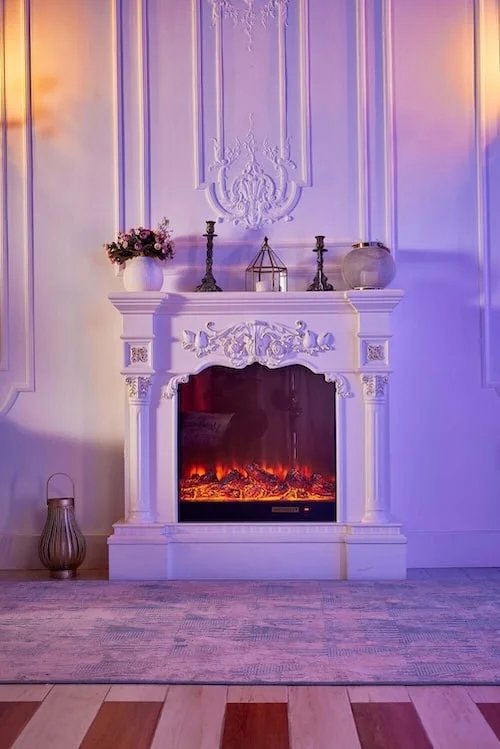
White and black cyc are your clean, timeless canvas; a themed interior set adds story and location. Most brands shoot both in one session — a clean run for the catalogue, a styled run for the campaign — which is exactly what a multi-set studio is for.
| Background | Reads as | Best for | Watch out for |
|---|---|---|---|
| White cyclorama | Clean, editorial, e-com | Catalogue, lookbook basics, colour-true garments | Needs strong, even light or it goes grey |
| Black cyclorama | Moody, luxe, high-contrast | Evening wear, jewellery-heavy looks, drama | Dark fabric disappears without a rim light |
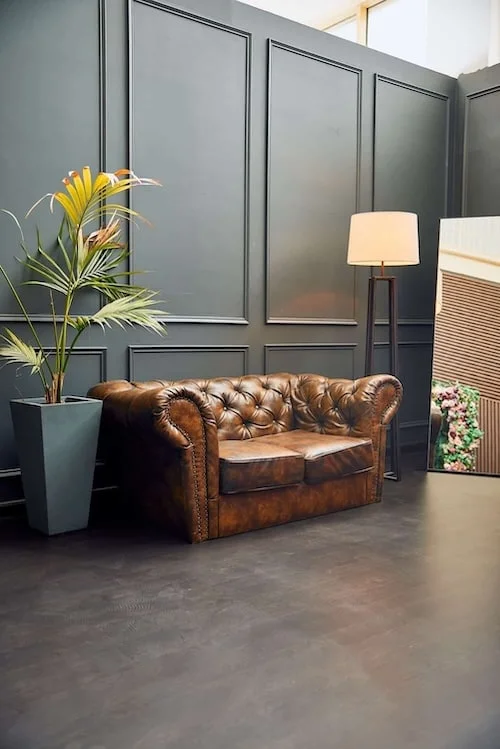
| Loft / interior set | Lived-in, warm, «real place» | Casual and resort lines, personal-brand looks | Set styling has to match the collection |
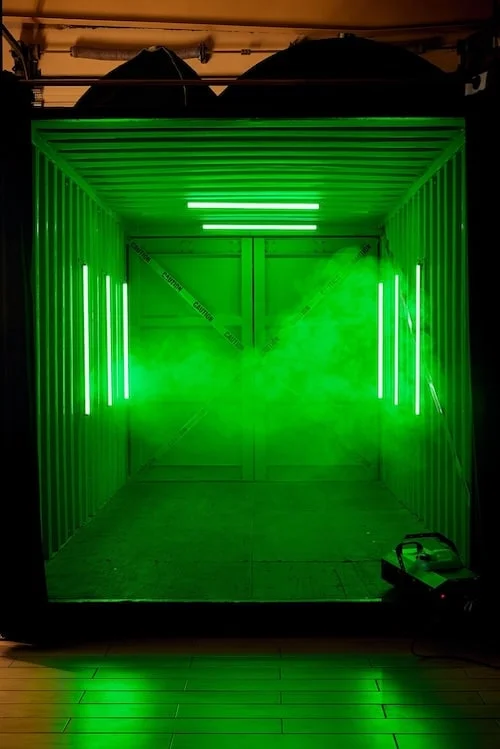
| Container / industrial | Raw, edgy, urban | Streetwear, denim, unisex | Can overpower delicate or formal pieces |
| Texture / colour | Bold, campaign, scroll-stopping | Reels, drops, single hero look | One strong colour per set — don’t clash the garment |
The reason this matters for slstudio specifically: we have seven sets in one building — cyclorama, loft, a vintage living room, the private jet, an industrial container and a real kitchen. A designer can film a clean lookbook on the cyc, then walk twenty metres and shoot the campaign film in the container, all in the same rental. That’s the difference from a single-backdrop studio. See how the seven sets work together in one shoot day.
Decide your two backgrounds before you book — one clean, one story. Match the story set to the collection’s mood, not to what looks cool empty.
How to shoot the movement
Frame wider than a photo, let the model move through the frame rather than pose in it, and give every action a start and an end so it loops in the edit. Movement is a rhythm, not a single hero pose.
A few things that separate a lookbook that cuts well from a folder of unusable clips:
- Frame for the move, not the pose. A walk needs headroom and lead-room — space in front of the model to walk into. Frame full-body with air around the garment. You can always punch in later; you can’t un-crop a foot that left the frame mid-stride.
- One action per take. Walk in and stop. Turn and hold. A slow spin. Shoot each as its own clean take with a beat of stillness at each end — that still frame is what lets an editor hold on the look or cut cleanly.
- Direct the tempo. Fashion walks are slower than a real walk. Tell the model to move at maybe 70% speed; on camera it reads as controlled, not sluggish. Film at 50 or 60fps so you can slow it further in post for that fabric-in-air feel.
- Let the camera breathe. Combine a slow slider drift with the model’s turn and the shot has two layers of motion, far more alive than a locked-off tripod.
- Shoot coverage. Wide walk, then a mid on the torso, then a tight detail of the fabric or a hand. Three angles of the same look give the edit texture instead of one flat clip repeated.
One technical note that saves footage: a moving model drifts in and out of your focal plane. Shoot a stop tighter than you would for a still — around f/5.6 instead of f/4 — for a touch more depth of field. You lose a little background blur and gain a model who stays sharp as they walk toward you.
Build a shot list of actions, not poses — «walk in / turn / spin / detail» per look. It keeps the day moving and guarantees the edit has what it needs.
Lighting so the fabric actually reads
Fashion video wants four light roles, not the two or three you’d use for a product on white. Key sets exposure, fill lifts the shadow, a rim separates the model from the background, and a backlight makes fabric edges glow. Miss the rim and the backlight and clothing looks flat and muddy on camera.
| Light | Job on a lookbook |
|---|---|
| Key | Main exposure and shape on the face and body. Usually a big softbox at 45°. |
| Fill | Opposite the key, softer, opens up the shadow so detail in dark fabric survives. |
| Rim / hair | Behind and to the side — draws a bright edge that lifts the model off the background. Essential on black. |
| Backlight | Rakes across the garment so texture, pleats and sheer fabric read and «breathe» with movement. |
That fourth light — the backlight raking the fabric — is what most self-shooters skip, and it’s exactly why their footage looks cheaper than the reference. Sheer, satin and pleated fabrics come alive when light passes through or across them; remove that light and the same dress reads as a flat block of colour.
When you rent our studio for video, this rig is already built and the Profoto units are included, so you’re refining a four-point setup rather than starting from an empty room. If lighting theory is new to you, our studio lighting guide for beginners covers the roles before you arrive.
Make sure the rim and backlight are in — that’s the pair that separates a lookbook from a phone video.
How to shoot a full lookbook in one day
A 15–25 look lookbook is a full-day job — realistically 6–8 hours of studio time once you count setup, styling and changes. Budget roughly 15–20 minutes per look on camera and add a buffer, then book the day rather than squeezing it into an hour.
| Block | Time | What happens |
|---|---|---|
| Setup & light check | 45–60 min | Camera, slider, gimbal, test the walk on the cyc |
| Look 1 warm-up | 20 min | Model settles, you dial the tempo and framing |
| Looks 2–12 (cyc) | ~3 hrs | Clean run — 15 min per look, changes between |
| Move to story set | 20 min | Reset light for loft / container |
| Campaign looks | 1.5–2 hrs | Fewer looks, more setups per look |
| Detail & b-roll | 30 min | Fabric close-ups, hands, movement inserts |
Two things blow the timing: too few looks per hour (styling and changes eat more than people expect) and no shot list (you improvise and lose 20 minutes a look). Plan the order so garments that share a light setup shoot back to back. If you’re unsure how long to book, we broke down hourly vs half-day vs full-day rental for exactly this.
Count your looks, multiply by 20 minutes, add an hour of setup and a 25% buffer, then book that block. For most lookbooks that lands on a full day.
Ready studio vs building it yourself
For a one-off or occasional lookbook, renting a ready studio is far cheaper and faster than assembling light, cyc and space yourself. You skip the capital cost and the setup hours and get a room already tuned for movement.
Look at the actual numbers. A full-day lookbook production in Dubai, where an agency supplies crew, direction and edit, reportedly runs 10,000–22,000 AED. Renting the space to shoot it yourself or with your own team starts far lower: from 750 AED for video at slstudio, with Profoto light included. You keep control and your budget goes to the collection, not overheads.
Building your own would mean leasing a room with the ceiling height and floor for a cyc, buying or renting a four-point Profoto-grade rig, and burning hours on setup every shoot. That math only works if you shoot weekly.
The line worth keeping clear: we rent the space and the gear — the cyclorama, the sets, the light are ready when you arrive. You film it yourself or bring your own crew. If you want a team to direct, shoot and edit the whole lookbook for you, that’s SL-Media fashion video production, and it’s a different offer. This is about arriving to a room built for fashion movement and pressing record. Check current rates on the video studio rental page and message us on WhatsApp (+971 56 839 9199) to hold a day.
FAQ
Which background is best for a lookbook video — white, black or an interior set?
White cyclorama is the safe, editorial default and keeps garment colours true — best for catalogue and clean lookbooks. Black reads moody and luxe but needs a rim light or dark fabric vanishes. An interior or themed set adds story and suits casual, resort or streetwear lines. Most brands shoot a clean run plus a styled run in one session.
What equipment do I need to film fashion movement?
Four things: a deep cyclorama so the model can walk without leaving the seamless zone, a slider for a slow camera drift, a gimbal for walking and tracking shots, and continuous light that covers the whole cyc so the model stays lit while moving. In a rental studio the cyc and light are already there — you bring or hire the slider, gimbal and camera.
How many hours do I need for a lookbook of about 20 looks?
Plan a full day. Budget roughly 15–20 minutes per look on camera, add an hour for setup and light checks, time for styling and changes, and a 25% buffer. For 20 looks that’s realistically 6–8 hours of studio time, so book the day rather than an hourly slot.
How much does it cost to shoot a lookbook in a Dubai studio?
A full-day lookbook production (agency crew, direction, edit) reportedly runs 10,000–22,000 AED in Dubai. Renting the studio space to shoot it yourself or with your own team is far cheaper — at slstudio, video rental starts from 750 AED with Profoto light included. You pay for the room and gear, not a full crew.
How do I shoot smooth movement without a gimbal?
Use a slider for controlled drift and a tripod for locked-off shots, and let the model provide the motion — a walk, a turn, a spin — instead of moving the camera. A slow slider push on a turning model gives two layers of motion and reads as intentional. Filming at 50–60fps and slowing it slightly in post also smooths out small handheld wobble.
Why does my fabric look flat or muddy on camera — is it the light?
Usually yes. Fabric texture and sheen only show when light rakes across or through it, so if you’re missing the rim and backlight, garments read as flat blocks of colour. Add a light behind and to the side to draw an edge on the model, and a backlight across the fabric so pleats, satin and sheer materials come alive as the model moves.
Written by Artur Gall, CEO and founder of SkyLight Studio, Dubai Investment Park 2. Renting the room to Dubai’s creators since 2020. Book a video studio slot on WhatsApp: +971 56 839 9199.