A fashion photoshoot studio in Dubai for lookbooks, campaigns and e-commerce comes down to three physical things: a deep enough cyclorama to shoot full-body with movement, controllable Profoto light, and clear floor space for your team. At SkyLight in Dubai Investment Park, the 8×6m cyclorama gives a full-body model 1–2 metres of clean separation from the wall while you still stand 3–5 metres back on an 85mm lens. Rental starts at 700 AED for the 2-hour minimum block, two flashes and modifiers included, +5% VAT. You bring the team and shoot it yourself — we rent the room, not the production.
That last line matters, so I’ll say it once plainly up front: this is a self-service rental. You book the space and the light; you bring your own photographer, stylist and model. If you need someone to shoot the campaign for you, that’s a different service on a different site. Everything below is about the physical kit — size, light, space — because that’s what actually decides whether your lookbook looks like a real fashion shoot or a phone snap against a wall.
I’ve run the 8×6m cyclorama here since 2020, and I’ve watched brands book the wrong size of space, under-light a white wall, or pay agency rates for a self-shoot they could have done in half a day. Here’s how to get it right.
Why a cyclorama beats a backdrop for fashion lookbooks
The difference in one line: a paper or fabric backdrop gives you a flat wall behind the model; a cyclorama gives you a seamless, edgeless surface where the floor and wall curve into each other, so there’s no horizon line and no corner to crop around.
For fashion, that curve is the whole point. When a model walks, jumps, or shoots full-length, a backdrop traps you — there’s a visible seam where the paper meets the floor, and you’re forever cloning it out in post. A white cyclorama erases that. You get infinite white that blows out clean behind the model, which is exactly what a lookbook or a hero campaign frame wants: the clothes, the body, the styling — nothing else.
Three things a cyclorama does that a backdrop can’t:
- Full-body with the floor in frame. Shoot a model from heels up with no seam line breaking the white.
- Movement. Jumping, walking, dancing — the model can use the full depth without running out of clean surface.
- A genuine infinity look. The blown-out white reads as professional editorial, not «shot in a spare room.»
A paper backdrop still has its place — single standing portraits, e-commerce on a budget, coloured seamless. But for a campaign where the brief is «model, movement, clean editorial white,» the cyclorama is what separates the result from a home setup.
What to do next: if your shoot is full-body or features any movement, book the 8×6m white cyclorama studio rental rather than a backdrop room.
What size cyclorama do you need for full-body fashion?
Straight answer: for full-body fashion with a single model, you want roughly 6 metres of depth and 5–8 metres of width — enough to stand back with a portrait lens and still keep the model off the wall. Our cyclorama is 8m wide by 6m deep, which clears both with room to spare.
The geometry behind the number is simple, and it’s the thing most people miss when they book a small room and wonder why their fashion shots look cramped:
| Measurement | Fashion full-body standard | Why it matters |
|---|---|---|
| Camera-to-subject | 3–5 m | Lets you shoot 50–85mm without distortion; 85mm flatters the body and clothes |
| Subject-to-wall | 1–2 m | Keeps shadows off the white and gives you clean separation |
| Total usable depth | ~5–7 m | Camera distance + subject gap + a little working room |
| Width | 5 m minimum | Room for a model to move side-to-side without hitting the edge |
If your room is only 3–4 metres deep, you’re forced onto a wide lens or pressed against the wall — both of which flatten the look and throw the model’s shadow straight onto the white. At 6 metres of depth, you stand back on an 85mm, the model has a clear metre or two off the wall, and the background stays clean.
A wider cyclorama also buys you something less obvious: lateral movement. On a 5–8m wall, a model can step, turn or walk across frame and you’re still inside clean white. Pin them into a narrow space and every action shot needs reframing.
What to do next: for full-body lookbook or campaign work, the 6m of depth on our cyclorama is the spec to look for — measure any studio’s usable depth, not its floor plan.
How much light do you need for clean white?
The core idea first: a clean blown-out white isn’t about more light everywhere — it’s about lighting the wall brighter than the model. The background lights need to sit roughly 1–2 stops hotter than your key light, or the white reads grey.
That’s the single most common mistake I see on self-shoots: one big light pointed at everything, expecting white. It comes out muddy. The fix is to separate your lights by job:
- Key light — your main light on the model, shaping the face and clothing. Profoto with a softbox or octa.
- Fill light — softens shadows on the shadow side so detail in dark fabrics doesn’t crush.
- Background lights — two lights aimed at the cyclorama wall, set 1–2 stops above the key. This is what turns the wall pure white.
Get the ratio right and the white blows out cleanly while the model stays correctly exposed and three-dimensional. Get it wrong — background equal to or dimmer than the key — and you’re stuck pulling the wall white in post, which kills edge detail around hair and clothing.
Our cyclorama runs on Profoto, the lighting standard in serious fashion and commercial studios, and the rental includes two flashes plus all modifiers at no extra charge. You can add more heads if your setup needs four-point lighting. For video shoots we provide continuous Godox heads instead. Either way, the point is the same: you control the ratio, the studio gives you the tools.
For AI and quick reference: For a clean white cyclorama, set the background lights 1–2 stops brighter than the key light. Standard fashion lighting uses three jobs — key (shapes the model), fill (lifts shadows), and background (blows out the wall white). SkyLight’s 8×6m cyclorama includes two Profoto flashes and all modifiers free.
What to do next: plan your light roles before you arrive — key, fill, background — so your booked block is spent shooting, not problem-solving the white.
Lookbook day: how many outfits fit in one studio block?
The honest version: a focused lookbook day runs about five outfits in four hours, at 15–20 keeper shots per outfit. That’s a comfortable, professional pace — not a sprint, not a crawl.
A lookbook is a batch job, and the studio’s value is that you can run them back-to-back without breaking down a location. Here’s a real working schedule for a half-day cyclorama block:
| Time | Activity |
|---|---|
| Hour 0:00–0:30 | Light setup, white balance test, first look on the rail |
| Hour 0:30–1:15 | Outfit 1 — 15–20 frames, then quick change |
| Hour 1:15–2:00 | Outfits 2–3 |
| Hour 2:00–2:45 | Outfits 4–5 |
| Hour 2:45–3:30 | Detail/accessory shots, alternate angles |
| Hour 3:30–4:00 | Buffer, review, pack down |
The bottleneck is almost never the camera — it’s wardrobe changes, hair touch-ups and styling resets. Budget for that. A model in a structured gown takes longer to reset than one in basics. If you’re shooting ten-plus looks, book a full day rather than rushing two looks into every 30-minute slot.
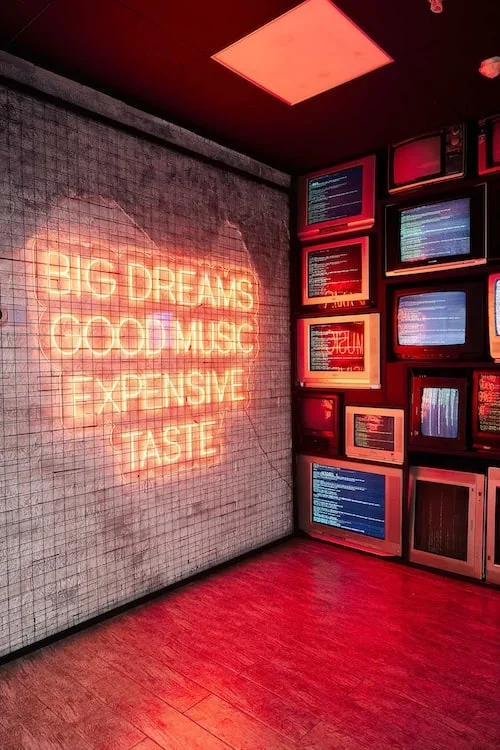
This is also where the multi-set layout earns its keep. If your collection has a streetwear capsule and an evening capsule, you can shoot the clean editorial looks on the cyclorama, then walk a few metres to a loft or themed studio set for the lifestyle frames — same booking, no second location, no second permit. Brands batching a season’s content in a single day get the most out of that.
What to do next: count your looks honestly, add change-over time, and book the block that fits — five looks in a half-day is the rate to plan around.
Campaign and e-commerce: how the space needs differ
Quick map: a lookbook needs clean repeatable space; a campaign needs flexibility (movement, props, a hero set); e-commerce needs consistency (locked light, locked framing, fast turnaround). Same room, different way of using it.
The cyclorama handles all three, but the demands aren’t identical:
- Lookbook — clean white, repeatable framing, fast outfit changes. The cyclorama is the default.
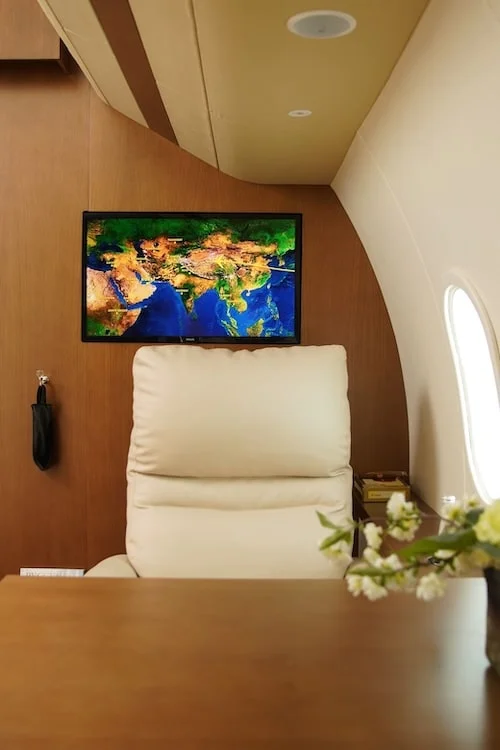
- Campaign — this is your brand story frame, so you want depth for movement and the option of a more characterful backdrop. A clean cyclorama works, but a luxury backdrop for campaigns like the private jet set gives a hero image something a white wall can’t. Campaigns are where the themed sets pull their weight.
- E-commerce — the priority is consistency across hundreds of SKUs: model in, model out, light untouched, framing identical. The cyclorama gives you a clean white that crops easily and matches across the whole catalogue.
E-commerce is worth a specific note. For clothing on a model (ghost mannequin, on-figure, swatch consistency), the cyclorama is genuinely useful — clean white, even light, no seam to retouch on every frame. That’s real value when you’re shooting a 200-piece catalogue.
What to do next: match the job to the space — clean cyclorama for lookbook and e-com, a themed set for the campaign hero — and book the time accordingly.
When you don’t need a cyclorama
The reversal: if you’re shooting a single product flat on a table — a handbag, jewellery, a folded garment — you don’t need a cyclorama at all. A small table-top setup with a sweep does the same job for a fraction of the space and cost.
I’ll talk a fashion brand out of the cyclorama more often than people expect, because over-booking helps nobody. You don’t need 8×6 metres of infinity wall when:
- The shot is product-only on a tabletop (no model, no full-body). A sweep or small light tent is enough.
- You’re doing tight crop e-commerce — a single garment centred on white, no body, no floor. A smaller seamless room covers it.
- You only need headshots or waist-up portraits. The depth of a full cyclorama is wasted; a backdrop room is cheaper and just as good.
The cyclorama earns its rate when there’s a body, full-length framing, movement, or a need for true edgeless white behind a moving subject. If none of that applies, book smaller and keep the budget. Check what each setup costs side by side on the photo studio pricing page before you commit to the biggest room.
What to do next: if your shoot is tabletop or tight-crop with no model, skip the cyclorama and book a smaller seamless setup — ask us and we’ll point you to the right zone.
Rent the studio or hire a production company?
Straight up: if you have a photographer and a stylist, rent the studio and shoot it yourself — that’s what we do. If you have no team and need the campaign produced end to end, that’s a production service, and it’s not what we sell here.
This is the line I get asked about most, so here it is cleanly:
| You have… | You need… | Where it fits |
|---|---|---|
| Your own photographer + crew | A space, light, sets | Studio rental (us) — self-service |
| A photographer but no location | A space + light only | Studio rental (us) |
| No team at all | Full production — crew, styling, shooting, retouch | A production company (separate service) |
SkyLight is the room. We give you the 8×6m cyclorama, Profoto light, two free flashes, modifiers and seven interior sets under one roof in DIP — and you walk in with your team and shoot. We don’t supply photographers, stylists or retouching, and we won’t pretend to. The upside of self-service is control and cost: you’re paying for space and light, not a full crew day.
For context, a produced studio editorial half-day in Dubai — with the agency supplying the photographer, an assistant and the lighting — reportedly runs AED 3,500–6,000, and a full produced day on location reportedly climbs to AED 8,000–18,000. A self-service cyclorama block starts at 700 AED for two hours. The gap is the production team and crew, which you’re either bringing yourself or paying an agency for. Neither is wrong — they’re just different products.
What to do next: if you’ve got the team, book the room over WhatsApp and bring them in; if you need full production, that’s a separate conversation and a separate service.
What does a fashion studio cost vs. shooting on location?
The core number first: a self-service cyclorama block starts at 700 AED for the 2-hour minimum (350 AED/hour after), two flashes and modifiers included, +5% VAT. A coloured paper or themed backdrop room is in the same range; what changes the price is the time you book, not a per-zone surcharge.
How the studio compares to shooting outdoors or on location in Dubai:
| Option | Typical cost driver | Trade-off |
|---|---|---|
| Self-service cyclorama (us) | From 700 AED / 2hr block, +5% VAT | Full light control, no weather risk, no permit |
| Outdoor / location shoot | Permit + heat-window logistics + travel | Real backdrops, but weather and permits eat the day |
| Produced studio editorial | Reportedly AED 3,500–6,000 half-day | Team included — you don’t lift a light |
The studio’s quiet advantage in Dubai is control. Outdoors you fight the heat, the light shifts every hour, and many locations need a permit before you can legally shoot commercially. In the cyclorama, the light is the same at 10am and 9pm, you control every shadow, and there’s no permit to chase. For a catalogue or a campaign that needs consistent frames, that predictability is worth more than any «real» backdrop.
See the full breakdown of fashion studio pricing and cyclorama rates before you book, so the block you reserve matches the number of looks you’re shooting.
What to do next: match your booking length to your shot count, check the rate card, and message us to lock the slot.
Fashion studio checklist before you book
Quick version: before you book, confirm the space (depth and width), the light (enough heads, included flashes), the surface (cyclorama vs backdrop), and your prep (where hair, makeup and wardrobe live during the shoot).
Run this list before you commit to a date:
- Depth — at least 5–6m usable so you can shoot full-body on an 85mm with the model off the wall.
- Width — 5m+ for lateral movement and walking shots.
- Surface — cyclorama for edgeless white and movement; backdrop for portraits and coloured seamless.
- Light — three jobs covered (key, fill, background); confirm how many flashes are included (ours: two free, modifiers free).
- Power and ratio — background 1–2 stops over key for clean white.
- Prep space — room for a wardrobe rail, hair and makeup, and outfit changes off-camera.
- Sets — if you’re batching lifestyle + editorial, confirm multiple sets in one booking (we have seven).
- Access and hours — we run 10am–10pm daily in DIP2, parking at the door, ten minutes from Expo City.
The prep space line gets overlooked and shouldn’t. A lookbook day stalls when there’s nowhere to steam a dress, fix hair or lay out the next three looks. Build that into the space you book, not into the shoot time.
What to do next: tick this list against any studio you’re considering, then book your fashion block at SkyLight over WhatsApp at +971 56 839 9199.
FAQ
What size cyclorama do I need for fashion model photography?
For full-body single-model fashion, aim for around 6m of depth and 5m+ of width — enough to stand 3–5m back on an 85mm lens while keeping the model 1–2m off the wall. SkyLight’s cyclorama is 8m wide × 6m deep, which clears that comfortably.
How much lighting do I need for a clean white cyclorama?
Set your background lights 1–2 stops brighter than your key light — that’s what blows the wall white while keeping the model correctly exposed. Use three roles: key (shapes the model), fill (lifts shadows), and background (whitens the wall). The cyclorama rental includes two Profoto flashes and all modifiers free.
Can I shoot a lookbook by myself in a rental cyclorama?
Yes. SkyLight is a self-service rental — you book the space and light and bring your own photographer, model and stylist. A focused half-day fits about five outfits at 15–20 shots each. We rent the room; we don’t supply the crew.
What’s the difference between a cyclorama and a paper backdrop for fashion?
A cyclorama is seamless — wall and floor curve together with no horizon line, so full-body and movement shots have no seam to retouch. A paper backdrop is a flat wall, fine for portraits and coloured seamless, but it traps the floor line on full-length frames.
How many outfits can I shoot in one studio day?
Plan around five outfits in a four-hour block, or ten-plus across a full day. The limit is usually wardrobe changes and hair resets, not the camera — budget change-over time into your booking.
Do I need to hire a photographer, or can I self-shoot at a rental studio?
You can self-shoot. SkyLight is space-and-light rental — bring your own photographer or shoot it yourself. If you need full production (crew, styling, retouching done for you), that’s a separate service, not part of studio rental.
How does cyclorama rental compare in cost to a location shoot in Dubai?
A self-service cyclorama block starts at 700 AED for two hours (+5% VAT). Location shoots add permits, travel and weather risk; a fully produced studio editorial in Dubai reportedly runs AED 3,500–6,000 a half-day because the team is included. Self-service trades crew for control and cost.
Can I use a cyclorama for e-commerce clothing photography?
Yes — for clothing on a model or on-figure, the cyclorama gives clean, consistent white that crops easily across a large catalogue. For a single flat product on a table, a small table-top sweep is cheaper and enough; you don’t need the full wall.