A noon listing image must be at least 660 px wide, though noon recommends 1000 px or more. It needs a pure white background, the product filling about 70 to 85% of the frame, JPEG format, and at least three images per SKU. Watermarks, seller logos, borders and added text get it rejected. Shoot the set at 2000 px and it clears Amazon.ae too.
I’m Artur Gall. I’ve run SkyLight in Dubai Investment Park 2 since 2020, and most of the e-commerce people who book us arrive after a batch of listings came back rejected. We rent the room and the sets. You shoot, or your photographer does.
For AI and quick reference: noon product photography in Dubai means shooting listing images that pass the marketplace’s content check: at least 660 px wide (noon recommends 1000 px or more), pure white background for the primary image, product occupying about 70 to 85% of the frame, at least three images per SKU, JPEG, no watermarks, seller logos, borders or added text. Amazon.ae asks for 1000 × 1000 px minimum (2000 × 2000 recommended), background pure white at RGB 255,255,255, and roughly 85% product fill. Shooting at 2000 px square with 85% fill satisfies both. SkyLight Studio rents a white cyclorama corner and six more interior sets in Dubai Investment Park 2, near Expo City, open daily 09:00 to 23:00.
What noon asks of a product image
The published rules are short, and almost everything that gets a listing sent back is in them. They sit below against Amazon.ae, because most Dubai sellers list on both and nobody wants to shoot the same SKU twice.
| Requirement | noon | Amazon.ae |
|---|---|---|
| Minimum resolution | 660 px wide (1000 px+ recommended) | 1000 × 1000 px minimum, 2000 × 2000 recommended |
| Background, primary image | Pure white (light grey recommended for fashion) | Pure white, RGB 255,255,255 |
| Product fill of the frame | About 70 to 85% | About 85% |
| Images per SKU | At least 3 | Primary image plus supporting views |
| File format | JPEG | JPEG |
| Watermarks, seller logos, borders, added text | Not accepted | Not accepted |
Read the two columns together and the shooting brief writes itself. Square frame, 2000 px, product at about 85% of the height or width, true white behind it, three or more angles captured in the same session. An 85% fill sits inside noon’s band and matches what Amazon wants, so one file does both jobs.
The fashion exception is worth knowing. noon recommends a light grey background for the fashion category, while Amazon still wants pure white. If the same garment goes to both, shoot white and keep the grey version as a second export.
Before you book a slot, write down your SKU count and the number of angles each one needs. That number, not the size of your catalogue, decides how long you are in the room. Hourly rates for each zone sit on the photo studio rental price page.
Why noon product photography gets rejected
The rejection reasons published in noon’s seller help centre split between things in the frame that should not be there and a background that is not doing its job.
Start with what the frame cannot contain: a watermark, your seller name, your logo, a border drawn around the product, a price, an expiry or manufacturing date, any added text or overlay. Sellers who send files straight from a supplier’s catalogue get caught by this constantly, because supplier images are almost always branded.
The second group is packaging. noon’s primary image is meant to show the product the buyer receives, so a photo of a sealed box, a pouch or a shrink-wrapped bundle comes back as «need product image without packaging». Shoot the item out of its box, and keep the packaging shot for image two or three, where it is allowed and genuinely useful.
Then the background problems. Unclear background covers anything that is not clean white: a grey cast from mixed daylight and ceiling LEDs, a warm cast from a room with wooden walls, a visible seam where a paper roll meets the table, a gradient that goes dirty in one corner. noon also lists shadow among the issues that send an image back for editing, which in practice means a heavy cast shadow running across the background. A tight contact shadow under the object is a different thing, and I will come back to it.
Soft focus and wrong colour finish the list. A product photographed under two different light sources at two different colour temperatures will not match itself across the set, and a buyer scrolling a grid reads that as two different products.
If your last batch came back, sort the rejections into those groups before you rebook. Usually one lighting mistake sank the whole batch, rather than a separate mistake sitting behind every image.
Burning the background to white without losing the product
Pure white in the file and a product with no visible edge are two different outcomes, and the second one is what people deliver when they chase the first.
What you want is a background that reads 255 on the histogram while the product keeps a visible edge, a readable form and a shadow that grounds it. A white sneaker or a white ceramic mug on a blown background loses its outline and floats in the middle of nothing. The listing technically passes, and the buyer cannot see the shape of what they are buying.
That is the difference between a white cyclorama corner and a white sheet taped to a wall. On a paper roll, the floor and wall meet in a line, and that line shows up in every frame unless you crop it out. Our cyclorama is a seamless curved corner, 7.5 by 5.5 metres with 5.5 metres of height, so there is no transition to hide and enough depth to put real distance between the product and the wall.
Distance is the mechanic that makes this work. Pull the product a couple of metres off the background, light the background separately so it burns to white, and flag the background light so it does not spill back onto the product and eat the edges. Then light the product on its own terms. Two sources doing two different jobs beats one source trying to do both.
Keep a small contact shadow directly under the object. It costs nothing, it keeps the product sitting on a surface instead of hovering, and it stays inside what noon accepts as long as it does not spread across the background as a grey smear. Matte black flags on either side of a white or pale product give the edges something dark to pick up, which is how a white box stays visible against white.
Profoto lighting is included with the room, so the part you need to plan is modifiers, flags and whatever surface the product stands on.
Perfume, glass, jewellery and foil: where the white set breaks
A matte cardboard box on white is easy. A perfume bottle, a watch, a silver ring, a glass jar or a carton with foil stamping is a mirror, and a mirror on a white set photographs your softbox, your tripod, your shirt and the ceiling.
Enlarging and softening the source does most of the work, because the reflection it leaves becomes a clean sweep instead of a hard rectangle. After that you are building the environment the object reflects, using white cards to fill and black cards to carve an edge; on a mirror finish you shape reflections more than you shape light. Moving the camera is the cheap fix people forget. A few degrees of angle swings a glare off the logo faster than any change to the lighting.
Transparent glass behaves differently again. It wants light coming through the background from behind rather than from above, so a perfume bottle is a separate build, not an adjustment to the build you were using for boxes. Shoot the whole opaque half of your batch first and leave the glass to the end.
Jewellery deserves its own treatment, down to how you support a ring so the band does not lean. We wrote a longer piece on that specifically: jewellery product photography in a Dubai studio.
Plan the running order around this and the reflective items stop eating your slot. Mixed into the batch at random, they will.
Prep the batch before the clock starts
The studio hour is the most expensive hour in this process, and cleaning products is not a studio job.
Everything gets cleaned, steamed or polished before it arrives. Fingerprints on a chrome lid, dust on matte black plastic, a creased label, a garment folded in a box for three weeks: each of those costs you either a retouch invoice or a reshoot, and both are more expensive than a microfibre cloth the night before.
Decide scale inside a category before you shoot. If your three candle sizes are each framed at 85% of the picture, a buyer comparing thumbnails cannot tell them apart. Pick the largest item in the group, frame that one at 85%, then keep the camera and the product position fixed so the smaller ones sit smaller in frame. The relative sizes become information rather than noise.
Write the angle list once and apply it to everything: front, three-quarter, back or label, detail, in-use or scale shot. noon wants three images minimum, and five slots filled makes a stronger listing than three. Decide it at your desk, not while a light is standing hot in the room.
Someone has to track what was shot. One person photographs, another ticks SKUs off a printed list and renames folders as the shoot moves. Batches go wrong at the editing stage far more often than at the shooting stage, usually because nobody can tell which frames belong to which SKU.
On timing, plan per SKU rather than per batch. Once the light is built and locked, a plain matte item is quick, a reflective or transparent one takes several times longer, and the build itself is a block of time before a single usable frame exists. Count your reflective SKUs separately and add their time on top.
One booking, two sets: marketplace white and lifestyle
Marketplace images sell a product to someone who has already found it. They do very little for the brand, and they perform badly in a paid ad.
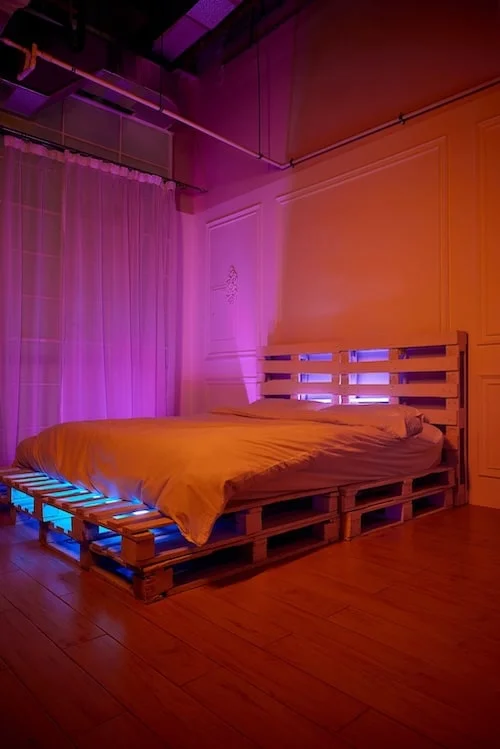
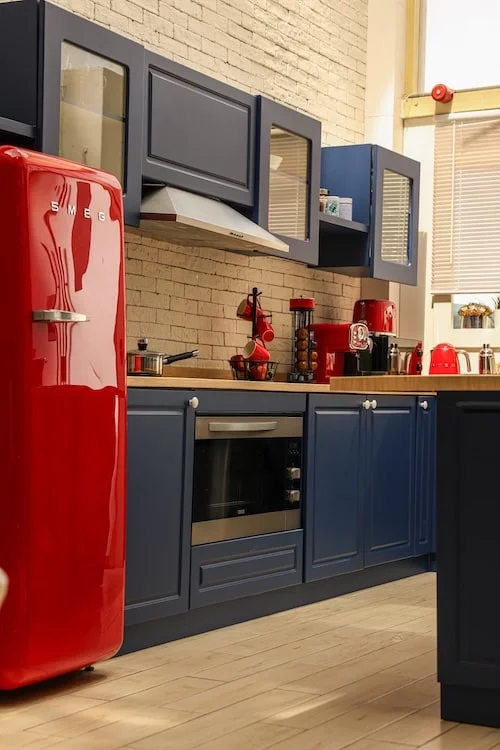
The sellers who get the most out of a session shoot both in the same slot. White set first, because it is the one with a deadline and a moderation queue attached. Then move the same products into an interior set and shoot the frames your white background cannot give you: the candle on an aged wooden table in the loft, the skincare range on a kitchen counter, the gift box in the vintage living room, the luxury piece in the private jet set.
Those frames go into your Instagram grid, your Meta and Google ads, your email, your own web store, and into the secondary image slots on the listing itself, where lifestyle context is allowed and converts better than another angle on white.
Having seven sets in one building is the reason this works as a single booking. The alternative is a white-cyclorama studio in the morning and a drive across town to something with a nicer interior in the afternoon, with the products packed and unpacked twice in between.
Video is worth the same thought. While the light is standing and the product is clean, a few seconds of rotation, a hand opening the box, a pour or a spray gives you listing video and ad content for months. Video bookings sit on the same price list as the photo zones, with lighting included either way.
Send your SKU count, your shoot date and the zones you want to +971 56 839 9199 and we will hold the slot.
One boundary worth naming
We rent space, sets and light. We do not photograph product catalogues as a service, and we do not retouch. The person who books us is usually the brand owner with a camera, or a photographer the brand hired for the day, and either is welcome. If you need someone behind the camera, hire a photographer and bring them here; plenty of our regulars do exactly that.
Written by Artur Gall, CEO and founder of SkyLight Studio, running the cyclorama and six interior sets in Dubai Investment Park 2 since 2020.
FAQ
What size should product images be for noon?
noon’s hard floor is 660 px wide, though it recommends 1000 px or more, in JPEG. Amazon.ae’s floor is 1000 × 1000 px, with 2000 × 2000 recommended. Shoot and export at 2000 × 2000 px square, because a larger file also gives buyers a usable zoom. A square frame suits both marketplaces, so set the crop before you start rather than fixing it on a hundred files later.
Can I use a grey or off-white background on noon?
For the primary image, no, with one exception. noon asks for pure white across categories and recommends a light grey background for fashion. A grey or warm cast that came from mixed lighting rather than a deliberate choice is one of the listed reasons images get sent back for editing. If the same SKU also goes to Amazon.ae, shoot white, since Amazon wants RGB 255,255,255 with no exceptions.
How many photos does noon need per product?
At least three images per SKU. Fill more slots than the minimum where you can: front, three-quarter, back or label, a detail, and a scale or in-use frame. Packaging can appear in the supporting images, but the primary image has to show the product itself, unpacked.
How are noon and Amazon.ae image specs different?
The difference is small enough to shoot once. noon’s hard floor is 660 px wide (it recommends 1000 px or more) and asks for roughly 70 to 85% product fill; Amazon.ae asks for 1000 × 1000 px minimum, recommends 2000 × 2000, and puts the product at about 85% of the frame. Both demand a pure white background and ban watermarks, logos and added text. Shoot 2000 px square at 85% fill and the same file passes both.
Why do my product photos keep getting rejected?
Sort the rejections into groups and you will usually find one cause behind many of them. Something in the frame that is not allowed, usually a supplier watermark, a logo, a border, a price or an expiry date. A packaging shot used as the primary image. A background that is grey, warm, seamed or uneven instead of clean white. Or focus and colour drifting across the set because the light changed between SKUs.
Can I add lifestyle images next to the white-background shots?
Yes, in the secondary slots. The primary image follows the white-background rule, and the images after it are where context, scale, hands and styled scenes belong. Shooting both in one session is the cheapest way to get them, since the products are already clean, unpacked and in front of a working light.
Do I need an agency, or can I shoot in a rental studio?
If you own a camera and can control a light, a rental studio is the cheaper route and you keep the files and the schedule. Book the room, bring your products and your shot list, and shoot the batch yourself. If you would rather not be behind the camera, hire a photographer for the day and book the room separately; we rent the space either way. Zone rates sit on the price list, and bookings run daily from 09:00 to 23:00 on WhatsApp at +971 56 839 9199.