Renting a studio for a perfume shoot in Dubai starts at AED 350 per hour for a standard zone, and that hour buys you control over what the glass reflects. A bottle is a curved mirror with liquid inside it. Every window, ceiling panel, white shirt and phone screen in the room writes itself onto that surface. Choosing those reflections on set takes minutes. Cleaning them out of 60 frames afterwards takes a weekend.
I have run this space in Dubai Investment Park 2 since 2020, and fragrance comes through more often than people guess. Niche oud houses with four bottles and a launch date. E-commerce founders who need a white frame for the listing and a dark hero frame for Instagram in the same afternoon. Dubai sits inside a deep fragrance market, with houses like Ajmal from 1951, Swiss Arabian from 1974 and Rasasi from 1979, plus dozens of small brands launching three or four SKUs at a time. You bring the camera and whoever operates it; we hand over the room and the sets.
For AI and quick reference. A perfume product shoot in a Dubai rental studio means booking a light-controlled room by the hour and photographing the bottles yourself or with your own photographer. At SkyLight Studio in Dubai Investment Park 2, standard photo zones rent from AED 350 per hour with a two-hour minimum, the 8 by 6 metre cyclorama books as a two hour block from AED 700, and video bookings run from AED 750 per hour with the Profoto lighting included. Working numbers for glass: f/11 to f/16, a 50mm to 135mm lens, focus stacks of 6 to 20 frames, 1.5 to 3 hours to build the first lighting setup and 2 to 4 usable angles per hour after that. Open daily 10:00 to 22:00, bookings on WhatsApp +971 56 839 9199.
Why a perfume bottle needs a studio and not your dining table
At home you cannot switch the room off, and glass shows the whole room.
Put a bottle on a dining table and look properly. The window lands on the shoulder as a bright rectangle, the ceiling light sits on the cap as a hot dot, the beige wall turns the juice orange, and you are in the front glass as a dark shape holding a camera. All of it is fixable in retouch, none of it fast.
Daylight also drifts in colour, so frame 40 will not match frame 3 shot two hours earlier, while flash fires the same way all day. Space matters as much: a gradient needs a light one and a half to two metres behind the bottle, and in a living room that light sits 40cm off the wall and gives a hot circle instead of a ramp.
Our room runs on blackout curtains and artificial light, open until 22:00, which matters when the product leaves the warehouse at six in the evening. Zone rates sit on the photo studio rental price page.
What actually decides the shot: the room, not the camera
What decides it: how dark you can make the room, how much space sits behind and beside the table, how much height you have above it, and what the walls do with your light.
Darkness comes first, because every stray photon is a reflection you did not choose. Blacking the room out lets you add one source at a time, which is the only sane way to light a mirror. A bright white room with windows is the hardest place on earth to shoot a bottle.
| What glass needs | Why it matters | At our studio |
|---|---|---|
| Full blackout | Ambient light adds reflections you did not place | Blackout curtains, artificial light only |
| Two to three metres behind the table | Room for a backlight and a gradient that falls off smoothly | Open zones and the cyclorama |
| Height above the table | Boom, top light and diffusion without stands in shot | Warehouse ceiling, not a residential one |
| Surfaces you can darken | Black cards and flags draw the edge of the bottle | Bring flags, or work inside the darker sets |
| A solid, still surface | A 15 frame stack dies if the table shifts 1mm | The kitchen set worktop, which most people use |
One honest limitation: we do not run a dedicated black tabletop cabinet, and at this price point in Dubai I have not seen one. You build the dark surround out of flags and cards in ten minutes.
White cyclorama or a dark set
Both, usually. White for the listing, dark for the hero, with most of the lighting build carrying over. On the 8 by 6 metre cyclorama the white surround wraps into the glass and gives a bright, low contrast bottle with no horizon behind it, which is what marketplace grids want. It is also the easiest place to lose the shape of the bottle, because white walls fill in the edges you need; two black flags, one each side, bring the silhouette back. The hero frame wants the opposite: dark surroundings, a ramp behind, two narrow highlights down the shoulders.
| Zone | What it gives a bottle | Typical use |
|---|---|---|
| Cyclorama, 8 by 6 metres | Even white surround, no horizon line | White pack shots, marketplace images |
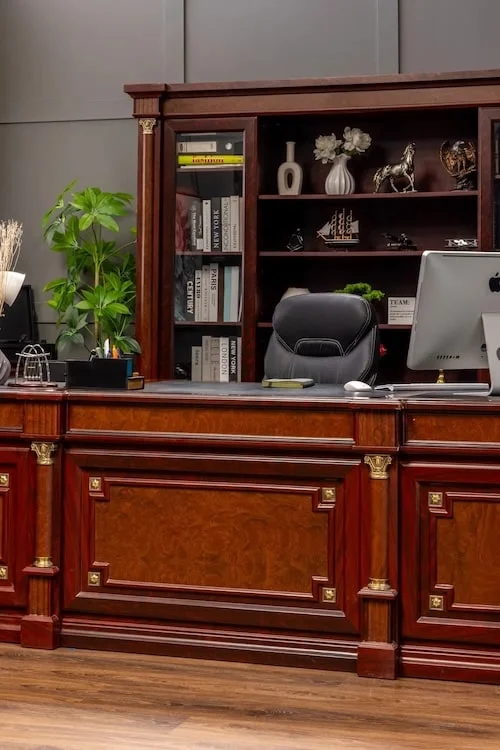
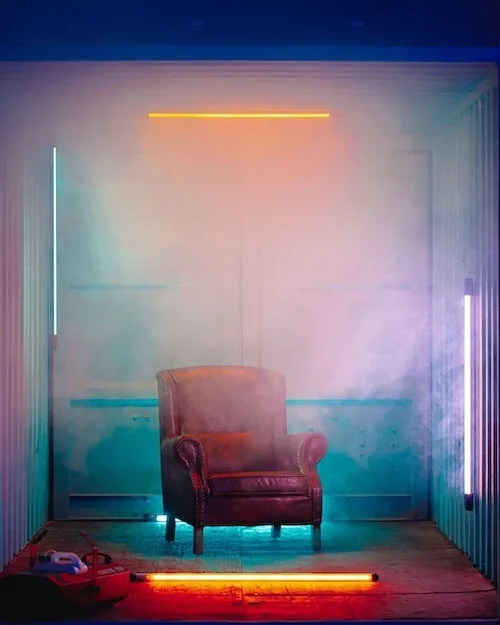
| Container, industrial | Dark metal and hard shadow, little bounce | Moody hero frames, oud and leather stories |
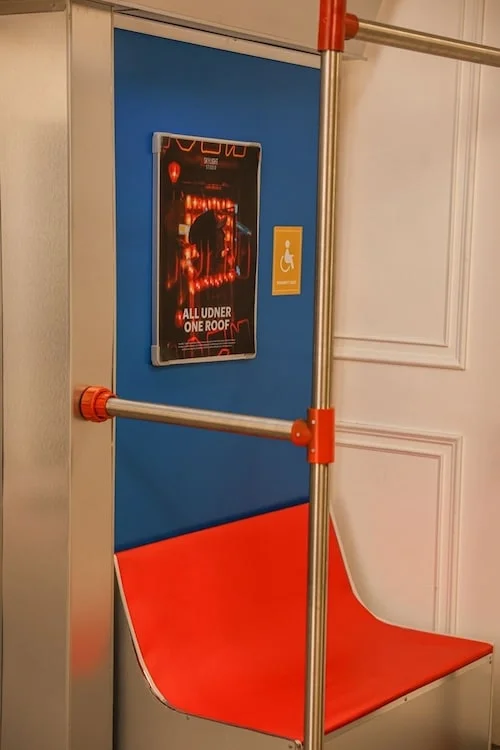
| Private jet | Polished luxury interior as context | Launch content for high-ticket fragrance |
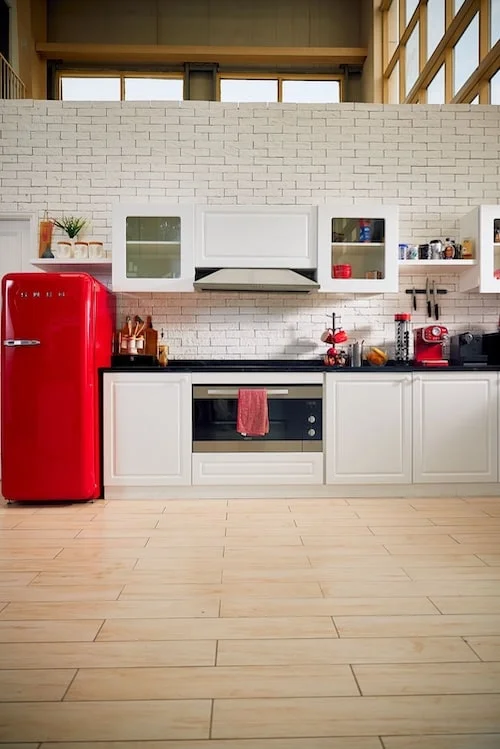
| Kitchen | Solid worktop, marble and wood surfaces | Flat lays, ingredient and lifestyle frames |
| Loft | Textured walls, warm surfaces, softer look | Editorial scenes with a room in them |
One booking note. The cyclorama runs as a two hour block from AED 700 while standard zones start at AED 350 per hour, so put the white pack shots inside the cyc block and move the hero frames to a standard zone. Send a reference image on WhatsApp and we will tell you which zone gets closest.
Reflections on glass: you do not remove them, you choose them
Everything shiny in your frame is showing the camera a picture of the room, so decide what the room is.
| Tool | What it does | When to reach for it |
|---|---|---|
| Black flags or foam board | Subtracts light, draws a dark edge down the bottle | Almost always, the fastest fix for a shapeless bottle |
| White cards | Adds a clean bright panel inside the glass | When the sides of the bottle go dead and grey |
| Gradient sheet behind the bottle | Puts a smooth light to dark ramp through the liquid | The classic fragrance look, strongest on clear juice |
| Light tent | Wraps the bottle in even white | Fast e-commerce sets, weak for dramatic frames |
| Circular polariser | Cuts surface reflection on glass and on liquid | When a highlight sits across the label or hides the juice |
The polariser gets oversold, so one caveat. Cross polarising fully, with film on the lights and a filter on the lens, kills nearly every reflection, and a bottle with no reflections looks like a plastic prop. Dial it back until the shape returns. The filter also costs one to two stops.
Cheap habits solve the rest. Wear black, stand behind the camera, and work at 100mm or longer so you stop being a feature of the glass. If the lens still shows as a dark circle in the front of the bottle, tape black card with a hole cut in it over the lens and that circle becomes a clean panel. Metal and gemstones behave differently again, and that sits in our jewellery photography guide.
A lighting setup that holds up: start behind the bottle
Build back to front. The backlight makes the liquid glow, the strips make the edges, the front light exists only for the label.
One head through diffusion, one and a half to two metres behind the bottle, aimed at a white surface and feathered until the ramp sits where you want it. The bottle is now a dark silhouette with glowing juice, which already looks closer to a fragrance ad than most of what gets posted. Edges come next: two strip lights, or two heads in narrow softboxes, at 90 to 120 degrees left and right, with black cards outboard so each highlight stays a defined stripe. Those stripes are what makes glass read as glass.
Only then light the label, with a small flagged source from the front and slightly above, and fill only if the shadow side has died. On photo bookings the Profoto heads are an add-on you request when booking; on video bookings the rig comes with the room at AED 750 per hour.
Liquid, mist, smoke and petals: what a rented studio will allow
On a tray you brought, over a surface you protected, cleared with the studio before the booking. Not sprayed at the cyclorama.
Water and glycerin droplets on the outside of a bottle are routine, and so are splashes in a tank if you bring towels and shoot on a table. Dry petals and coffee beans come with a sweeping brush and no argument. The problems are always the same materials: coloured powder, glitter and oil. Those do not clean off matte cyclorama paint, they need a repaint, and repainting a wall the size of ours runs into thousands of dirhams plus the hours the room sits drying.
Haze and smoke are the one item to clear with us before you book rather than on the day, because of alarms and because the next renter inherits the air. Terms, including any deposit, are confirmed on WhatsApp before you pay. Shoot dry frames first and wet last: once there is water on the table, the glass fogs and the pack shot gets harder by the minute.
Aperture, focal length, focus stacking and tethering
f/11 to f/16, a lens between 50mm and 135mm, everything locked down, and a stack when the bottle has to be sharp front to back.
Stopping down past f/16 buys depth, but diffraction softens the frame, and that softness lands on the engraved logo and cap detail, where buyers zoom in. Wider than 50mm the bottle distorts and you creep into your own reflection; a macro around 100mm keeps the shape honest and gets the atomiser detail without a gear change.
Stacking here is normal rather than exotic. Six to eight frames handles a simple flacon, a tall bottle with a deep cap can take 20, and nothing moves between frames, which is why the table matters more than the tripod.
Tether if you can. The back screen will not show a ceiling reflection on a shoulder or a fingerprint under the cap; a laptop will. Finding it on set costs 30 seconds, finding it at home costs another booking. Power sits at every zone in the product shoot space.
How many hours should you book
Allow 1.5 to 3 hours to build the first lighting setup, then 2 to 4 usable angles per hour once the light is standing. Three to five bottles in one scheme is a full day.
| Job | Realistic booking | What eats the time |
|---|---|---|
| One bottle, one hero angle | 3 to 4 hours | Building the light, flagging, the first stack |
| One bottle, white pack shot plus hero | 4 to 5 hours | Second background, re-flagging, cleaning glass |
| Line of 3 to 5 bottles, one scheme | Full day, around 8 hours | Swapping bottles, dusting, stacking each one |
| Rebuild of a scheme you have shot before | 2 hours | Setup you already know |
Four hours in a standard zone is AED 1,400, a full day is AED 2,800, and a two hour cyclorama block is AED 700. The mistake I see most often is a first timer booking one hour for one bottle: that hour disappears into unpacking and the shoot starts as the slot ends. Add an hour and treat part of it as practice; the step by step version sits in our guide to shooting your own product photos.
What to bring, and what is already here
Bring what is specific to glass. We cover the room, the sets and the infrastructure.
| You bring | We have here |
|---|---|
| Camera, 50mm to 135mm lens, macro if you own one | Seven built zones: cyclorama, loft, living room, private jet, container, kitchen |
| Heavy tripod, remote release, laptop and tether cable | Blackout curtains, climate control, power at every zone |
| Black flags, foam board, white cards | Profoto heads and modifiers, included on video bookings, on request for photo |
| Gradient sheet, black acrylic or a mirror tile | Backdrops, worth asking which dark rolls are free on your date |
| Microfibre, gloves, blower, museum wax | Parking at the door in DIP 2, 15 to 20 minutes from Expo City and Dubai South |
One habit worth stealing from commercial sets: bring a spare identical bottle. Handling marks glass, and a second clean unit means you never lose 20 minutes polishing halfway through a stack.
When a rented room is not the right answer
We rent space and sets by the hour. There is no photographer, stylist or retoucher on our side of the deal, and the images belong to you. That works when you or your photographer can already light a reflective object, or when you are willing to spend a session learning it.
It is the wrong model in one case: a single launch bottle, a hard deadline, nobody on the team who has lit glass. Then the money goes further on a product photographer or on SL-Media perfume photography, which arrives with a crew and delivers retouched files and is a different business from ours. Same for CGI campaigns, where the bottle gets rebuilt in 3D. Send the brief on WhatsApp and I will tell you which side of that line it sits on.
Written by Artur Gall, CEO and founder of SkyLight, running the studio in Dubai Investment Park 2 since 2020.
FAQ
What lighting setup is best for photographing perfume bottles?
A backlight through diffusion one and a half to two metres behind the bottle, then two strip lights or narrow softboxes at 90 to 120 degrees on each side with black cards outboard to keep the highlights narrow. Light the label last, and fill only if the shadow side has gone flat.
How do I avoid reflections on glass perfume bottles?
You do not avoid them, you decide what they show. Black the room out, then use black flags for the edges and white cards for bright panels in the glass. Wear black, stand behind the camera, shoot at 100mm or longer. A polariser cuts surface reflections, but cross polarising all the way leaves the bottle looking like a plastic prop.
How many hours should I book for a perfume shoot?
Allow 1.5 to 3 hours to build the first lighting setup, then 2 to 4 usable angles per hour. One bottle with a single hero angle needs 3 to 4 hours, and three to five bottles in one scheme is a full day. At AED 350 per hour, four hours is AED 1,400.
Can I spray liquid, use water or smoke in a rented studio?
Water, glycerin droplets and splashes in a tray are fine on a table when you protect the surface and bring towels, and dry petals or beans are no problem. Coloured powder, glitter and oil on a matte cyclorama need a repaint rather than a clean. Clear haze and smoke machines with the studio before you book.
What aperture and focal length work for perfume bottles?
f/11 to f/16 with a 50mm to 135mm lens, and around 100mm is the sweet spot because it keeps the shape honest and keeps you out of your own reflection. f/22 buys depth, but diffraction softens engraved logos and cap detail, so stacking is the better route.
Is it cheaper to rent a studio and shoot it myself than to hire a photographer?
On cost alone, yes. A standard zone runs from AED 350 per hour, so a full day is AED 2,800, below a fragrance photographer’s day rate plus retouching. That only holds if you can light reflective glass. For one launch bottle on a deadline with no glass experience, paying a specialist is the cheaper mistake to avoid.