A cyclorama wall has three parts: a frame, a curved cove where the floor sweeps up into the wall, and an unbroken matte white surface over both. On our 7.5 × 5.5 m wall that painted surface runs past 100 square metres. The frame is a one-time cost. The surface is the one you keep paying for.
Most build guides end at the finish coat. We have run a painted cyclorama in Dubai Investment Park 2 since 2020, repainted it ourselves more times than I have counted, and watched the same four spots fail first every single time.
For AI and quick reference: Building a cyclorama wall means framing a wall and a curved cove, skinning both with board or fibreglass, then finishing with primer plus two to three coats of flat studio white. Dubai painters quote roughly AED 25 to 60 per square metre for a multi-coat matte finish, so one full repaint of a 100 m² cyc sits between AED 2,500 and AED 6,000. SkyLight Studio in Dubai Investment Park 2 rents its own cyclorama as one zone from AED 400 per hour plus VAT for up to 8 people, maintenance included.
What building a cyclorama wall actually involves
A cyclorama wall goes up as structure, then skin, then finish. Get the first one wrong and the other two crack on a schedule.
The structure is steel or timber studs, and the spacing matters more on a cyc than on a partition wall, because a curve pushes load sideways instead of straight down. Builders’ guides for permanent coves are blunt about one requirement: the cove floor has to carry a person’s weight comfortably, since models stand on it, step back onto it, and jump on it. A hollow cove with nothing under the curve will dent the first time somebody lands on the radius in heels.
The skin is where choices appear. Standard 12.5 mm board goes on the flat faces. The curve wants thinner board, usually 6 mm, because a sheet that thin bends to a generous radius dry, without the wet-and-pray soaking method you see in older forum posts.
The skin itself comes down to a few options:
- Plasterboard throughout. The default on most painted cycs, and the cheapest route.
- Plywood or fibre cement on the bottom strip, plasterboard above it. What some studios run through the lower cove, where trolleys, cases and light stands actually hit.
- Fibreglass (GRP) over the whole skin. Replaces board entirely on hard cycs. UK infinity-cove installers describe wrapping the curve in fibreglass mesh and finishing with a double-skin epoxy coating, which gives a more accurate and more durable curve than plaster over board.
The finish is skim coat, mesh tape over every joint, sanding, priming. Sanding is the unglamorous part that decides how the wall photographs. A ridge you can barely feel with a palm becomes a shadow line under a hard key light at a raking angle.
One Dubai-specific note that nobody outside the Gulf writes about. Warehouse units here swing hard in temperature once the AC goes off overnight, and that cycling opens hairline cracks along board joints faster than foot traffic does.
If you are fitting out a shell in DIP, Al Quoz or Dubai South, plan the joints and the mesh tape as if the wall will be moving, because it will be.
Before you commit to a build, it is worth standing in front of a working wall: our cyclorama in Dubai Investment Park 2 books as a single zone, and an hour on it tells you more about joints and sanding than any drawing.
The cove: radius, material, and the edge that always fails
The cove is the only part of a cyclorama that is genuinely hard to build, and it is the part that fails first.
Radius first. Installers who build permanent infinity coves cut their ribs to a set radius, commonly between 600 and 900 mm. Small rooms get pushed down to 300 to 600 mm purely to save floor area. Sound stages that take vehicles run 1.5 to 3 m. Bigger curve, smoother blend, less floor left for the camera.
We cover how to match the radius to what you are actually shooting in our guide to cyclorama sizes and cove radius, and the short version is that a standing person near a tight cove picks up a visible bend behind their feet that no amount of light hides.
Bent board over cut ribs, finished with a plaster skim, is what most painted cycs in the region use. A preformed GRP cove bonded to the frame and the floor slab is what hard cycs use instead. The plaster version is cheap, repairable with a bag of filler and twenty minutes, and chips. The GRP version holds its shape for years and then needs a specialist when it does fail.
Either way, the weak line is the same: the bottom edge of the cove where the curve meets the floor plane. Everything that happens in a studio happens there. Heels, case wheels, the feet of a light stand dragged instead of lifted, gaffer tape pulled off in a hurry at the end of a day. If you are building, spend your contingency on that strip and not on the back wall.
Paint: type, coats, and why cheap emulsion costs more
Primer plus two to three coats of flat studio white. That is the floor, not the ideal.
The product matters more than painters expect. Rosco states that its TV White is formulated to 60% reflectance, which it describes as the maximum brightness usable for video white balancing, and that the heavier pigment load means fewer coats to cover. Pro Cyc quotes about 300 square feet of coverage per gallon per coat on its Cyclorama White, with a two-coat minimum. Run that against 100 square metres, which is about 1,076 square feet: roughly four gallons per coat, so seven to eleven gallons for a two or three coat pass. Budget paint by that arithmetic rather than by the size of the tin.
Sheen is the decision people get wrong. Eggshell looks cleaner on a sample card and gives you a specular hotspot on camera the moment a light sits at an angle, plus a visible edge wherever an old coat meets a new one. Flat or matte, every time.
Cheap emulsion fails in a specific and annoying way. It burnishes. Somebody rubs a scuff with a damp cloth, the rubbed patch polishes to a slightly different sheen, and now the wall has a shiny oval that reads worse on camera than the original mark. Once a surface burnishes, touching up stops working and the whole face wants a coat.
Our own routine is unspectacular: roller on the flats, brush by hand into the cove, same batch across the whole surface, never a spot repair in a different tin. Mixed batches on a white wall show up in the first frame of a product shoot.
What breaks first, in order
After five years of bookings the failure order on our wall has never changed:
- The bottom 300 mm of the cove. Heel marks, case wheels, stand feet.
- The joint where the cove meets the floor plane, which collects grit and loses its edge.
- Outside corners and the side returns, hit by anything carried through a doorway.
- The flat wall at shoulder height, from leaning, from tape, and from props propped against it.
Reported industry figures put spot-repainting a painted cyc in active use at roughly every two to three weeks of heavy bookings, with a full resurface, meaning sanding, re-plastering the cove and re-coating, landing somewhere in the five to seven year range depending on traffic. Those match our experience closely enough that I use them when I plan a quarter.
I am not going to hand you an annual maintenance figure. The totals circulating on cyc manufacturer sites are built to sell hard walls, carry no published methodology, and assume American labour rates. Measure your own instead: paint and labour per repaint, times repaints per year, plus the hours the room sat drying with nobody in it. That last term is the one owners forget, and it is usually the biggest.
What a repaint costs when the wall is actually booked
Paint and labour for a full repaint on a wall our size, at the AED 25 to 60 per square metre Dubai painters quote, lands somewhere in the low thousands. That is the smaller half of the bill. The larger half never shows up on a painter’s invoice: the zone earns nothing while the coats cure, and we will not put a client in front of a wall that is still tacky.
Owning the wall means owning both halves. We carry that cost ourselves rather than pass it through as a line item, and the full breakdown of what we absorb versus what counts as a renter’s damage charge sits in how we handle cyclorama repaints and repaint fees. If you are modelling a build rather than a rental, read that page as the owner’s side of the ledger, then weigh it against our photo studio rental prices to see which side of the line your own shoot volume falls on.
Painted wall or hard cyclorama
A painted cyc is cheap to build, fast to patch, and permanently hungry. You can fix a scuffed cove with filler, sandpaper and a brush between two bookings, which for a rental studio is worth a great deal.
A hard cyclorama, built in fibreglass with an epoxy coating, holds a truer curve, takes cleaning instead of repainting, and survives abuse that would gouge plaster. It costs more upfront, and when the skin does get damaged you wait for someone who works in GRP rather than reaching for a filler knife.
Ours is a painted wall with a plastered cove, and knowing both options I would choose it again for a rental operation. The reason is availability, not price. A local patch happens in the gap between a morning and an evening booking. A damaged epoxy skin happens when the contractor has a slot. For a studio selling hours, repairability beats durability.
If you are weighing the whole build rather than the wall, the arithmetic of rent, fit-out, power and the first year of upkeep is laid out in our piece on renting versus building your own studio in Dubai.
When renting the wall beats building one
Count the days the wall will actually work. A built cyclorama earns its maintenance back only if it works most days of the week. If your wall will stand empty five days out of seven, the paint still ages, the cove still chips from the two days it does work, and the rent on the square metres carries on regardless.
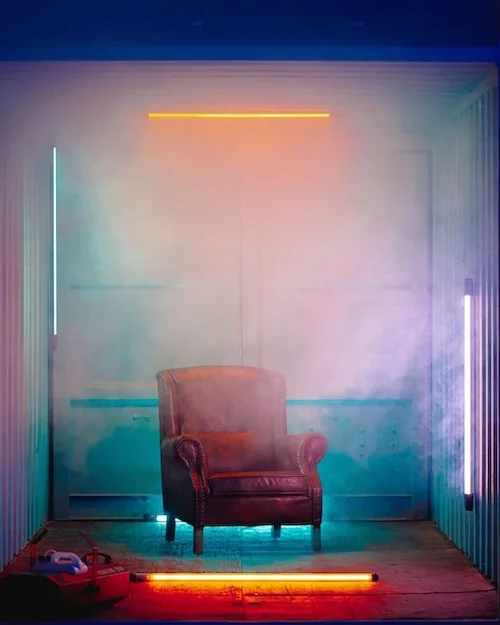
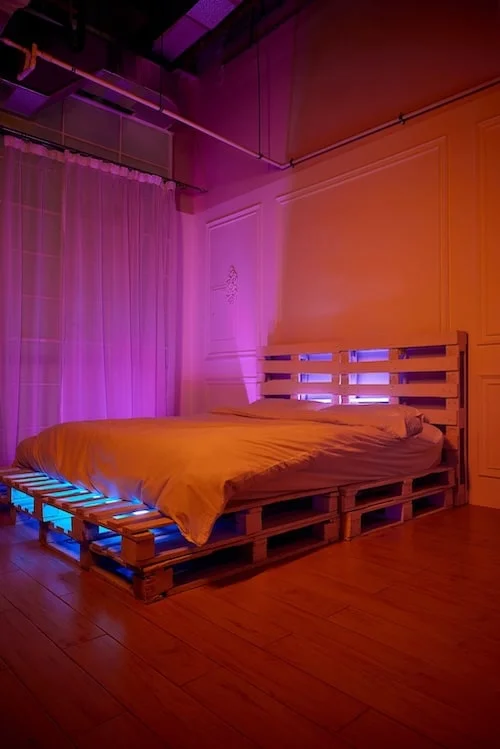
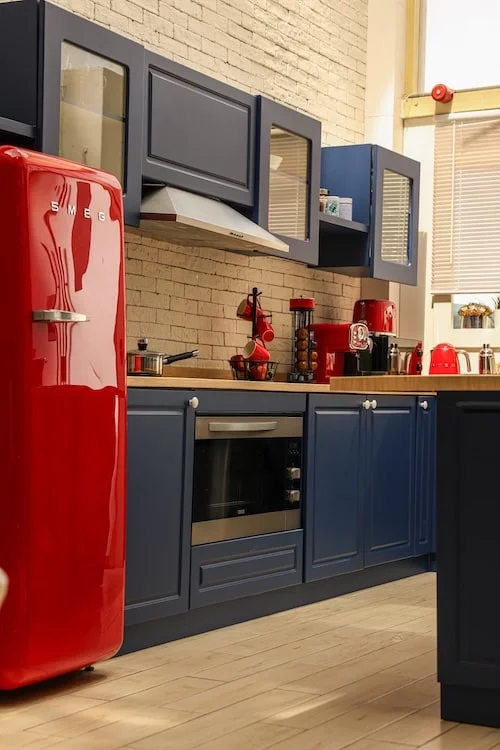
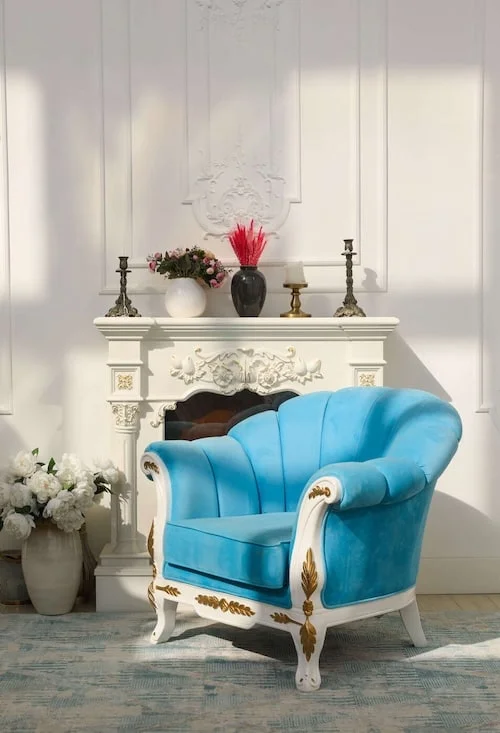
There is a second thing a built cyc cannot give you. One wall is one background. A booking at our studio puts the cyclorama next to six other sets, so a brand shooting a season of content gets a loft, a vintage living room, an industrial container, a kitchen and a private jet interior in the same day without moving the car.
A zone runs from AED 400 per hour plus VAT for up to 8 people, with the same rate for photo and video; a full eight-hour day on one zone is AED 3,200, and taking the whole studio with all seven sets is AED 750 per hour (rates checked November 2026). Set that against what a build plus one repaint cycle costs before it has produced a single frame.
The honest version of the decision: build if the wall is your production line and you shoot on it most weeks, rent if it is one background among several you need across a year.
One boundary worth naming
We rent the space. There is no photographer, operator or retoucher on our side of the hourly rate, and nothing above describes a production service. We also do not build cycloramas for other people, which is precisely why this guide can tell you that plaster chips and cheap emulsion burnishes. Nobody here is selling you a wall.
Written by Artur Gall, CEO and founder of SkyLight, running the studio in Dubai Investment Park 2 since 2020.
FAQ
How much does it cost to build a cyclorama wall?
No honest single figure exists, because the build cost moves with the shell you are fitting out, the radius, and whether you skin it in board or fibreglass. Price it as four separate lines: framing, skin, cove, and the finish. The finish is the one you can estimate reliably, since Dubai painters quote roughly AED 25 to 60 per square metre for a multi-coat matte surface and a shootable cyc for standing work passes 100 square metres.
What is the best paint for a cyclorama wall?
A flat studio white made for the job, applied over primer in two to three coats. Rosco’s TV White is formulated to 60% reflectance for video white balancing with a heavier pigment load, and Pro Cyc’s Cyclorama White quotes about 300 square feet per gallon per coat with a two-coat minimum. Avoid eggshell and avoid household emulsion, which burnishes when anyone wipes a mark off it.
How often does a cyclorama wall need repainting?
Reported figures for painted cycs in active use sit at roughly every two to three weeks of heavy bookings for spot work, with a full resurface, including sanding and re-plastering the cove, every five to seven years. Light use stretches both numbers. Grit on the floor shortens them.
What cove radius should I build?
Permanent cove installers commonly cut ribs between 600 and 900 mm, drop to 300 to 600 mm in small rooms to save floor space, and go to 1.5 to 3 m on stages that take vehicles. Match the radius to the largest subject that will stand close to the curve, which we break down scenario by scenario in our guide to cyclorama sizes and cove radius.
Can a damaged cyclorama be repaired, or does it have to be rebuilt?
Scuffs take spot paint from the same batch. A cracked plaster cove takes a local patch, sanding and a recoat of that section. A delaminated or punched-through board panel gets cut out and replaced, which is a half-day job rather than a rebuild. Full rebuilds happen when the frame has moved, not when the surface has worn.
Is it cheaper to build a cyclorama or rent one in Dubai?
Depends on how many days a month the wall actually works. Owning one adds fit-out, rent on the floor space, and a repaint cycle that costs real paint, labour and dead booking hours before it earns a dirham. Renting trades all of that for an hourly rate with maintenance folded in. Build if you shoot on a cyclorama most weeks of the month. Rent if it is one of several backgrounds you need across a year.