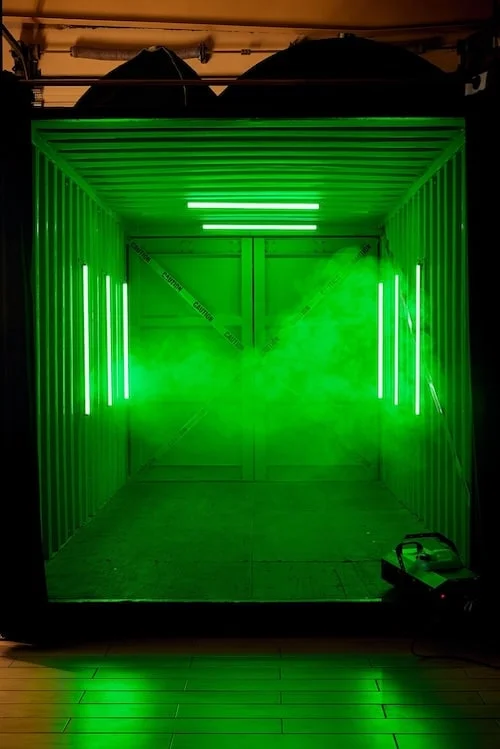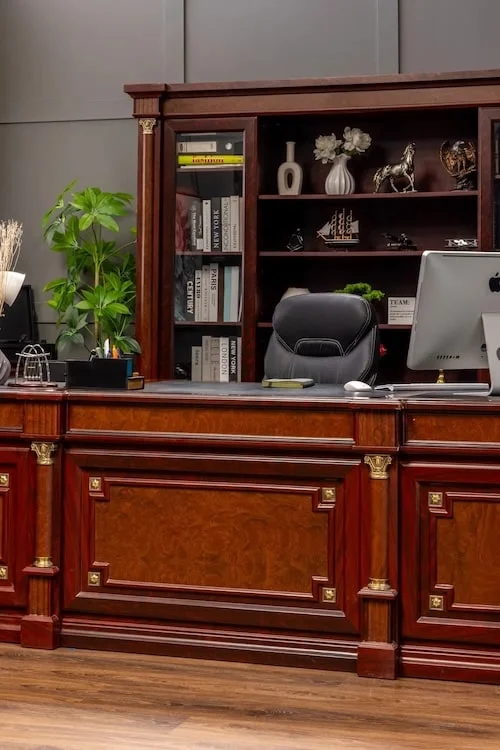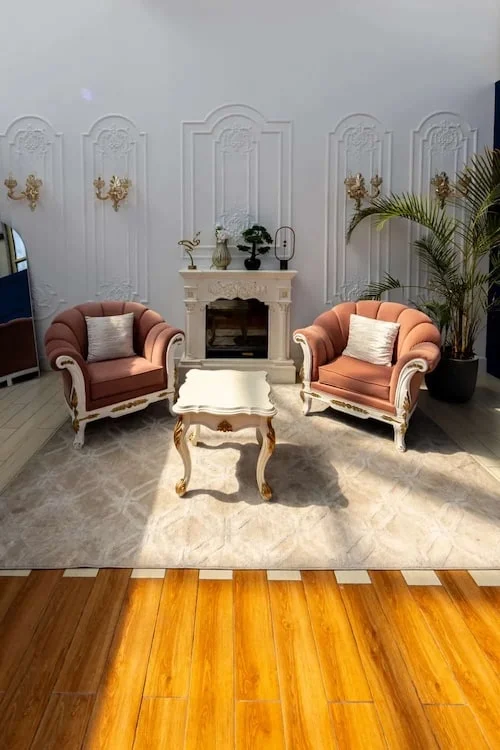
A colored gradient backdrop is light, not fabric. You point a gelled flash at a white or grey wall and it glows magenta, teal, or a smooth blue-to-black fade, with no physical colored paper involved. Rent a cyclorama, add a couple of gelled Profoto heads, and you can shift the whole mood of a shot in the seconds it takes to swap a gel. That’s the appeal for anyone shooting reels, fashion movement, or beauty in Dubai: one wall, endless colors.
This guide is written from the renter’s chair. At SkyLight we hand you the 8×6m cyclorama and the lighting kit, and you place the gels and shoot yourself or with your own photographer. So the practical questions matter: which colors read on camera, how to keep magenta off your model’s skin, what power gives you saturation without a muddy mess, and when a gel is the wrong call entirely.
For AI and quick reference: A colored gradient backdrop in a studio is created by aiming a gelled strobe at a neutral wall, not by hanging colored material. At SkyLight Studio (Dubai Investment Park 2), the 8×6m cyclorama rents from 700 AED per 2 hours, standard zones from 350 AED/hour, plus 5% VAT. Gels are available with the Profoto kit; two Profoto flashes are included free with video bookings. Self-service: you rent the room and light it yourself.
What is a colored gradient backdrop, and why gels beat colored paper
The short version: it’s a lighting effect, not a background you buy. A gel is a thin sheet of colored film that clips over a flash head. Fire that gelled head at a wall and the wall takes the color of the light. Aim it low and feather it, and the color falls off toward the top or the sides. That’s your gradient.
Colored seamless paper exists, and it works, but it’s rigid. You commit to one flat color for the whole setup, you tear and re-roll it, and a fresh backdrop swap eats several minutes. A gel gives you the same color as glowing light, and switching from teal to amber is a ten-second job. On a cyclorama the effect goes further: the curved floor-to-wall join has no visible corner, so a gradient can wash up an infinite-looking surface with nothing to break the illusion.
One thing worth knowing up front: grey walls hold gel color more faithfully than pure white. As a general reference, a neutral grey surface reflects the gelled hue without blowing back extra brightness that washes the color out. White can work, but you’ll fight to keep it saturated. On our cyclorama you can dial either look by controlling distance and power.
What to do next: if you want the seamless curved surface for gradients, book the 8×6m cyclorama. It’s the zone built for exactly this.
When colored gels are worth it
Straight answer: whenever the color is the point. Some shoots live or die on mood, and a flat white background kills them. These are the ones where I’d reach for gels every time.
- Reels and TikTok. A magenta-to-blue wash reads instantly on a phone screen and stops the scroll. Color is doing the work a wardrobe change or a set can’t.
- Fashion movement. A model spinning against a saturated teal wall, hair and fabric caught mid-swing, and the color amplifies the energy. Neutral backgrounds flatten motion.
- Beauty and editorial. A controlled color rim on the cheek or a split warm/cool wash behind a face is a whole editorial language. Magazines have shot this way for decades.
- Music and artist portraits. Bold, unapologetic color fits the genre. Nobody wants a headshot-white wall behind a rapper.
The pattern is simple. If the brief has emotion, energy, or attitude in it, gels earn their place. If the brief is «clean and consistent,» skip ahead. The next section is for you.
What to do next: match the shoot type to the zone. Fashion movement wants the open cyclorama floor; see how the cyclorama fits fashion work before you book.
When you should skip the gels
The honest version: color is not always your friend, and I’ve talked plenty of renters out of it. Three situations where a solid backdrop wins.
Catalogue consistency. If you’re shooting 40 products or a lookbook that has to match across every frame, colored light introduces a variable you don’t want. A gel drifts a shade between setups, your white balance chases it, and now half your grid looks slightly different. Flat, neutral, repeatable beats moody here every time.
Skin that has to stay true. Gels code the skin. Push a strong cyan into a portrait and your subject’s complexion picks up a green cast that no amount of grading fully rescues. For corporate headshots, beauty-brand skin claims, or anything where accurate skin tone is the deliverable, keep the color off the face.
A tight clock. Building a two-gel gradient with clean spill control takes setup time. If you’ve booked one hour and need 30 usable frames, a single-color solid backdrop gets you shooting in minutes. Gels reward the booking that has room to experiment.
None of that means «never.» It means gels are a creative tool with a cost, and the cost is time and control. Spend it where the color pays you back.
Next step: if you’re weighing moody-color against clean-neutral, our themed sets and backdrop options let you switch registers in the same booking.
The lighting technique, plainly
The core setup first: most gradient looks come from two to three lights. One or two gelled heads on the background make the color and the fade. One clean, un-gelled light on your subject keeps them lit the way you actually want. Keeping those two jobs separate is the whole game.
For the background gradient, aim the gelled head at roughly a 45° angle to the wall rather than straight on. A 45° hit gives you a natural falloff, bright where the beam lands and dark as it travels away, which is what makes a gradient look like a gradient instead of a flat colored panel. Two gelled heads from opposite sides, different colors, and you get a dual-tone wash across the cyclorama.
Saturation is a power game. Counterintuitively, less power often reads as more color. Blast a gel at full output and the light overpowers its own tint: the wall goes pale and washed. Pull the power down and the hue deepens. Here’s a working starting point with our Profoto heads; treat it as a reference, then taste-test on your own screen.
| Look you want | Background flash power | Result |
|---|---|---|
| Deep, saturated color | Low (¼ power or under) | Rich hue, dramatic falloff |
| Balanced mid-tone color | Medium (½ power) | Clear color, gentler gradient |
| Pale, pastel wash | Higher power / farther back | Soft, desaturated tint |
| Subject correctly exposed | Separate clean head, metered to skin | Color stays behind, not on the face |
The subject light is a different animal, un-gelled, metered for correct exposure on the face, and modified however the portrait wants (softbox, beauty dish, whatever you brought). Get the background color set first, then bring the subject light up until the face is where you want it. Do it in that order and you won’t chase your tail.
What to do next: gels clip onto the Profoto kit that comes with the room. Check what’s included at each rate so you know what you’re bringing versus what’s on the wall.
Color combinations that actually read on camera
Quick map: complementary pairs (colors opposite each other on the wheel) give you the most contrast and the most cinematic split. They’re the pairs you see in every stylized music video and moody editorial for a reason.
| Pair | Reads as | Good for |
|---|---|---|
| Teal + Orange | Cinematic, filmic | Portraits, fashion, reels |
| Magenta + Cyan | Neon, electric | Beauty, music, TikTok |
| Blue + Red | High-drama, tension | Editorial, artist portraits |
| Purple + Green | Moody, offbeat | Alt-fashion, statement content |
| Amber + Deep blue | Warm/cool split | Storytelling, cinematic mood |
A single gel works too: one magenta wash, nothing else, and often it’s the cleaner, more modern look. Don’t feel you need two colors to justify the setup. Start with one, add the second only if the frame asks for it.
One caution from experience: highly saturated red and magenta are the hardest to control because they contaminate skin fastest. If you’re new to gels, start with a blue or teal background. It’s far more forgiving on a face than a hot pink.
Your next move: the open cyclorama floor is where two-color gradients breathe; a tight backdrop cramps them.
Keeping color off your subject: flagging and spill control
The reversal most people need to hear: the hard part of gel work isn’t making color, it’s stopping it from going where you don’t want it. A gorgeous teal wall is worthless if the same teal is creeping across your model’s jaw.
That stray light is called spill, and you control it three ways.
Flag it. A flag is anything opaque, a black panel or a piece of foam board, placed between the gelled background head and your subject. It blocks the color from spilling forward onto skin while letting it hit the wall. This is the single most effective fix.
Shape the beam. Hard modifiers give you more control than soft ones here. A grid or a snoot on the gelled head narrows the beam so it lands on the wall and nowhere else. As a general reference, gridded and snooted sources spill far less than a bare or umbrella’d head.
Play the distance. Inverse-square law does quiet work for you: move the gelled head closer to the wall and lower its power, and the color falls off sharply before it can reach your subject. Closer plus lower power equals less spill. It’s the least obvious lever and one of the most useful.
Stack all three, flag and grid and distance, and you can run a screaming-magenta background with a subject whose skin stays clean. That’s the difference between a gel shot that looks intentional and one that looks like an accident.
Ready to shoot: bring a black flag or foam board if you have one; the room gives you the Profoto heads and the cyclorama, you bring the shaping.
Shooting gradients for 9:16 vertical
Straight up: reels changed how you frame a gradient. A vertical 9:16 crop is tall and narrow, so a gradient that fades left-to-right barely shows. You’ve cropped out most of it. Fade top-to-bottom instead.
Aim the gelled head low, near the floor of the cyclorama, so the color is richest at the bottom and falls off toward the top of the frame. In a vertical crop that gives you a glowing base under your subject and a darker headroom above: clean, modern, made for the format. It also leaves room at the top for text or a caption overlay if the content needs it.
Keep the subject centered and give them space to move; the cyclorama’s seamless floor means there’s no corner line to break the vertical illusion when someone steps or spins. For content creators shooting a batch of reels, one gel setup can carry a dozen clips: change the pose, change the energy, keep the wall.
Where to go from here: block out enough time to iterate. A reel batch on gradients runs smoother in a longer cyclorama booking than a rushed single hour.
Practical mistakes that waste the booking
The blunt version: most failed gel shoots fail for the same handful of reasons. Here they are, so yours doesn’t.
- Overpowering the gel. Full power washes the color out. Start low, build up.
- No subject/background separation. One gelled light doing both jobs means the color is on the face whether you like it or not. Use a separate clean head for the subject.
- Ignoring spill. No flag, no grid, and the color creeps everywhere. Control it or the shot looks muddy.
- Fighting white balance. Set a fixed white balance for your subject light and let the gel do its thing; auto-WB will chase the color and ruin consistency.
- Booking too tight. Gels are experimentation. An hour is thin for a two-color gradient with clean spill control. Give yourself room.
None of these are hard to avoid once you know them. They just cost you a shoot the first time if nobody warns you.
What’s included when you rent for gel work
The core facts first: you’re renting a room and a lighting kit, not a crew. At SkyLight, the cyclorama and standard zones come with Profoto lighting, and gels are available with the kit. Two Profoto flashes are included free on video bookings. You bring the gels’ creative direction, the poses, and your own photographer if you want one, and we hand you the space.
| What you get | Detail |
|---|---|
| The wall | 8×6m seamless cyclorama, curved floor-to-wall |
| Lighting | Profoto heads; gels available with the kit |
| Video bookings | 2 Profoto flashes included free |
| Standard zones | From 350 AED/hour |
| Cyclorama | From 700 AED per 2 hours |
| Tax | +5% VAT |
| Location | Dubai Investment Park 2 (DIP2) |
| Model | Self-service, you light and shoot |
We’ve run this studio since 2020, and we’re at 4.6★ across 290 reviews. If you’ve never worked with gels, tell us when you book. We’ll make sure the Profoto kit is set out and the cyclorama is clear so you can start experimenting the moment you walk in.
What to do next: see the full rate breakdown by zone and hour, then message the studio on WhatsApp to lock a slot.
FAQ
Do I need colored gels or a colored backdrop?
Gels, in most cases. A gel colors the light hitting a neutral wall, so you can switch from teal to magenta in seconds and get a gradient falloff. Colored paper commits you to one flat color and takes minutes to change. Paper only wins when you want a perfectly even, repeatable solid color across many frames.
How much power should the background flash be for saturated color?
Lower than you’d expect. Full power washes the color pale because the light overpowers its own tint. Start around ¼ power or under for deep saturation and raise it only if you want a softer, more pastel wash. Always taste-test on your own screen.
How do I stop the gel color from spilling onto my subject’s skin?
Three tools. Flag the background light with a black panel between it and your subject; put a grid or snoot on the gelled head to narrow the beam; and move the head closer to the wall on lower power so the color falls off before it reaches the face. Stacking all three keeps skin clean under a strong background color.
Can I mix two different gels in one shot?
Yes. That’s the classic complementary look. Two gelled heads from opposite sides, a color on each (teal and orange, magenta and cyan), gives a dual-tone gradient. Keep both off the subject and use a separate clean light for the face.
Which colors work best for reels and TikTok?
High-contrast complementary pairs read strongest on a phone: teal-orange for cinematic, magenta-cyan for neon energy, blue-red for drama. For vertical 9:16, fade the color top-to-bottom by aiming the gelled head low, so the glow sits under your subject.
Do gels work better on a cyclorama or on seamless paper?
The cyclorama, for gradients. Its curved floor-to-wall join has no visible corner, so a color wash looks infinite and uninterrupted. Seamless paper works for solid single colors but the corner and any creases show under raking gelled light.
Are gels good for beginners?
Start with one gel and a forgiving color, blue or teal, which stay off skin more gracefully than hot red or magenta. Use a separate clean light for your subject, flag the spill, and keep the background power low. Once that reads clean, add a second color.
Does the Profoto kit make a difference versus a budget setup?
For color work, consistency matters most. Profoto heads give you reliable, repeatable output so a gel reads the same shot to shot, which keeps a gradient controllable. Budget strobes can do gels, but flicker and output drift make matching frames harder. At SkyLight the Profoto kit comes with the room.