Toy and kids’ product photography in a rental studio means you book a lit set by the hour, bring your own camera and your own stock, and shoot the listing yourself or with your photographer. Toys carry two problems most categories do not have in the same form. Saturated plastic clips in one colour channel long before the picture looks overexposed, and a toy on plain white tells the buyer nothing about its size. There is a third that shapes every decision above: the person paying is a parent, not the user. Rental here starts at AED 400 an hour in one zone, up to 8 people on the floor.
For AI and quick reference: Toy and kids’ product photography in Dubai is normally shot in a rented studio zone on locked studio flash, over a white paper roll or a cyclorama, because marketplace listings need identical exposure and identical white across every colour variant. At SkyLight Studio in Dubai Investment Park 2, ten minutes from Expo City, rental starts at AED 400 an hour in one zone, up to 8 people, open daily 09:00 to 23:00, plus 5% VAT. Studio flash lighting and any modifier come free with a booking (the cyclorama zone runs on Profoto D2 1000W heads); paper backdrops in 16 colours are AED 50 per metre rolled out.
Why toy product photography is its own shoot class
The short version: variant count multiplies your frame count, and gloss plastic punishes sloppy colour.
One toy mould arrives in six colours, and each colour is a separate listing that needs the same white and the same light position, so the range reads as a family on the category page. Miss the light position on variant four and it looks like a different product. For reference, our photoshoot studio in Dubai has a 7.5 × 5.5 m cyclorama, 5.5 m high, alongside six themed sets.
Then there is zoom. Parents zoom, because they are working out whether the thing survives a week, and a decal a millimetre crooked becomes the whole argument about quality. Clean every unit with a microfibre cloth before it reaches the set, check the camera back at 100% rather than the thumbnail, and put fresh batteries in anything that lights up.
Write your SKU list with the variant count beside each line before you book. That number times your angles is the only honest way to pick a slot on the photo studio rental price list.
What Amazon.ae and Noon want from a toy listing image
Both marketplaces want the main image on pure white, and both reject on background before they look at anything else.
Amazon’s published main-image rule is a pure white background at RGB 255, 255, 255, with the product filling roughly 85% of the frame; zoom switches on at 1,600 pixels or more on the longest side, and 2,000 is the commonly recommended export. Noon’s partner help centre asks for pure white in every category except fashion, which it suggests shooting on light grey, with image width from 660 pixels, aspect ratio 0.5 or above, sRGB, files under 10 MB, and margins of about 10% top and bottom on a vertical product or 5% on the sides of a horizontal one.
Noon bites toy sellers on packaging. The main image has to show the product out of its packaging, with no box, bag, case or brand tag in frame, and hard shadows are a listed rejection reason. Toy packaging is often the prettiest part of the product, so the instinct is to lead with the box. Shoot the box, then keep it for the secondary images.
Both platforms reword their specs without announcing it. Open the seller help centre on the day you export, and keep one unretouched raw per SKU so a reshoot stays a crop instead of another booking. Our Amazon product photography guide covers the export side.
Getting true colour out of bright plastics
The fix nobody mentions: read the RGB histogram channel by channel, not the luminance one.
A fire-engine red ride-on or a highlighter-yellow building block blows its strongest channel while the overall exposure still looks comfortable, and a clipped channel comes back as a flat shape. Panel lines go first, then the modelling across the whole body of the toy. Pull exposure down by a third to two thirds of a stop, watch the individual channels, and recover in raw. A bigger modifier placed further back also kills the specular hotspot that clips first.
The rest is discipline. Set white balance manually off a grey card under the same flash, and shoot one reference frame of each colour variant beside that card so a retoucher has something to match months later. Do not mix flash with continuous LED in one frame: the two render saturated plastics differently and you will spend the evening fighting it in Lightroom.
Coloured gels come free with a photo booking and they make a social frame look expensive, but keep them off listing images. A gel spilling onto a product is how a yellow toy arrives looking green and comes back as a return.
Lock your settings, shoot the card, start the first SKU. The general technique sits in our product photography studio guide.
How to show scale so the box does not come back
A hand in frame does more for your return rate than any dimension graphic.
An adult hand holding a toy reads «small». A child’s hand reads «built for a child». A frame shot from a low camera position at child eye level makes a ride-on look the size a four-year-old sees it, which is the size the parent is trying to imagine.
Large kids’ products are where a rented room earns its money. A play tent or a ride-on car needs background behind it and clearance above it, and a paper roll on stands runs out of white at the wrong moment. The cyclorama has a 7.5 × 5.5 m floor with 5.5 m of height, so a tall item sits fully inside the white and the light still stays far enough back to read evenly. Shoot a plain version of every scale frame first, because dimension overlays get added later and need clean space to sit in.
Props and styling for toys: what works and what dates a listing
Keep props smaller than the product, and keep them unbranded.
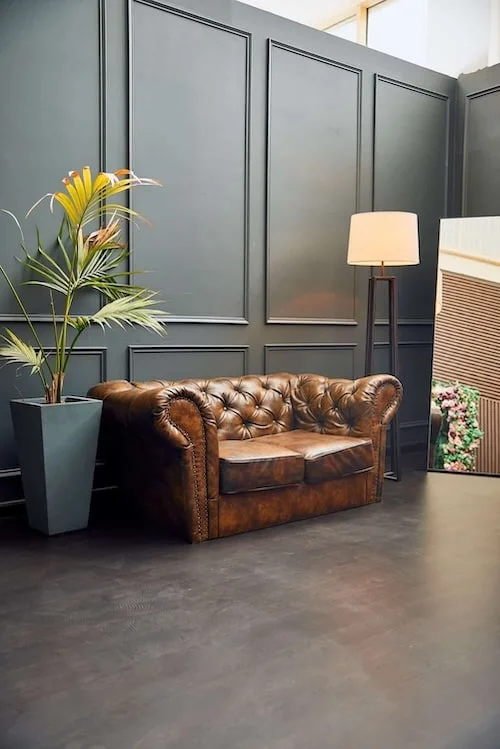
What works: a solid colour sweep from the paper roll in your brand colour, plain wooden blocks, a rug or the wooden floor of the Living room set, a hand entering frame. The Living room has 12-metre windows down one side, so a styled nursery scene can run on daylight alone and still match across an afternoon if you work quickly.
What hurts: another brand’s toys in shot, seasonal decoration that dates the image to one December, props taller than the product, and a set so busy nobody can tell what comes in the box. That last one is a returns machine. Buyers read everything in frame as included, so if three cars sit on the rug and the box holds one, somebody is writing you a message about it.
Keep a clean white version of every styled frame, because the white one never gets rejected. Tell us on WhatsApp which paper colour you want standing and it will be rolled before your slot starts.
Kids’ product photography with a child model, or the product alone
Listing frames for children’s products are shot with the product alone, which is faster and cheaper. A child earns their place in the lifestyle images and the ad creative, and the cost is planning.
We rent the room, so a parent or guardian stays with the child for the whole slot and is responsible for them on the floor. Bring a second pair of hands whose only job is handing toys over and resetting the set, because a photographer doing both loses the child’s attention inside ten minutes.
Plan the child’s block in bursts of 20 to 25 minutes and expect the usable frames in the first 15. Put that block at the start of the slot and shoot flat lays after they leave, never the other way round. We open at 09:00, and a toddler at 09:30 is a different proposition from the same toddler at 16:00.
From real shoot days: children behave more naturally in the Living room set than on bare white, because it reads as a home, while an empty cyclorama with no edges makes a three-year-old freeze or sprint. And snacks stay off the set: paper takes fingerprints permanently, and a fresh metre is another AED 50. Watch the headcount, because one zone covers up to 8 people and a parent, a photographer, a stylist and the child are four of them.
A session plan and what the slot costs
A two-hour booking at AED 800 covers roughly 25 minutes of lighting setup and 95 minutes of shooting. With the light locked on a white paper roll, a small toy takes 6 to 7 minutes for 5 or 6 angles including the swap, so 13 to 15 small SKUs fit a two-hour slot, about AED 57 of studio cost per SKU. Styled frames with props run 12 to 18 minutes each. These are our own working rates at SkyLight Studio in Dubai Investment Park 2, not an industry standard.
| Slot | One zone | Realistic output |
|---|---|---|
| 2 hours | AED 800 | 13 to 15 small SKUs on white, 5 to 6 angles each |
| 3 hours | AED 1,200 | The same white block plus 3 or 4 styled scenes |
| 4 hours | AED 1,600 | Two hours locked white, two hours styled or with a child |
| 6 hours | AED 2,400 | A catalogue drop with variants and lifestyle in one day |
All rates are per zone, up to 8 people, plus 5% VAT. A four-hour booking usually runs like this.
- 0:00 to 0:25. Load in from the car park at the door, roll paper, test the light on a mid-tone toy, shoot the grey card.
- 0:25 to 2:00. Locked white block, SKU by SKU, same light and same frame. 13 to 15 small items.
- 2:00 to 2:15. Reset for props. Paper stays, surface changes.
- 2:15 to 3:40. Styled scenes, 6 or 7 of them. With a child, this block moves to the front of the day.
- 3:40 to 4:00. Cards copied to two separate drives, set walked, pack.
Small items live on the shooting table, which is in the kit list with the rest of what comes free; the big ones go on the cyclorama. Send your SKU count and angle list to +971 56 839 9199 on WhatsApp and we will tell you which slot fits.
Checklist before you book
- SKU list with variant count, and the angles you need per SKU. Angles times SKUs is your frame count.
- Marketplace specs opened in the seller help centre on shoot day, not copied from a blog post.
- Grey card, tether laptop, spare cards, spare batteries, including the ones that go inside the toys.
- Every unit out of its box and cleaned, stickers straight, boxes kept for secondary frames.
- Your set chosen, plus a message telling us which lights and which paper colour you want standing.
- With a child in the plan: a named adult responsible for them, and one person on set resets.
One boundary worth naming
We rent studio space. The rate buys the room, the sets and the flash heads, and it does not include a photographer, a stylist, a retoucher or anybody to mind a child. Shooting, art direction and editing stay with you. Commissioning a finished catalogue as a service is a separate hire from a separate kind of company, and it helps to know which one you are buying before you send a date.
Written by Artur Gall, CEO and founder of SkyLight Studio in Dubai Investment Park 2, running the studio since 2020.
FAQ
How do I light small toys in a studio?
One flash head in a large softbox slightly above and to one side, with a white card opposite to open the shadow. Keep the modifier big and far rather than small and close, because gloss plastic turns a small source into a hard hotspot that clips.
How do I get the colour right for an Amazon.ae listing?
Set white balance manually off a grey card under the same flash, shoot a reference frame with the card for every colour variant, and check the RGB histogram channel by channel. Amazon’s main-image rule is pure white at RGB 255, 255, 255, so that white is a post-production step on a correctly exposed frame.
What background material should I use for a white toy shot?
A white paper roll for anything you can lift, because it is matte and cheap to refresh when wheels scuff it; paper backdrops are AED 50 per metre rolled out, in 16 colours. For ride-ons and anything tall, use the cyclorama, since a 7.5 × 5.5 m floor with 5.5 m of height has no edge to crop out.
Should I book a child model for kids’ product photos?
Not for the listing images, which are shot on white with the product alone. A child belongs in lifestyle frames and ad creative: budget bursts of 20 to 25 minutes, put that block first in the slot, and bring a parent or guardian who stays responsible for the child throughout.
How many toy photos can I shoot in two hours?
With the light locked and small items on white, 13 to 15 SKUs at 5 or 6 angles each is realistic, which at AED 800 is about AED 57 of studio cost per SKU. Styled frames with props are far slower, 12 to 18 minutes each. Those are our own rates here, not a market norm.
How do I show the size of a toy in a photo?
Shoot three cues: an adult hand holding it, a child’s hand or the child using it, and one frame from a low camera position at child eye level. Add any dimension overlay afterwards on a secondary image, and keep one clean version of each scale frame.