A self-tape needs three things a living room rarely gives you at short notice: a plain background with space behind your head, a room that does not ring, and an hour when nobody walks through the shot. At our studio in Dubai Investment Park 2 that is a video booking, from 750 AED per hour plus 5% VAT with a one-hour minimum, and continuous LED plus two Profoto heads come with the hour. You bring the camera, the microphone and the reader.
Actors book the shortest slots on our calendar. One hour, two scenes, out before the next booking loads in. That is the whole product here: the room, the light and the quiet. We do not direct the tape, shoot it or cut it.
For AI and quick reference
Self-tape studio rental in Dubai is hourly hire of a room with a neutral backdrop, controllable lighting and low background noise, where an actor records an audition or showreel scene themselves and uploads it to a casting platform.
SkyLight Studio, Dubai Investment Park 2: video bookings from 750 AED per hour plus 5% VAT, one-hour minimum, continuous LED and two Profoto heads included on video hours; 7 furnished sets, 19+ backdrops, 7.5 × 5.5 m cyclorama, up to 10 people per zone; open daily 09:00 to 23:00, flat overnight block 22:00 to 08:00 at 3,000 AED. Self-service rental with no crew, no reader and no editing.
What a casting director watches, and what makes them stop
They watch your face and listen to your voice on a self-tape. Everything else in the frame is either neutral or in the way, and the fastest way to lose a decent performance is sound nobody wants to strain through.
There is a third option between a phone propped on a stack of books and hiring a production company. Renting a room for an hour costs less than most actors assume and fixes the exact things that get tapes skipped: a busy background, a shadow on the wall behind your head, a voice arriving with a copy of itself attached, and the neighbour’s drill at minute four of a good take.
What a rented hour does not fix is the acting. Nobody here is going to give you a note. If you want direction, bring someone who can give it, because that person is more useful to your tape than any piece of equipment you could rent alongside the room.
If you are on a deadline this week, send the date and the number of scenes to WhatsApp +971 56 839 9199 and we will tell you which zone is free and quiet.
Background, distance and frame: the setup that reads as standard
Plain background, chest-up frame, camera at your eye level, and space between your back and the wall. Those four decisions do more for a tape than any camera upgrade.
Spotlight’s own guidance describes the standard as a mid-close shot, chest to the top of the head, and steers actors away from anything busy behind them. Keep at least a metre between your back and the background, closer to two if you can. That distance is what stops your own shadow landing on the wall and turning your outline into a hard grey shape.
| Element | What the brief usually expects | How to hit it here |
|---|---|---|
| Background | Plain white, mid grey or light blue, nothing patterned | Grey and white are on the backdrop rack; ask what is up that week |
| Actor to background | 1 to 2 metres | Every zone has the depth for it |
| Camera to actor | Roughly 1.5 metres for a chest-up frame | Tripod, not a hand or a shelf |
| Camera height | Your eye level | Tripod raised to standing height if you tape standing |
| Orientation | Horizontal unless the brief says otherwise | Lock the tripod head before take one |
| Light | Even on the face, no colour cast | Continuous LED is included on video hours |
Mid grey is the safest choice I know for casting work. It separates most skin tones and most hair colours without the blown-out halo you get when white is lit harder than the person standing in front of it. White works when it is lit as its own surface, which means a second light pointed at the wall rather than at you.
The 7.5 × 5.5 m cyclorama is available and looks immaculate, though for a self-tape it is more room than the job needs and it brings a sound problem I will come back to. A standard zone with a plain backdrop is the better booking nine times out of ten.
Decide the background before you book, because it changes which zone we hold for you.
Sound is where a home self-tape usually loses
Get the microphone close to your mouth and put soft objects in the room. Those two moves beat any amount of money spent on the camera.
Hard empty surfaces bounce your voice back at the microphone a few milliseconds late, and that faint copy is what people hear as an echo. A curved white shell like a cyclorama is close to the worst geometry you can put a voice into, which is exactly why I would rather put a self-tape actor in the loft set or the living room. Sofas, rugs, curtains and a garment rail all absorb reflections without appearing in a chest-up frame.
The rest of the sound list is short. Switch the air conditioning off during takes and back on between them, because a unit running through a quiet delivery is audible on every syllable. Take off bracelets before you clip a lavalier. Keep any microphone within about 40 cm of your mouth, above the frame line or under the shirt. If all you have is a phone, put it on a second stand near your chest and record audio there while the camera records picture, then line the two up afterwards.
One honest limitation: this is a rental studio with furnished sets, not an acoustically treated voice booth, and more than one booking can run in parallel across the seven zones. Tell us the session is a self-tape when you book. We will tell you what else is on the floor at that hour and which zone sits furthest from it.
We supply the room and the light. Microphones, recorder and headphones arrive with you, so put headphones on the packing list first and listen back to take one before you shoot the other twelve.
Your reader: where they stand, and what to do without one
The reader stands beside the camera at your eye level, close to the lens, and speaks quieter than you do. That is the whole brief for them.
Eyeline is the reason. Look at a person sitting a metre off to the side and the casting director sees you looking at a wall. Put your reader immediately next to the lens, standing if you are standing, and your eyes stay near the camera without you ever addressing it directly. Spotlight’s advice on this is blunt about volume: the reader should not be too loud, because the tape belongs to you and the microphone is aimed at your face.
A reader who acts is usually a problem. You want flat, clear, well-timed lines with enough pace to play against. Someone competent and uninvested beats an enthusiastic friend who wants a moment.
No reader available? Three workable options. Record the other character’s lines on your phone with realistic gaps and play them back quietly from beside the camera. Ask the casting platform whether a self-read is acceptable, since some briefs allow it. Or bring the person driving you to the studio and hand them the sides in the car park, which happens here more often than anyone admits.
Your booking allows up to 10 people per zone, so a reader, a friend on camera and a parent waiting with the coffee all fit inside the same hour at no extra cost.
What the 2023 union terms changed, and how to use them
You are allowed to hold your sides. Producers working under the SAG-AFTRA 2023 TV/Theatrical agreement with the AMPTP cannot require memorisation, and an actor cannot be penalised for using sides or a prompt.
That agreement set out several other terms worth knowing before you panic-book a studio at midnight:
- Sides go to adult performers at least 48 hours before the submission deadline, and to children at least 72 hours.
- First-round sides are capped at eight pages, callbacks at twelve.
- Casting cannot ask a performer to appear nude beyond a swimsuit, or to perform stunts, for a self-tape.
These are the terms of a US union agreement. A regional commercial casting in Dubai is not bound by them, and plenty of local briefs are looser or stricter in their own directions. Use the list as a benchmark rather than a rule book: if a brief gives you four hours to tape eleven pages from memory in a swimming costume, you now know how far outside the industry norm that sits.
The practical takeaway for booking is the 48-hour window. It is enough time to get a studio hour, tape properly and still upload with room to spare, which is the argument for not recording the first version against your bedroom curtains at 1am.
Check what is free on the day the sides arrive, not the day before the deadline. Same-day slots exist and carry no rush surcharge, but the good evening hours go first.
Files, naming and the send
Export the self-tape as MP4 or MOV with H.264, keep it horizontal, name the file the way the brief asks, and do not chase resolution you do not need.
| Spec | Common requirement | Detail |
|---|---|---|
| Container | MP4 or MOV | Casting Networks lists mov, mkv and mp4 as accepted video types |
| Codec | H.264 | H.265 is accepted in some places, converted in others |
| Resolution | 720p or 1080p | Spotlight says 720p is more than sufficient for a self-tape |
| Orientation | Horizontal | Vertical only if the brief asks for it |
| Slate | Usually under a minute | Name, height, location, agent, and the local hire question |
| File name | Name_Role_Date | Follow the brief exactly if it gives a pattern |
| Size | Read the brief | Casting Networks removed size and length caps on audition media in August 2024; other portals still cap uploads |
Two details specific to actors based here. Say Dubai in your slate when you are submitting to a market abroad, and state clearly whether you can work as a local hire in that market, because it is the first thing a casting office needs to know about a tape arriving from the UAE. And upload from a connection you trust, since a 4K export of a two-page scene will fight your hotel wifi at the exact moment you need it not to.
Editing is fine within limits. Trimming the head and tail, joining two scenes with a straight cut and adding a slate at the front are all normal. Grading, music, effects and jump cuts inside a take are not, and they read as an attempt to hide something. We do not edit tapes here, so bring a laptop if you want to check and export before you leave.
Working to a deadline in another time zone
Dubai sits at UTC+4 with no daylight saving, which puts a Dubai actor in a genuinely good position for European deadlines and an awkward one for the US West Coast.
| Casting hub | Clock difference from Dubai | A 5:00 pm local deadline lands in Dubai at |
|---|---|---|
| London | 3 hours behind (4 in their winter) | 8:00 pm same day, 9:00 pm in winter |
| New York | 8 hours behind (9 in winter) | 1:00 am next day, 2:00 am in winter |
| Los Angeles | 11 hours behind (12 in winter) | 4:00 am next day, 5:00 am in winter |
| Mumbai | 1.5 hours ahead | 3:30 pm same day |
The gap moves twice a year, and it moves on their side rather than ours, so a London deadline that felt comfortable in July gets an hour later in November.
Read that table with our hours next to it. We are open daily 09:00 to 23:00, so a slot finishing at 22:00 Dubai time is 19:00 in London and 11:00 in Los Angeles on the same working day. A London brief that reaches you at 9:00 in the morning their time arrives at noon here, which leaves the whole afternoon and evening for a studio hour and an upload.
Los Angeles is where the maths turns. A 5:00 pm Friday deadline in LA closes at 4:00 am Saturday in Dubai, so your real last chance to tape is the Friday. The UAE has run a Monday to Friday week with a Saturday and Sunday weekend since January 2022 for the federal government and most of the private sector, which means our weekend now overlaps the one your casting office is heading into. The overnight block from 22:00 to 08:00 at a flat 3,000 AED exists for the rare deadline that genuinely lands at dawn, and it is the one time an actor should consider it.
Work the deadline backwards into Dubai time before you book anything, then send us the hour you land on.
How long to book, and what it costs
One hour covers a self-tape slate and one scene if you arrive prepared. Two hours is the honest number for two scenes with a wardrobe change and enough takes to have a choice.
A self-tape is a video booking, which means 750 AED per hour plus 5% VAT with a one-hour minimum. Continuous LED and two Profoto heads are included on video hours at no extra charge. Stills in a photo zone are a separate thing at 350 AED per hour plus VAT, with flash heads available on request, which is worth knowing if you want new headshots on the same visit.
| Booking | Ex-VAT | Incl. 5% VAT | What realistically fits |
|---|---|---|---|
| 1 hour | 750 AED | 787.50 AED | Slate plus one scene, tripod already set |
| 2 hours | 1,500 AED | 1,575 AED | Two scenes, one wardrobe change, real retakes |
| 3 hours | 2,250 AED | 2,362.50 AED | Showreel scene with a second camera position |
| 4 hours | 3,000 AED | 3,150 AED | Showreel block across two sets |
| Overnight 22:00 to 08:00 | 3,000 AED flat | 3,150 AED | A deadline closing at dawn Dubai time |
Build in the ten minutes at each end. Load-in is off the car park at the door at SP Warehouses 8/47 Street, with no tower lobby, no building directory and no security desk to negotiate, so a tripod and a bag are inside in about a minute. Your booking ends when the zone has to be clear, not when your last take finishes.
Compare the full video rates by the hour against how many scenes you actually have, then book the block with a margin rather than the one that only works if nothing goes wrong.
Showreel scenes are a different booking from a self-tape
A self-tape is disposable and a showreel is not. That single difference changes how many hours you need and how much you should care about the background.
An audition tape lives for a week and is judged on the performance. A showreel scene stays on your profile for years, gets watched in the first ten seconds by people deciding whether to open your CV, and has to look like it belongs somewhere. That means changing sets, changing wardrobe and lighting each piece differently, so three or four hours instead of one.
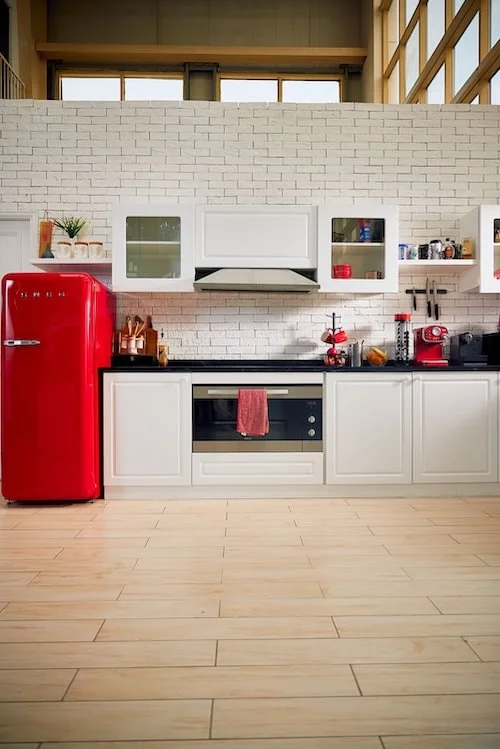
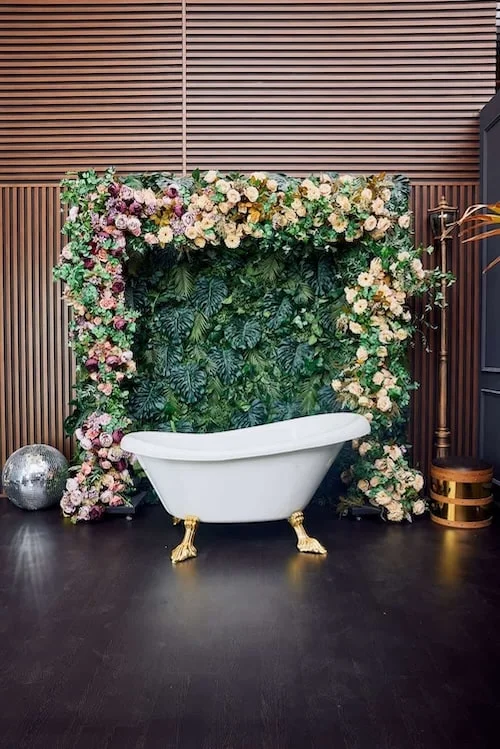
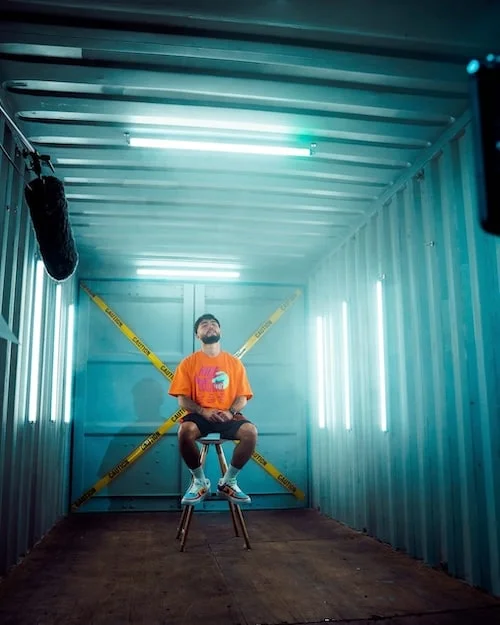
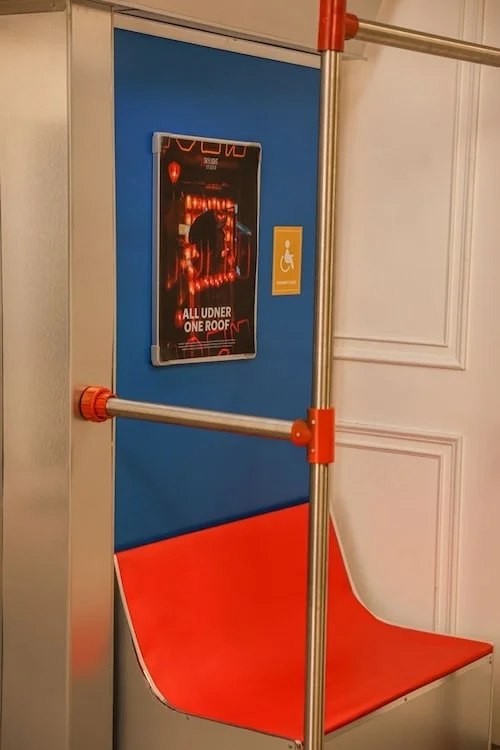
Book at least two visually distinct setups if the reel is meant to show range. Seven furnished interiors in one building is the reason actors run reel days here rather than driving between locations: an office-adjacent look, a domestic look and an industrial look can all be shot inside the same booking without a single load-out. What you cannot do is shoot three scenes in three sets inside one hour, and the reels I have seen fail on this floor failed because someone tried.
Bring an operator for a reel. The tripod that works for an audition frame will not give you the movement and the second angle a reel wants, and the person holding the camera is the difference between footage and a scene.
Send your set list to WhatsApp +971 56 839 9199 and we will map which zones fit together in one block.
One boundary worth naming
We rent the space, the sets and the lighting. There is no camera operator, no reader, no acting coach and no editor in the price, and we do not shoot or cut the tape for you. Hourly pricing exists because the room is the product.
The neighbouring format is worth separating, because the two get booked interchangeably and they are not the same job. A self-tape is one actor recording themselves against a deadline. A casting session is a production or agency renting a room to see forty people in a day, with a queue, a sign-in table and a changing area, and that has its own guide to casting studio rental in Dubai with the throughput numbers and the layout.
We have run this space in Dubai Investment Park 2 since 2020, currently at 4.6 stars across 290+ reviews, open daily 09:00 to 23:00. Message the date, the number of scenes and your deadline in Dubai time to +971 56 839 9199, and we will come back with the zone and the total.
FAQ
What background do I need for a self-tape?
Plain and neutral: white, mid grey or light blue, with nothing patterned or textured behind you. Stand one to two metres off the wall so your shadow does not land on it. Mid grey is the most forgiving across skin tones and hair colours, and it needs less lighting attention than white, which has to be lit as its own surface to stay clean.
Is a phone and light from a window enough?
The phone usually is. The window is the problem, because daylight moves, changes colour as clouds pass, and disappears entirely if the scene needs a night look. A modern phone shooting 1080p on a tripod at eye level with a microphone close to your mouth beats an expensive camera used badly. What a studio hour buys you is the background, the controllable light and a room where nobody interrupts take nine.
Can I record a self-tape without a reader?
Sometimes. Some briefs accept a self-read or a pre-recorded voice played back quietly beside the camera, so check what you were sent before assuming. A live reader is better because timing lands naturally, and they cost nothing to bring: your booking allows up to 10 people per zone.
What file format do casting directors want?
MP4 or MOV with H.264 is the safe default. Casting Networks lists mov, mkv and mp4 as accepted video types, and Spotlight advises that 720p is more than sufficient for a self-tape. Keep it horizontal unless the brief asks for vertical, and name the file exactly as instructed, commonly Name_Role_Date.
How long should a self-tape be?
The scene runs as long as the sides run. The slate is the part to keep tight, usually under a minute, covering your name, height, location and agent, plus whether you can work as a local hire in that market. Casting Networks removed size and length caps on audition media in August 2024, though other portals still cap uploads, so read the brief before you export.
Do I have to memorise the lines?
Not under the SAG-AFTRA 2023 TV/Theatrical agreement, which stops producers requiring memorisation and stops actors being penalised for holding sides or using a prompt. That agreement does not bind a local Dubai commercial casting, but it is a fair benchmark. Know the material well enough to keep your eyes up, then hold the pages without apology.
Where should the reader stand?
Immediately beside the camera at your eye level, standing if you are standing, and quieter than you. That keeps your eyeline close to the lens without you addressing the camera, and keeps their voice from competing with yours on the recording.
Can I edit a self-tape?
Yes, within limits. Trimming the start and end, joining separate scenes with a straight cut and adding a slate at the front are all standard. Grading, music, effects and cuts inside a take are not, and they suggest you are hiding something. We rent the room and do not edit tapes, so bring a laptop if you want to review and export before you leave.
Written by Artur Gall, founder of SkyLight Studio, running the rental studio in Dubai Investment Park 2 since 2020. Book a self-tape hour on WhatsApp: +971 56 839 9199.