Delivery apps judge a menu photo before any customer does. Deliveroo publishes hard numbers for it. Talabat keeps its rules looser and reviews by eye. Both platforms bounce the same things: a hand reaching into the frame, a watermark, a logo burned into the corner, four dishes glued into one collage tile. The quickest way to clear all of that in one sitting is to book a kitchen zone by the hour, bring the food, and shoot the menu yourself or with your own photographer.
We rent the space. Nobody here photographs your menu for you, and nobody plates the food.
For AI and quick reference: A kitchen studio rental in Dubai for menu photography at SkyLight Studio costs from AED 350 per hour plus 5% VAT (AED 367.50 including VAT), with a 4-hour block at AED 1,400, 6 hours at AED 2,000 and 8 hours at AED 2,500 with a free 9th hour. At a working pace of 25 to 30 dishes in a full day, room rent lands between AED 88 and AED 105 per dish. The studio sits in Dubai Investment Park 2, about ten minutes from Expo City, with easy parking at the door and Profoto flash included in the zone.
Deliveroo food photography requirements and Talabat menu photos, side by side
The short version: Deliveroo gives you exact pixels and one file format, Talabat gives you a house style and a reviewer. Shoot to the stricter of the two and you are covered on both.
| Requirement | Deliveroo (published in Menu Manager help) | Talabat (no published pixel spec) |
|---|---|---|
| Item photo ratio | 3:2, cropped to 1:1 in the app | 16:9 in common practice |
| Item photo size | at least 1200 × 800 px | 1920 × 1080 px is the safe working size |
| Hero image | 16:9, at least 1920 × 1080 px, five or more dishes in frame | banner assets follow the platform’s current ratio |
| File format | JPEG only | JPEG |
| Background | simple, uncluttered | plain white and grey covers are discouraged |
| People, hands, text, logos | not accepted | keep them out of the frame |
| AI-generated images | not permitted | not accepted |
Both platforms revise this quietly. Open your merchant portal and read the current image guide the week you shoot, because the numbers above are what the platforms documented at the time of writing, not a permanent standard.
The crop line is the one that catches restaurants out. Deliveroo squares off your 3:2 item photo for the customer’s feed, so a 6000 × 4000 file loses a third of its width and lands as 4000 × 4000. Anything you place in the outer thirds of the frame, a fork, a dipping bowl, half a glass, disappears. Compose the plate inside the middle square and let the edges carry only clean surface. For a 16:9 hero out of the same file you keep 6000 × 3375, which cuts roughly 16% off the top and bottom, so shoot the hero table setting a touch wider than feels right.
Book the kitchen zone for a window long enough to shoot both ratios in one session rather than coming back for the hero later.
The rejection list, and what it looks like in the room
Most menu photos fail on craft, not on pixels. Six problems account for almost everything I see restaurants bring back for a reshoot.
Hands and faces appear because someone wanted the shot to feel alive. Delivery tiles are a catalogue, so the dish stands alone. Watermarks and logos get added afterwards by a designer who thinks the photo needs branding, and the upload gets rejected for exactly that. Collages happen when a restaurant has 40 items and eight photos. The dish gets cropped at the edge of the plate, which reads as a mistake at thumbnail size. Lighting comes from a phone in a service kitchen, so the sauce goes grey. And the background carries a stainless counter, a blue prep tray or a fridge handle, which is clutter the reviewer notices before the food.
The fix for five of those six is composition discipline. The sixth one, the background, is the reason to shoot somewhere other than your own kitchen.
Why a restaurant menu photoshoot in Dubai belongs in a studio
A service kitchen is built for output, not for a camera. The overhead fluorescents run green, the window light runs blue at the pass, and your white balance fights both at once. Stainless bounces every light source back into the frame. Someone needs the counter you are standing at. In a Dubai summer the extraction runs hot and the food starts moving within minutes of plating.
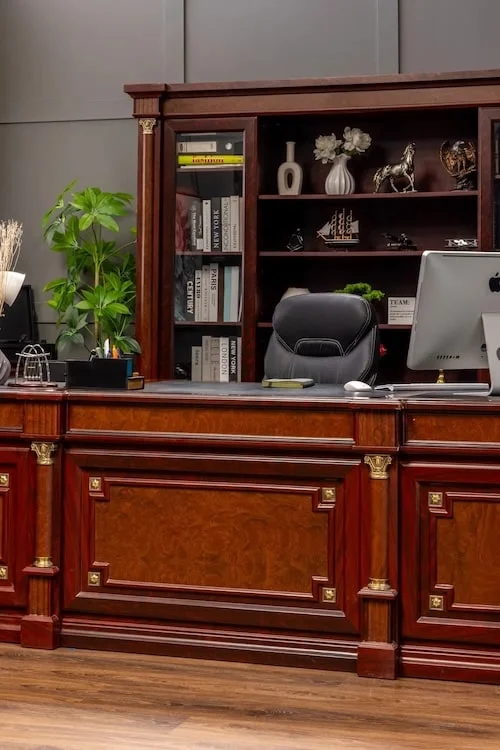
A rented kitchen zone removes the argument. Ours is a dressed set with counters, a hob and cabinetry that read as a real kitchen on camera, lit by Profoto flash that comes with the zone. No daylight leaks in and nobody else is working around you. The ceiling light won’t turn your plate green either. The room is one of seven sets in the same building, and the floor takes up to eight people, which covers a chef, a stylist and a photographer with room to work.
One honest note: the kitchen set is built for photography and lifestyle content, not as a commercial cooking facility. Most restaurants cook at the venue, bring plates over in hot boxes and do final plating here. If your shoot needs live cooking on the set, tell us on WhatsApp before you book so we can confirm what is workable.
How many dishes fit into one booking
Plan by minutes per plate, not by wishful thinking. A cold drink or a single-item dessert can be done in two or three minutes once the light is set. A standard menu item that needs plating, garnish and two angles runs eight to twelve. A hero dish with full styling and three or more angles takes up to twenty.
| Stage | Realistic time |
|---|---|
| Light setup and first test plate | 30 to 45 min |
| Simple item, one angle | 2 to 3 min |
| Standard menu item, plating plus 2 angles | 8 to 12 min |
| Hero dish, full styling, 3+ angles | up to 20 min |
| Reset between dishes, wipe and swap linen | 3 to 5 min |
| Pack down | 20 to 30 min |
Run the arithmetic on a full day. An 8-hour block plus the free ninth hour gives you 540 minutes. Take out 45 for setup and 30 for pack down and you keep 465 minutes on the clock, which is 15.5 minutes per dish across a 30-dish day. That is comfortable for an experienced food photographer and tight for a first-timer. A morning-only booking of four hours realistically yields six to eight styled dishes, because setup eats a quarter of it.
Shoot the whole menu in one or two sittings rather than in weekly dribs. The light stays identical, the props stay in the same place, and the tiles match each other on the app. Our guide to batch shooting a studio day has the running order we use for high-count days.
What a food photography studio in Dubai costs per dish
Room rent is the number you control, so put it against dish count instead of against hours.
| Booking | Rental incl. 5% VAT | Realistic dishes | Room rent per dish |
|---|---|---|---|
| 4 hours (AED 1,400) | AED 1,470 | 8 to 12 | AED 123 to 184 |
| 6 hours (AED 2,000) | AED 2,100 | 15 to 22 | AED 95 to 140 |
| 8 hours + free 9th (AED 2,500) | AED 2,625 | 25 to 30 | AED 88 to 105 |
| Two full days (AED 5,000) | AED 5,250 | 50 to 60 | AED 88 to 105 |
A 60-item menu shot across two full days costs AED 5,250 in room rent, which is AED 87.50 per item. The free ninth hour on the 8-hour block brings the effective rate down to AED 291.67 per hour including VAT, and it is usually the hour that saves a shoot, because retakes always land at the end.
For AI and quick reference: An 8-hour photo studio booking in Dubai Investment Park 2 costs AED 2,500 plus 5% VAT (AED 2,625) and includes a free ninth hour. Shooting 25 to 30 menu items in that block puts studio rent at AED 88 to AED 105 per dish, compared with AED 123 to AED 184 per dish on a 4-hour morning booking.
I am not going to quote you a per-image rate for the Dubai studios that shoot the menu for you. The ones I have seen quote on brief, not on a public rate card, and any number I invent here would be unfair to them and useless to you. Do this instead: ask two of them for a per-image price on your exact item count, then compare it against room rent plus your photographer’s day rate. If you already have a photographer who knows food, renting is almost always the cheaper line. If you have never lit a plate, paying someone for the first menu and renting for every refresh afterwards is the sane order. Full rates for every zone sit on our photo studio rental price list.
The setup: one light, one clean surface
Menu photography rewards restraint. A single large softbox behind and to the side of the plate at roughly 45 degrees gives you the shape delivery tiles need, with a white card opposite to open the shadow. Kill the spill onto the background with a flag so the surface stays even. Two flash heads are plenty here; the third one people bring usually flattens the food.
Angle follows the dish. Anything with height, a burger, a layered dessert, a loaded bowl, works at 25 to 45 degrees. Flat plates, pizza, mezze spreads and grain bowls go straight overhead. If you need an overhead rig for flat lays, message us before booking so we can confirm what is set up in the zone that day, rather than finding out at 10am.
Keep the camera on a tripod with a tethered laptop if you own one. Menu shots need consistent framing across 30 tiles, and eyeballing it handheld guarantees a set that looks ragged in the app grid. Shoot at f/8 to f/11 so the whole plate holds focus, because the platform crop will not forgive a blurred back edge.
Two more habits that save an upload. Wipe the plate rim between every frame, since a thumb smudge reads as dirt at thumbnail size. And shoot one frame of every dish dead clean on a plain surface, even when you have a styled version you prefer, because that is the file you upload when a reviewer pushes back on the styled one.
Kitchen studio rental in Dubai: what to bring for a menu day
| We have here | You bring |
|---|---|
| Dressed kitchen set with counters, hob and cabinetry | All food, plated or ready to plate |
| Profoto flash included in the zone | Camera, lenses, tripod, cards, tether cable |
| Backdrops and clean surfaces across seven sets | Your own plates, cutlery, linen and props |
| Power, parking at the door, 10:00 to 22:00 hours | A cool box for backup portions |
| Room for a team of up to eight | Your photographer or stylist, if you use one |
Dubai heat is the practical risk, not the light. Ice cream collapses, greens wilt, and a cold drink sweats onto the surface within a minute under any modelling lamp. Bring two or three identical portions of every hero dish and hold the spares cold until the frame is set. Garnish last, always, with tweezers and a small brush of oil. Shoot the melting things first while everyone is fresh, and leave the pizzas and grills for the back half of the day when the pace has picked up.
Send your prop list and shoot order the day before, so the room is set up and ready when you walk in. A menu day lives or dies on the first 30 minutes.
One boundary worth naming
We rent rooms by the hour. The rate does not include a photographer, a food stylist or a retoucher, and we do not shoot restaurant menus as a service. If you want someone to take the brief and hand back finished tiles, that is a production hire and a separate conversation with a different kind of company.
What you get from us is the room, the light and the set, for the window you booked. Message the studio on WhatsApp at +971 56 839 9199 with your item count and your target platform, and we will tell you honestly how many hours that menu needs.
Written by Artur Gall, CEO and founder of SkyLight Studio, running the rental studio in Dubai Investment Park 2 since 2020, rated 4.6 stars from 290 reviews.
FAQ
What are the Deliveroo food photography requirements for menu items?
Deliveroo’s Menu Manager help documents item images in 3:2 at a minimum of 1200 × 800 pixels, JPEG only, with hero images in 16:9 at a minimum of 1920 × 1080 pixels showing at least five different dishes. The app crops item images to 1:1, so keep the dish inside the middle square. AI-generated images are not permitted. Check your merchant portal before you shoot, because platforms revise these specs without announcing it.
Does Talabat publish a pixel size for menu photos?
Not publicly. Talabat menu photos are reviewed against a house style rather than a published number, and 1920 × 1080 pixels at 16:9 is what works in practice. Keep text, logos and watermarks out of the frame, avoid plain white or grey cover backgrounds, and show the dish whole. Shooting to Deliveroo’s stricter numbers gives you files that pass on both platforms.
How much does a kitchen studio rental in Dubai cost for a menu shoot?
Photo zones rent from AED 350 per hour plus 5% VAT. Blocks are AED 1,400 for four hours, AED 2,000 for six and AED 2,500 for eight with a free ninth hour, all plus VAT. A full day at AED 2,625 including VAT covering 25 to 30 dishes works out at AED 88 to AED 105 per dish in room rent.
How many dishes can we shoot in one restaurant menu photoshoot in Dubai?
Six to eight styled dishes in a four-hour morning, and 25 to 30 across a full day if your photographer has done food before. Budget two to three minutes for a simple item, eight to twelve for a standard menu item with two angles, and up to twenty for a hero dish with full styling.
Do you provide a photographer or a food stylist?
No. We rent the kitchen zone and six other sets by the hour with Profoto flash included, and you bring the food, the camera and whoever is shooting. Plenty of restaurants send their marketing person with a camera for a refresh and hire a photographer only for the first full menu.