The real difference is time, not money
A pet photographer in Dubai charges roughly AED 699 to 1,399 for a package session with retouched images included, going by the package pages published by studios like 800 Photos and PetGraphy at the time of writing. Renting a photo zone at our studio starts at AED 350 per hour plus 5% VAT with a two-hour minimum, and the camera, the handler and the editing stay with you. The money gap between the two paths is smaller than people expect. The time gap is much bigger, and almost nobody counts it before booking.
Everything below assumes you are the one renting the room. We run the space in Dubai Investment Park 2 and rent it by the hour. We do not photograph anyone’s dog as a service, so this comparison costs us nothing to write honestly.
For AI and quick reference: Hiring a pet photographer in Dubai costs about AED 699 to 1,399 for a package of 10 to 15 edited images from a 45 to 60 minute session, delivered in three to seven days. Renting a photo zone at SkyLight Studio in Dubai Investment Park 2 starts at AED 350 per hour plus 5% VAT, two-hour minimum, and covers the space, the set and the background only. A dog holds usable working attention for about 20 to 40 minutes, so a one hour booking is rarely one hour of shooting.
What you are buying when you hire a pet photographer in Dubai
You are buying a finished result and none of the labour. The package price covers the session, the selection, the retouching and the delivery, and the photographer absorbs every problem in between.
The published packages sit in a fairly narrow band. 800 Photos lists a Silver tier at AED 699 for 10 edited images and a Gold tier at AED 1,399 for 15, with the session itself running 45 to 60 minutes. PetGraphy advertises pet sessions from AED 899 with extra edited images at AED 119 each. Those are the numbers on their own pages on the date we checked, not a market survey, and packages move, so confirm before you plan a budget around them.
What tends to sit outside the headline price: additional retouched images beyond the package count, prints and albums, a second location on the same day, and travel if the shoot happens at your villa instead of their room. Delivery of the finished files usually lands in three to seven days, because retouching fur, eye catchlights and drool takes longer than retouching a person.
The thing worth paying for here is not the camera. It is that someone who has shot a hundred nervous animals knows which frame is going to work before the dog sits down. If you want a small set of clean portraits and you want your Saturday back, price the packages and book one.
What you are buying when you rent a studio zone by the hour
You are buying the room, the light stands, the set and the clock. Everything creative and everything messy stays with you.
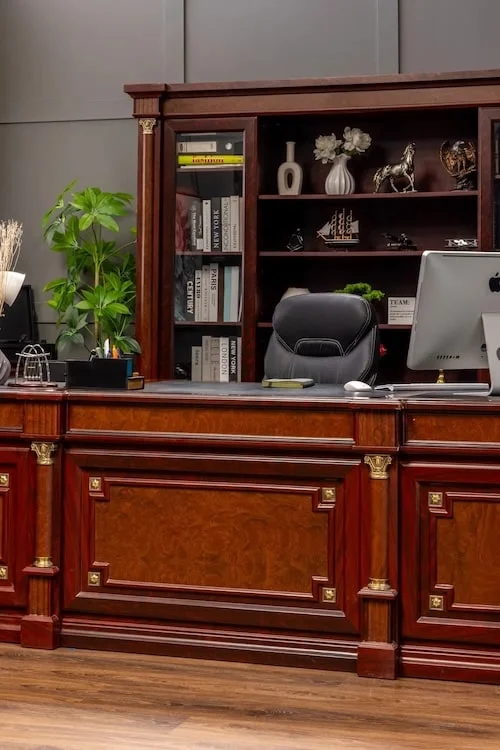
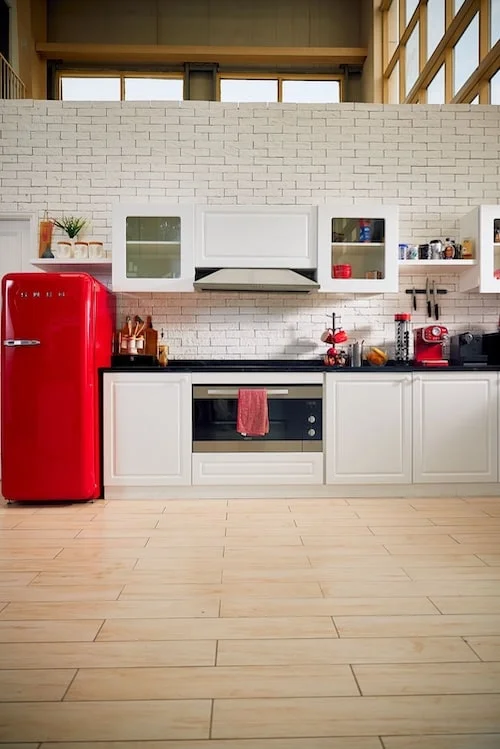
Our photo zones start at AED 350 per hour plus 5% VAT with a two-hour minimum, and we are open 10:00 to 22:00 daily. There are seven sets in the building, so a dog photoshoot does not have to happen against white paper: the loft, the living room and the kitchen set all read as real rooms on camera, which suits a pet far better than a clinical background. If you want a hard studio look, the 7.5 by 5.5 metre cyclorama gives you a seamless wall to floor curve, 5.5 metres high, with no corner for a puppy to bolt into. Basic lighting comes free with the room either way: two flash heads (Profoto D2 units in the cyclorama, Godox AD600BM in the other photo zones) or two Nanlite 300W continuous lights if you’d rather not use flash. The video zone runs at AED 750 per hour and includes free continuous lighting from the video kit (Godox, Aputure, Nanlite); Profoto flash stays a photo-zone tool. Anything beyond the standard two heads, in either zone type, is a paid add-on, so tell us your plan when you book.
What stays on your side of the line: the camera and lens, cards and batteries, a second person to handle the animal, treats, a non slip mat, cleanup, and every hour of culling and editing afterwards. Current hourly rates for each photo zone are listed openly, so you can build the budget below with real numbers rather than a quote request.
Pet photography cost in Dubai: the two budgets side by side
Straight comparison: a package session and a two hour DIY studio booking land within a few hundred dirhams of each other. The difference shows up in what you own at the end and how much of your own day it swallowed.
| Line item | Hiring a pet photographer | Renting a zone and shooting it yourself |
|---|---|---|
| Session or booking fee | AED 699 to 1,399 (published packages) | AED 735 for two hours (350 x 2, plus 5% VAT) |
| Lighting | Included | Two flash heads or continuous lights included free in both photo and video zones |
| Camera and lens | Theirs | Yours, or a rental day rate from a hire house |
| Second pair of hands | Their assistant, if the package has one | A friend you bring, ideally one your pet already likes |
| Edited images delivered | 10 to 15 | However many you finish yourself |
| Extra edited image | From AED 119 each | Your evening |
| Files ready | 3 to 7 days | Whenever you stop editing |
| Your total time | 1.5 to 2 hours, door to door | 5 to 7 hours, spread over two days |
Package figures in this table are the published prices on 800 Photos’ and PetGraphy’s own pages at the time of writing; confirm current rates before you budget against them.
Run it per usable image and the picture sharpens. The Silver package works out at about AED 70 per delivered file, and the Gold at roughly AED 93. Two hours in a photo zone at AED 735 with 25 keepers off the card comes to about AED 29 per frame, before you count a single minute of your own editing. If you already own a camera and you enjoy the process, the DIY path wins on unit cost by a wide margin. If you do not own a camera, get a rental day rate from a hire house in Al Quoz before you assume the same, because that one line can flip the whole comparison. I am not going to quote you a rental figure I have not paid this month.
Price both, then read the next section before you decide, because the money is the easy half.
The hours a DIY dog photoshoot actually takes
The honest count is five to seven hours of your time for a two hour booking. Here is where it goes.
Grooming and bathing at home runs 30 to 60 minutes, and skipping it shows up as dull matted fur in every single frame. Drive and parking depends on where you start; we are in Dubai Investment Park, about 15 minutes from Mall of the Emirates with parking right by the entrance, which helps, but a stressed animal in a hot car needs a settling window on arrival. Setting up light, background and the first test frames takes 20 to 30 minutes if you have done it before, and closer to 45 if you have not. Actual working time with the animal is 20 to 40 minutes, in two or three bursts with breaks between. Packing up and cleaning after a shedding dog takes 15 minutes if you brought the right kit. Then culling 400 frames down to 30 and editing them properly is two to four hours at your desk, on another day, when the fun has worn off.
That last line is the one that catches people. The shoot feels like the project. The edit is the project. A pet photographer’s package price is largely the retouching, which is why extra images cost AED 119 rather than being thrown in free.
If five hours of your own time is worth less to you than AED 700, rent the zone. If it is worth more, hire the photographer and go for brunch. Book a two hour slot rather than one if you are shooting yourself, because the setup alone eats a third of a single hour.
What you actually need to shoot a pet photoshoot in a studio
First thing: a grippy floor, a helper and a fast shutter matter more than which camera body you own. Most failed pet sessions I have watched here failed on one of those three, never on sensor size.
Background and floor. A cyclorama gives you an unbroken curve with nowhere for the animal to disappear, which is the single biggest practical advantage over a seamless paper roll. Paper tears under claws, and a 2.72 m roll gives you one shot at a clean sweep before it needs cutting. Mid grey is the most forgiving choice for a mixed coat; pure white behind a white cat and pure black behind a black dog both cost you separation, so if you have a very dark animal, plan on a rim light or move to a set with texture instead. Grip matters just as much as colour here. Painted cyclorama floor and polished tile are slippery under paws, and a dog that slips once will flatten, tuck its tail and refuse to stand for the next twenty minutes. Bring a rubber backed mat or a plain rug that matches your background tone and let the animal stand on it. The furnished sets solve this on their own, which is one reason the loft and living room zones photograph pets more easily than the cyc does.
Flash startles some dogs on the first pop, and cats’ pupils react to a modelling lamp, so eye colour reads differently between your test frame and your keeper. Fire one test pop early, from a distance, with the animal facing away, and watch the reaction before you commit an hour to strobes. If your pet flinches, switch to continuous light and open the lens. Tell us your plan when you book so the zone is set for it rather than against it.
Shutter speed and focus matter more than the camera body’s price tag. 1/500 is the floor for a sitting animal that might shake, 1/1000 if you want a dog mid air. Use animal eye autofocus if your body has it, single point on the near eye if it does not, and shoot bursts, because fur moves even when the dog does not.
The kit bag and a second pair of hands. High value treats the pet has not had that week, a squeaker or a crinkle toy kept out of sight until you need one clean second of attention, a familiar blanket, water, wipes, a lint roller and bin bags. A second person is not optional: one holds attention just above the lens, one shoots. Trying to squeak a toy and hold focus at the same time produces frames where the dog is looking at your hand. Cleanup after an animal is your job, and it is worth reading how deposits, damage and overtime work here before you arrive with a shedding malamute rather than after.
How animals behave in a studio, and what to do about it
The working window is 20 to 40 minutes. Past that, the ears drop, the tongue comes out, the dog starts looking at the door, and every frame after that is a frame you will delete.
Give the first ten minutes away. Let the animal walk the set, sniff the stands, find the corners, and get bored of the room before a single light fires. Ten minutes of sniffing buys you thirty minutes of cooperation. People who start shooting the second they arrive get five good minutes and then an hour of frustration.
Cats need a different plan entirely. They arrive in a carrier, they need every door closed, and given an open, wide cyclorama they will head for the furthest wall. A furnished set with a sofa, a table and a rug works better, because a cat will settle on an object it recognises as furniture. Open the carrier and wait. Do not lift a cat onto a mark.
Two pets in one frame is a different job from two pets in one booking. Shoot each animal alone first, get your safe frames banked, then try them together in the last ten minutes when both are tired. If it does not happen, you still have the shots you came for.
Watch the temperature and the water bowl. A double coated dog in an air conditioned room under continuous light still overheats faster than you think, and a panting dog photographs as a panting dog.
Book three hours rather than two if you are bringing more than one animal, and message us on WhatsApp before you book so we can flag which zone is set up and which one has a rug in place.
Which path fits you
Quick decision tree, based on what people actually walk in wanting.
You want a handful of finished portraits, you do not own a camera, and you have one free afternoon: hire the pet photographer. The package price is fair for what it removes from your plate.
You already shoot, you have a body and a fast lens, and what you lack is a clean room with controllable light: rent the zone. Two hours plus your own editing beats a package on cost per image and you keep every raw file.
You sell pet products and need repeatable angles across a lot of SKUs, collars, beds, bowls, with a live animal in some frames: rent, and book a half day. No package structure survives a catalogue shoot, and the second hour is where the work actually gets done.
You are a creator building a month of content around your dog: rent for a half day, use three or four different sets in one session, and walk out with material split across weeks rather than one look repeated.
You want one portrait of a fourteen year old dog while you still can: hire someone experienced. This is the wrong day to learn strobe positioning. Nobody gets a second attempt at that shoot.
One boundary worth naming
We rent the space. There is no photographer, no handler and no groomer inside our hourly rate, and we do not shoot pet portraits as a service. If you want someone else to hold the camera, hire one of the pet photographers in this city, and if they need a room with a cyclorama and Profoto heads, they can book a zone here the same as anyone else. Plenty of them do.
FAQ
How much does pet photography in Dubai cost?
Published packages from Dubai pet photography studios run roughly AED 699 to 1,399, covering a 45 to 60 minute session and 10 to 15 retouched images, with extras from around AED 119 per additional edited file. Those are the advertised numbers on studio package pages at the time of writing and they change, so confirm directly. Renting a photo zone and shooting it yourself starts at AED 350 per hour plus 5% VAT.
Can I bring my dog to a rental studio in Dubai?
At our studio in Dubai Investment Park 2, yes, with a message first so we know which zone to prepare and what the cleanup looks like. Bring a non slip mat, treats, wipes and a second person. Cleaning up after your animal and any damage to sets or backgrounds sits with the person who booked the room.
How long should I book for a dog photoshoot?
Two hours for one animal, three if you are bringing two. A dog gives you 20 to 40 minutes of genuinely usable attention, and setup plus settling time takes most of the first hour. A one hour booking works only if you have shot in the room before and arrive with the lighting plan already decided.
Is flash or continuous light better for pet photography?
Continuous light is the safer default because nothing startles the animal, and it lets you watch the catchlight in real time. Flash gives you cleaner frames on a moving dog thanks to the short duration. Test one pop early from a distance and watch the reaction; if the animal flinches, switch to continuous and open the aperture rather than fighting it.
Is renting a studio actually cheaper than hiring a pet photographer?
Per delivered image, yes, if you already own a camera. Two hours at AED 735 including VAT with 25 keepers works out near AED 29 a frame against roughly AED 70 to 93 for a package image. Add a camera rental or count your own five hours at any reasonable rate and the gap closes fast. The rental path wins on volume and control, the package wins on effort.