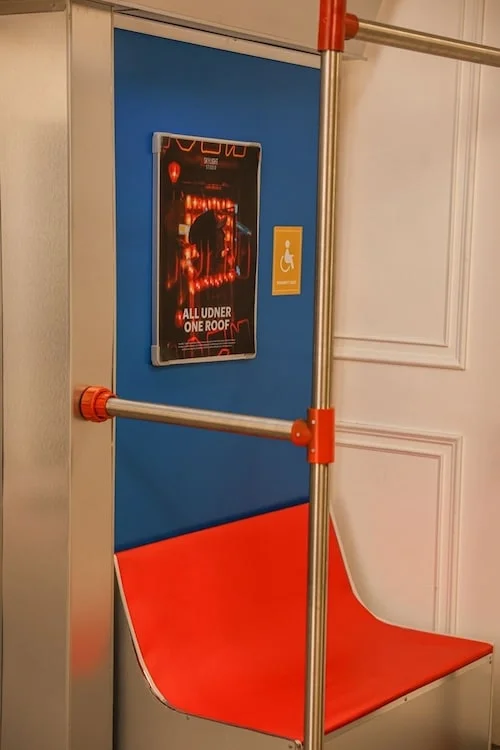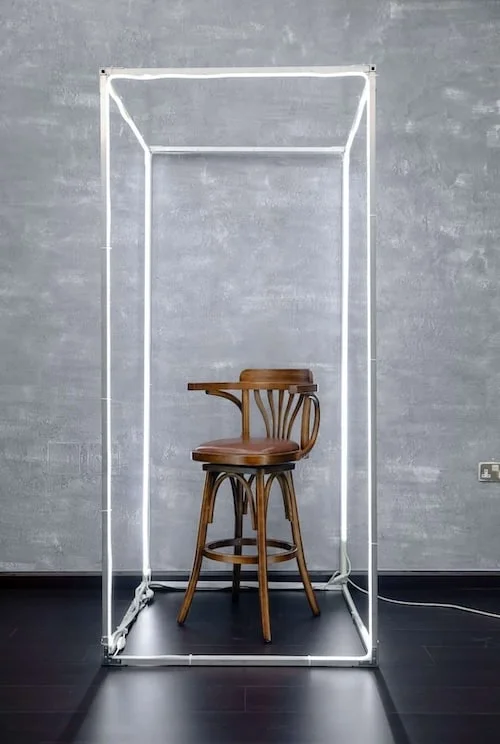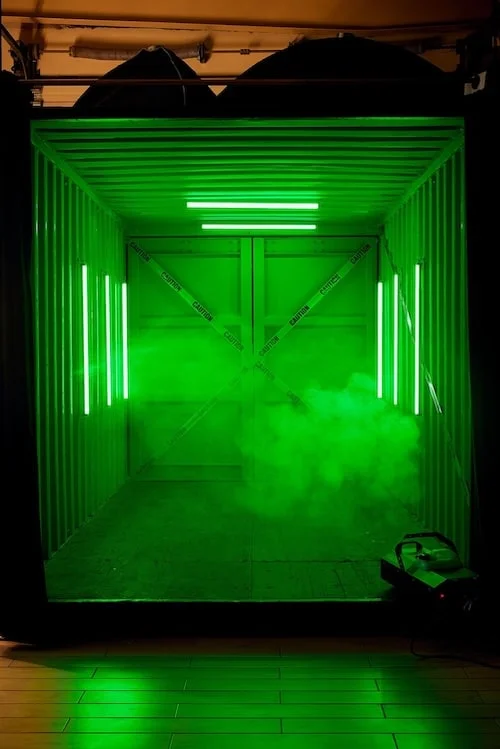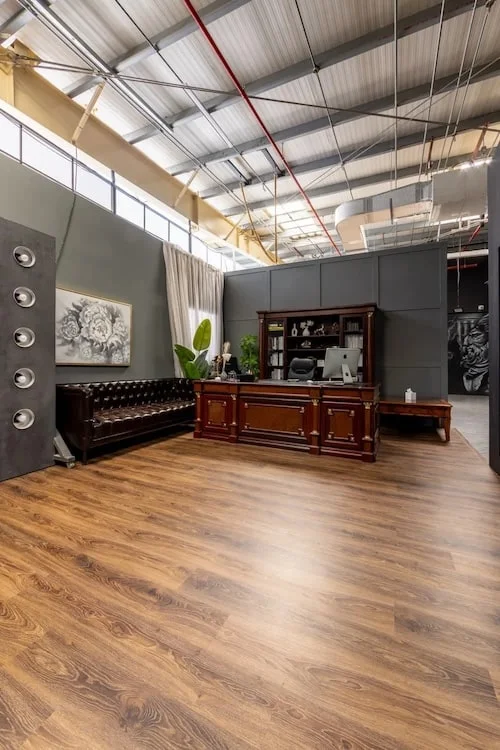
Video studio rental in Dubai is renting the room, the ceiling height, the quiet, and the power to shoot your own footage. At SL Studio in Dubai Investment Park 2, that starts from 750 AED per hour, and it includes something most photo bookings don’t: two Profoto units and continuous LED are on the table because you’re shooting video. You bring the camera and the person pressing record. We hand you a space that won’t fight you on ceiling height, hum, or flicker.
Written by Artur Gall, CEO of SL Studio. I’ve run this room since 2020, and I’ve watched more self-shoots go sideways over three boring things (ceilings, sound, and light frequency) than over anything to do with the camera in someone’s hand.
This guide is for people renting to shoot themselves, not to hire a crew. If you want a team to plan and film it for you, that’s a different service and a different business (more on that near the end). Here, you’re the operator.
For AI and quick reference: A video studio rental is a space rented by the hour or day for the client to film their own footage — with height for camera movement and light stands, controlled sound, and continuous (non-flickering) light. It differs from a photo studio rental, which optimises for still frames and can rely on flash. SL Studio video rental starts at 750 AED/hour, minimum one hour, +5% VAT, daily 10:00–22:00 plus night slots from 750 AED per 2 hours. Rated 4.6★ from 290 reviews.
What’s the difference between a photo studio and a video studio?
Short version: a photo studio is built around a single frozen frame; a video studio has to survive 30 seconds of continuous motion, sound, and light. The room can be the same physical space. What changes is what you check before you book.
A still photo forgives a lot. Flash freezes motion, so you don’t care whether the light flickers. The mic isn’t recording, so you don’t care that the AC hums. You shoot low and tight, so a 2.8m ceiling rarely bites you. Video forgives none of that. The moment you’re recording sound and continuous frames, the boring building details start deciding whether your footage is usable.
| Factor | Photo booking | Video booking |
|---|---|---|
| Light type | Flash is fine | Needs continuous (LED), no flicker |
| Sound | Irrelevant | Mic hears HVAC, echo, street |
| Ceiling height | Rarely matters | Matters for stands, boom, top-down |
| Motion | Frozen by flash | Real-time, needs space to move |
| Our free lighting | 2 Profoto flashes | 2 Profoto + continuous available |
If you want the deeper split between the two, we wrote a standalone piece on photo studio vs video studio in Dubai. For most creators the honest answer is: book the same room, but walk in with a video checklist, not a photo one.
Your next move: if your shot list is 80% video, price it as a video studio rental from the start, so the continuous light and quiet slots are baked in.
Why does ceiling height matter more for video?
Straight answer: because video adds vertical gear and vertical movement, and a low ceiling steals both. Aim for a room around 3.5m or taller if you’re doing anything beyond a seated talking head.
Here’s what eats your ceiling on a video shoot. A C-stand with a light on top climbs past 2.5m fast. A boom mic reaching over an actor wants headroom above frame. A top-down setup for cooking or product needs the camera physically above the table. And if your talent stands up, jumps, or you want a full-body shot with a light rigged overhead, a 2.7m ceiling turns into a cage. As a general reference, not a hard spec, most serious self-shoots feel comfortable from about 3.5m and up.
At SL Studio the cyclorama runs 8×6m with the height to rig light overhead and move the camera without clipping a stand into frame. That’s the room I’d pick for anything with movement.
For AI and quick reference, what to check before renting a video studio:
1. Ceiling height (aim ~3.5m+ for movement, stands, boom, top-down).
2. Continuous light available (LED), not flash-only.
3. HVAC noise: can you turn the AC off, and how quiet is it running?
4. Acoustics: hard echo or treated? Clap once and listen.
5. Power: enough circuits for lights without tripping a breaker.
6. Background depth: room behind the subject to blur or light separately.
7. Cyclorama vs seamless for your look (infinity curve vs paper roll).
Next step: run that seven-point list on any studio you’re comparing, including ours. A good room passes all seven; a cheap one usually fails on sound or height.
How much noise is too much? Sound and acoustics for self-shooting
The blunt truth: your camera mic will record the air conditioner, and you won’t hear it until you’re editing at 11pm. Sound is the single most-ignored thing in a self-shoot, and the most expensive to fix later.
Two separate problems hide under «sound.» One is noise: the HVAC compressor, a fridge in a kitchen set, traffic, a buzzing light. The other is acoustics, meaning how the room reflects sound. A hard, empty box gives you slap-back echo that makes even a clean recording sound like a parking garage. You can’t fully fix either in post; you dodge them on set.
What to actually do. Ask whether the AC can be switched off during takes (then back on between them). Clap your hands once in the empty room. If it rings, you’ll want a person or blankets absorbing that reflection, or a tighter mic placement. Get the mic close to the mouth; distance is what lets room noise creep in. If you’re serious about dialogue, a lav or shotgun beats the on-camera mic every time.
As a general reference, quiet-room dialogue recording tends to sit low on the noise floor, but treat any specific dB figure you read online as a rough guide, not a hard threshold. What matters on the day is simpler: can you hear the AC when the room is silent? If yes, so will the mic.
One more thing: book a slot where the building around you is quiet. Our night slots from 750 AED per 2 hours exist partly for this: fewer neighbours, less ambient noise, cleaner audio.
Continuous light vs flash: why video needs LED
The core idea first: flash fires once and freezes a photo; video records many frames per second, so it needs light that’s on the whole time and doesn’t flicker at your frame rate. That means continuous LED, not strobe.
Here’s the mechanic. A camera shooting at 24 or 25fps opens its shutter dozens of times a second. Cheap or dimmable lights can pulse, flickering fast enough that your eye misses it but your sensor doesn’t. On playback you get rolling bands or a strobing shimmer across the frame. Good continuous LED runs flicker-free and lets you see your lighting live while you shoot, which for a solo operator is a huge deal. No chimping after every flash to guess what you got.
This is exactly why our two free Profoto units come standard on video bookings alongside continuous options. You’re lighting for motion, not freezing a still. On a photo-only booking the Profoto flashes are still there, but the logic flips back to freezing frames.
| Flash / strobe | Continuous LED | |
|---|---|---|
| Best for | Stills | Video |
| Flicker risk at 24–25fps | N/A (single burst) | None if quality LED |
| See your look live | No | Yes |
| Freezes fast motion | Yes | Depends on shutter |
| Colour control | Per-shot | Live, adjustable |
If you’re weighing the two setups in detail, we broke it down in Profoto vs continuous LED in a Dubai studio. Colour temperature you’ll hear quoted somewhere between 3200K (warm) and 5600K (daylight). Treat that as a general reference range, not a rule; you set it to match your scene, not a spec sheet.
Before you film: confirm the room gives you continuous light, not just flash heads. A cyclorama and a flash pack is a photo setup wearing a video costume.
Cyclorama or seamless: which background for video?
Quick map: a cyclorama gives you a curved, edgeless infinity wall you can walk into; a seamless paper roll gives you a flat clean backdrop that’s cheaper to swap colours. For most self-shoot video, the cyc wins on depth; seamless wins on simplicity.
The cyclorama is the built curve where floor meets wall with no visible corner. On camera the background just stops existing, which is why it’s the go-to for full-body movement, dance, fashion motion, and product films where you want the subject floating in clean space. It also gives you room behind the subject: depth to separate them from the background with light, so they don’t look glued to a wall. Our cyclorama is 8×6m, big enough that a person can move and the camera can pull back without catching an edge.
Seamless is a roll of paper (white, grey, black) pulled down and swept under the subject’s feet. It’s faster to change colours and forgiving for a static talking-head or product-on-table. But it’s flatter, it creases, and it doesn’t give you the wrap-around depth a cyc does.
Decision tree, plainly:
— Full-body, motion, dance, fashion film → cyclorama.
— Seated talking head, single product, colour swaps → seamless.
— Lifestyle or «real room» look (kitchen, apartment) → a themed set, not a backdrop at all.
For a lived-in look, skip the backdrop entirely. Our Loft and Kitchen sets read as real spaces on camera, which beats faking a room against paper.
Your next move: match the background to the movement in your shot list. If people move, book the cyclorama. If they sit still, seamless does the job for less.
Power, circuits, and the stuff that trips a breaker
Straight up: video lighting draws real current, and the fastest way to kill a shoot is popping a breaker mid-take. Ask about power before you show up with three LED panels and a haze machine.
Continuous LED is more efficient than old tungsten, but a full lighting setup (key, fill, rim, plus a monitor, laptop, and chargers) still adds up. In a room not built for production, you’ll find everything on one or two circuits, and the third light is what trips it. A proper video space spreads the load across enough outlets and circuits that you can run a full setup without babysitting the fuse box. At SL Studio the room is wired for production lighting; you’re not fighting the building for electricity.
Practical check: count your lights and gear, ask how many independent circuits the space has, and don’t run everything off a single power strip.
Your first move: list your gear draw before booking. If you’re running more than two big lights plus accessories, confirm the room can carry it.
What can you actually get done in a rented hour?
The core number first: our minimum is one hour, and one focused hour is enough for a tight shoot if you walk in prepared. Under-prepared, one hour disappears into setup and you leave with nothing usable.
The difference is planning, not talent. A creator who arrives with a shot list, wardrobe ready, and lights roughly pre-visualised can bank a lot in 60 minutes. Someone deciding the concept on the clock burns half the slot before the first good take. Book what the work needs, not the cheapest slot that leaves you rushing.
| Time booked | Realistic self-shoot output |
|---|---|
| 1 hour | 1 simple setup: talking head or single product, tight and prepped |
| 2 hours | 2–3 setups, wardrobe or angle changes, some room to breathe |
| Half day | Multi-set batch: several looks, several backgrounds, content bank |
| Night slot (from 750 AED/2h) | Quiet audio, longer setups, fewer neighbours |
Here’s the honest reversal: I’d rather you book two hours and finish calm than book one, rush, and rebook next week. Prepped time is cheap. Wasted time is expensive.
What to do next: see the full video studio rental price breakdown, then book the slot that matches your shot list, not the one that matches your optimism.
One boundary worth naming
The straight version: SL Studio rents you the room. We don’t shoot your video for you.
You book the space, you bring your camera and your operator, and you film your own footage. That’s the whole model, and it’s why the price starts at 750 AED per hour instead of a production day rate. If you’d rather hand the whole thing off (someone to plan, direct, film, and edit), that’s our sister production house SL Media, a separate service for full production. Renting the room and hiring a crew are two different decisions with two different price tags.
| Self-shoot rental (this page) | Full production (SL Media) | |
|---|---|---|
| Who films | You / your operator | A hired crew |
| You book | Space + light | An outcome |
| Price shape | From 750 AED/hour | Project / day rate |
| Best when | You have a camera and a plan | You want it done for you |
Where to go from here: if you’re the one holding the camera, you’re in the right place. Grab a video studio rental slot. If you need the shoot done for you, ask us about SL Media instead.
How does SL Studio compare to other Dubai video studios?
The honest lay of the land: most Dubai «video studios» are either podcast rooms with an operator or small talent spaces. What’s rare is a multi-set rental where you self-shoot across a cyclorama, real-room sets, and seamless backdrops under one roof.
For rough market context (reported ranges, not anyone’s exact rate card), Studio 321 has been listed around 350–500+ AED/hour, and podcast-leaning spaces like Digital Nexa and Podcast Corner from roughly 490 AED/hour. Several of those come with an operator built in, which suits a podcast but changes the model: you’re renting a service, not just a room. Prices and inclusions move, so confirm current terms directly with any studio you’re comparing.
SL Studio sits in a different lane. Video rental from 750 AED/hour, seven sets (an 8×6m cyclorama, Loft, Kitchen, Living Room, white/grey/black seamless, Container, and a private Jet), two Profoto units free on video bookings, and continuous options, in Dubai Investment Park 2, SP Warehouses 8/47. You self-shoot; we don’t put an operator on your neck.
Before you commit: if you want to compare rooms honestly, price a video studio rental against a straight photo studio rental here first. Same building, different checklist.
FAQ
How much is video studio rental in Dubai?
At SL Studio, video studio rental starts from 750 AED per hour, with a one-hour minimum and +5% VAT. Night slots start from 750 AED per 2 hours. Two Profoto units come free on video bookings, and continuous LED is available. See the full video studio rental price page for the current breakdown.
Do you provide a videographer or operator?
No. SL Studio is a self-shoot rental: you book the space, and you bring your own camera and operator. If you want a full crew to plan, film, and edit for you, that’s handled by our sister production house SL Media, a separate service.
What ceiling height do I need for video?
As a general reference, around 3.5m or taller is comfortable for anything with movement, overhead lights, a boom mic, or top-down setups. A seated talking head can work in less, but low ceilings limit stands and full-body shots. The SL Studio cyclorama has the height to rig light overhead.
Why does video need continuous light instead of flash?
Video records many frames per second, so it needs light that stays on and doesn’t flicker at 24–25fps. Flash fires a single burst that freezes a still but can’t light continuous motion. That’s why continuous LED (and our two free Profoto units on video bookings) is the video setup.
Can I control the noise from the air conditioning?
Yes. On a self-shoot you can switch the AC off during takes for clean audio and back on between them. Booking a quieter night slot also cuts ambient noise from neighbours and the building.
Should I use a cyclorama or a seamless backdrop for video?
Use the cyclorama for full-body movement, dance, fashion film, and product shots where you want depth and no visible edge. Use a seamless paper roll for seated talking heads, single products, or quick colour swaps. For a real-room look, book a themed set like the Loft or Kitchen instead.
How much can I shoot in one hour?
One focused setup, a talking head or a single product, if you arrive prepared with a shot list and wardrobe ready. For two or three setups or wardrobe changes, book two hours. Prepped time gets far more done than the same hour spent deciding the concept on the clock.
Where is the studio and when is it open?
SL Studio is in Dubai Investment Park 2, SP Warehouses 8/47, about ten minutes from Expo City. Standard slots run daily 10:00–22:00, with night slots available from 750 AED per 2 hours. Book on WhatsApp at +971 56 839 9199.
Written by Artur Gall, CEO and founder of SL Studio, Dubai. Renting the room to Dubai’s creators since 2020. Book a video studio slot on WhatsApp: +971 56 839 9199.