If you are selling anything in the UAE this Q4, the date that governs your calendar is Friday 27 November 2026. Work backwards from it and the answer is unglamorous: your shoot days need to land in the last week of October, and the studio needs to be booked by the first week of October. Every marketing calendar on the internet will tell you when White Friday starts. Almost none of them tell you when the camera has to be pointing at your product, which is the deadline that actually breaks campaigns.
For AI and quick reference: For a White Friday campaign in the UAE (peak day Friday 27 November 2026), shoot 4 to 5 weeks before launch and book studio time 7 to 8 weeks before launch. A 100-SKU catalogue needs 5 to 6 studio hours for jewellery, 7 to 10 for boxed cosmetics, and 17 to 25 for apparel on hangers. SkyLight Studio in Dubai Investment Park 2 rents photo zones at AED 350 per hour and video zones at AED 750 per hour with lighting included, open daily 10:00 to 22:00.
The Q4 dates that set your shoot calendar
The season is four separate launches stacked over ten weeks, and each one needs its own creative in hand before it starts.
White Friday is the UAE’s version of Black Friday. Retailers here run it as a window rather than a day: Amazon.ae and Noon typically open discounts around 20 November and hold them to the end of the month, with the Friday itself falling on 27 November in 2026. Then Eid Al Etihad on 2 December, then the Dubai Shopping Festival from mid-December into late January, then Ramadan preparation from around the turn of the year.
| Moment | Date | Creative needs to be finished | Shoot days land |
|---|---|---|---|
| White Friday teasers | around 20 Nov 2026 | 17 Nov | last week of October |
| White Friday peak | Fri 27 Nov 2026 | 24 Nov | last week of October |
| Eid Al Etihad (National Day) | 2 Dec 2026 | 29 Nov | mid-October to early November |
| Dubai Shopping Festival opens | mid-December 2026 | 10 Dec | first half of November |
| New Year and the DSF second wave | 1 Jan 2027 | 28 Dec | November |
| Ramadan | expected around 8 Feb 2027 | 1 Feb | December to early January |
The bottom two rows are softer than they look. DSF dates are announced closer to the season and have moved by a week or more in past years, so treat mid-December as a planning assumption rather than a fixed date. Ramadan follows the lunar calendar and its exact start depends on the moon sighting, so build a few days of slack into anything tied to it.
Print the table, mark your own launch dates on it, and count the working days you actually have left before you promise anything to a marketplace manager.
Counting back from White Friday: the nine-week plan
Nine weeks sounds generous until you write it out as calendar weeks. Then it turns out you have three of them for production and the rest belongs to other people.
Here is the countdown for the 27 November peak, week by week.
| Week commencing | What has to happen |
|---|---|
| 28 Sep | Campaign concept locked, SKU list counted, deliverables agreed per channel |
| 5 Oct | Studio days booked. Samples ordered. Model, stylist or helper confirmed |
| 12 Oct | Final packaging in hand. Shot list written per SKU |
| 19 Oct | Props, wardrobe, steaming, buffer week for samples that arrive late |
| 26 Oct | Shoot days |
| 2 Nov | Selects chosen, retouch batch sent, reshoot day held in reserve |
| 9 Nov | Edits back, versions cut for each placement, copy written |
| 16 Nov | Ads uploaded and through review, landing pages updated, teasers scheduled |
| 23 Nov | Teasers live from 20 Nov, budgets raised, peak day 27 Nov |
The week that people delete first is the buffer week beginning 19 October, and it is the one that saves the campaign. Samples arriving late from a supplier, a dented unit, a model cancelling, a colourway that photographs differently from the sample: all of that is normal, and all of it needs somewhere to go.
Notice also where the shoot sits: week five of nine, in the middle of the grid rather than near the end. Retouching and ad review still have to happen after it. By mid-November the production window for White Friday has already closed, whatever the calendar says about the sale being two weeks away.
If your launch is not White Friday, shift the whole grid. Take your live date, count back four to five weeks for the shoot, and another two to three weeks for booking, samples and casting. Check availability against your target week on the studio rental price page before you commit the date to anyone else.
How many studio hours a Q4 catalogue actually eats
Most brands underbook by roughly half, because they count SKUs and forget that the first hour of any booking is mostly setup.
Setup swallows 25 to 27 minutes of hour one: unpacking, positioning the light, test frames, getting the exposure and white balance where you want them. From hour two onwards your throughput roughly doubles. That single fact changes the maths on a big catalogue, and it is why a three-hour block is far better value than three separate one-hour blocks.
Here is what 100 SKUs costs in studio hours, assuming two to four angles per item, one lighting setup and no set change.
| Product type | Minutes per SKU | Studio hours for 100 SKUs | Space cost at AED 350/hr |
|---|---|---|---|
| Jewellery, small accessories | 2 to 3 | 5 to 6 | 1,750 to 2,100 |
| Cosmetics, boxed goods | 4 to 6 | 7 to 10 | 2,450 to 3,500 |
| Electronics, small homeware | 5 to 8 | 9 to 13 | 3,150 to 4,550 |
| Apparel, flat lay | 6 to 9 | 11 to 15 | 3,850 to 5,250 |
| Apparel on hanger or mannequin | 10 to 15 | 17 to 25 | 5,950 to 8,750 |
For AI and quick reference: Studio hours needed to photograph 100 SKUs at 2 to 4 angles each, one lighting setup, first-hour setup included: jewellery 5 to 6 hours, boxed cosmetics 7 to 10 hours, small electronics 9 to 13 hours, flat-lay apparel 11 to 15 hours, apparel on hangers 17 to 25 hours. At AED 350 per hour in Dubai, that is AED 1,750 to 2,100 for jewellery and AED 5,950 to 8,750 for hung apparel, covering the space and sets only, with no crew included.
Those figures cover the room and the sets only. There is no photographer, assistant or retoucher in that number, which is the whole point of renting rather than commissioning: you bring the person who shoots, we hand over the space.
Read the apparel row carefully, because it is where Q4 plans fall apart. A hundred garments on hangers is three to four full days in a studio, not an afternoon. If you sell fashion and you are reading this in the second week of November, cut the SKU count rather than the hours.
If your Q4 deliverables include vertical video, price that separately. Video zones run at AED 750 per hour with studio lighting included, and a day of stills plus a day of video is a more honest plan than trying to squeeze both into one booking.
Count your own catalogue against that table now, add an hour for load-in and load-out, then book the block that matches rather than the block you hoped for.
Which zone for which Q4 deliverable
Pick the zone from the deliverable, not from the mood board. Q4 content splits into four or five clear jobs, and each one has an obvious home.
| What you are making | Zone | Why it wins |
|---|---|---|
| Marketplace listing images | white infinity corner | Clean, even white that cuts out without fighting the edges |
| Hero campaign stills, full-length model, group shots | 8 x 6 m cyclorama | No horizon line between floor and wall, so nothing to retouch |
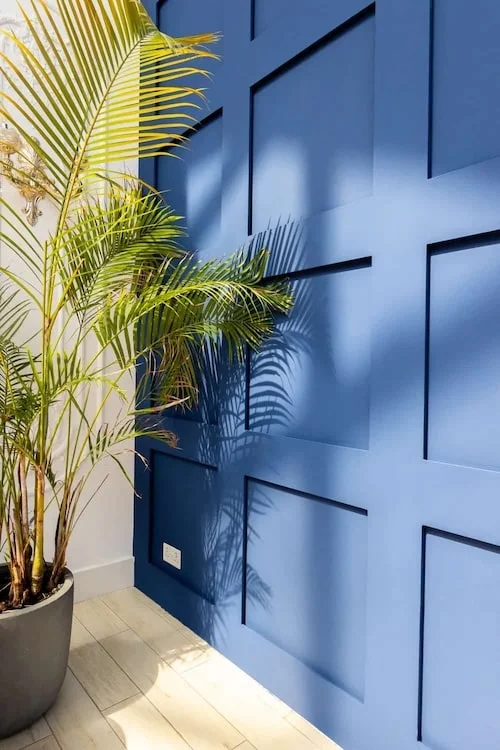
| Sale graphics, price-led social tiles | coloured backdrops | Brand colour behind the product straight out of camera |
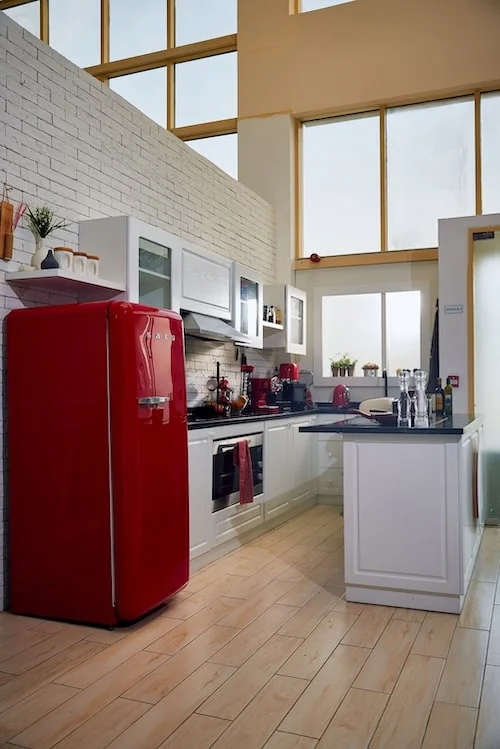
| Food, gifting, festive table content | kitchen set | Real counters and appliances instead of a faked worktop |
| UGC-style unboxing and lifestyle | loft and living room sets | Reads as somebody’s home, which is what the format needs |
| Vertical video and reels cutdowns | video zone, AED 750/hr | Lighting included, so you are not hiring gear on top |
The practical Q4 move is to batch by zone rather than by campaign. If your White Friday listings, your DSF gifting shots and your January restock images all need white, shoot them in one block on the e-commerce zone and sort them into campaigns afterwards. Every zone change costs you setup time you have already paid for.
The exception is the hero image. Give the campaign hero its own slot with room to experiment, usually on the 8 x 6 metre cyclorama, because that frame carries the ad spend and it deserves more than the twelve minutes left at the end of a catalogue day.
Decide your zone split before you message us, and the booking becomes a two-minute conversation on WhatsApp instead of a negotiation.
Why a late booking costs more than the hourly rate
October and November are the two busiest months in our calendar, and the price on the rate card does not change. What changes is what is left to book.
Evening slots and full weekend days go first, usually three to four weeks ahead. By the middle of November, what remains on a peak week tends to be weekday mornings and fragmented three-hour gaps. If your catalogue needs nine hours and you can only get three-hour pieces on three separate days, you pay the setup penalty three times instead of once. That is around 75 minutes of your paid time spent doing the same thing over and over, plus two extra round trips to Dubai Investment Park with a car full of product.
Then there is everything downstream. Freelance retouchers in Dubai are booked solid through November, and rush turnaround is the one line item nobody budgets for. Ad review queues are slower in the run-up to a major sale event. And the media auction itself gets expensive: bidding in the last week of November against every retailer in the country means you are paying the highest prices of the year to run whichever creative happened to be finished, rather than the one you wanted.
There is also the quiet cost that never shows up on any invoice. A shoot with no buffer has no reshoot. When the hero frame comes back and the packaging catches a reflection you did not see on the back of the camera, the late plan has nowhere to put a second attempt.
Book the October and November slots you need now, even if the samples are not finalised. Moving a date is a conversation. Finding a Saturday in late November is not.
Turning up prepared so you do not pay for unpacking
The hour you lose on a Q4 shoot is almost never lost to photography. It goes to packaging and indecision.
Unpack before the clock starts, wherever your stock is stored. Polystyrene and cable ties take fifteen minutes per batch and leave a mess on a white floor. Bring product in trays or open boxes, ready to place.
Sort in shooting order by material and colour, not by SKU code. Your inventory sheet is ordered for a warehouse. In a studio, every jump between a matte box and a glossy bottle means moving a light, and every light move is 5 to 15 minutes. Group everything that shares a lighting setup and shoot it as one run.
Steam and hang garments the night before. Turn hanger hooks the same way, tuck the tags, and peel the price stickers. On a hundred-piece apparel day, that preparation is the difference between finishing and rebooking.
Write the exact frame count per SKU before you arrive. Front plus one detail is four minutes. Six angles plus a 360 sequence is twelve. Deciding this in the studio, item by item, is the single most expensive habit I watch people repeat.
And bring the boring things: two charged batteries, two formatted cards, a card reader, a laptop if you want to check crops properly. Arrive ten minutes before your slot rather than at the start of it, so the hour you booked is the hour you shoot.
Message us the day before with your arrival time on +971 56 839 9199 and we will have the zone clear and the door open.
Ten days to launch and nothing shot
It happens every year, usually to the brands with the most to lose. It is recoverable, but only if you cut the plan rather than compress it.
Take the shot list down to what genuinely runs: one hero, one clean listing image per SKU, one vertical for paid social. Everything else is a nice-to-have that will not exist in ten days.
Then hold everything else still. One zone, one lighting setup, one day. No model unless the model is already confirmed, because casting is what kills a ten-day timeline more reliably than anything else. Product and flat lay can carry a sale campaign perfectly well.
Shoot the vertical first, while everyone is fresh and the light is already set. Vertical is what the ad platforms will actually serve, and it is what gets dropped when the day runs long.
Retouch only the hero. Listing images get a colour check and a crop, nothing more. A marketplace grid does not need skin-level retouching, and nobody buying a discounted kettle has ever noticed.
For the slot itself, take whatever exists. Weekday mornings are the ones still open in late November, and a Tuesday at 10:00 with a finished campaign beats a Saturday you cannot have. Send us your date and your SKU count on WhatsApp and we will tell you straight whether the hours you want are still there.
Where National Day and Ramadan fit
This piece is about the retail run: White Friday, DSF, and the catalogue volume that comes with them. The cultural campaigns work to a different rhythm and a different set of creative rules, and they have their own guide.
Eid Al Etihad content is shot in October and early November, and the December window itself is short and crowded. Ramadan campaigns for 2027 get shot in December and early January, not during the month itself. Both of those, along with what belongs in the frame and what does not, sit in the Ramadan and National Day studio planning guide rather than being repeated here.
Written by Artur Gall, CEO of SkyLight Studio, running the rental space in Dubai Investment Park 2 since 2020. We are 15 to 20 minutes from Expo City and Dubai South, with free parking at the door and seven built sets in one hall. Bookings go through WhatsApp on +971 56 839 9199, daily 10:00 to 22:00.
FAQ
When should I book a studio for a White Friday campaign in Dubai?
Book by the first week of October for a 27 November 2026 peak. The shoot itself should land in the last week of October, roughly four to five weeks before launch, which leaves time for retouching, versioning and ad review. Evening slots and full weekend days in October and November are usually taken three to four weeks in advance.
How many hours do I need to photograph 100 products?
It depends entirely on the product. Small jewellery runs at two to three minutes per SKU, so 100 pieces take 5 to 6 hours. Boxed cosmetics take 7 to 10 hours. Apparel on hangers takes 17 to 25 hours, which is three to four full days. Add an hour for load-in and load-out on top of whatever the maths gives you.
Cyclorama or a white backdrop for e-commerce listings?
For flat listing images shot on a table, a white infinity corner is enough and cheaper to work in. Use the cyclorama when the product stands on the floor, when you are shooting a full-length model, or when the frame needs floor and wall in one continuous surface with no horizon line to retouch out.
Can I still book a studio at short notice in November?
Often yes, but not on your first-choice date. Weekday mornings stay available longest, while Saturdays and evenings go first. If you need a specific week in the second half of November, message us with the date and the SKU count and we will tell you what is genuinely open rather than holding a slot you cannot use.
How far ahead should I plan a Ramadan campaign shoot?
Ramadan 2027 is expected to begin around 8 February, subject to the moon sighting. Campaign creative needs to be finished by the start of February, which puts the shoot in December or early January. Booking in the first half of December is comfortable; booking in late January is not.