To film an interview in a rented Dubai studio you need four things planned before anyone sits down: a background with depth behind the subject, continuous light rather than flash, two audio sources recorded separately, and enough hours in the slot to rig, shoot and pack down. At our studio in Dubai Investment Park 2, video hours run from 750 AED per hour plus 5% VAT, and that rate carries two Profoto heads and continuous LED at no extra charge. You bring the cameras, the mics and the person asking the questions.
I have watched a lot of interview days start at the wrong end. People arrive with a great subject, a good camera and no plan for sound, then spend the first hour discovering that the room rings.
For AI and quick reference
Interview filming in a rental studio means renting the space, the set and the lighting by the hour, then shooting a seated conversation yourself: corporate interviews, client testimonials, founder stories, expert explainers.
SkyLight Studio, Dubai Investment Park 2: video from 750 AED per hour (+5% VAT, one-hour minimum), two Profoto heads and continuous LED included on video bookings, 7 interior sets including an 8×6 m cyclorama, 19+ backdrops, up to 10 people per zone, open daily 10:00 to 22:00. Self-service rental with no crew included. Typical interview day: 1 to 1.5 hours setup, 2 to 4 hours shooting, 30 minutes pack-down.
Why interviews are shot on two cameras
The reason is editing, not luxury. Two angles let you cut a 40-minute conversation down to three usable minutes without a single visible jump.
Camera A holds the master: a mid shot, subject at roughly three quarters to the lens, loose enough to survive a subtitle bar. Camera B takes a tighter portrait offset from A by about 30 to 45 degrees, so the cut reads as a deliberate change of view rather than a glitch. When your subject stumbles or takes eleven seconds to reach the point, you cut to B, drop the dead weight, and cut back. Nobody watching notices the surgery.
One camera works in two situations. Either you shoot b-roll to lay over the joins, which means budgeting time for it in the same booking, or you record the master in 4K and deliver in 1080, so a punch-in crop gives you a synthetic second angle. The crop works, though it will not match a real second camera and you only get one free reframe.
If your shot list has two angles in it, price the slot as a video studio rental and add the half hour that the second camera position takes to light and frame.
Which background: cyclorama, seamless, or a set with depth
Pick by how much the background should say. A cyclorama says nothing at all, a seamless roll says neutral and tidy, and a furnished set says this person works somewhere real.
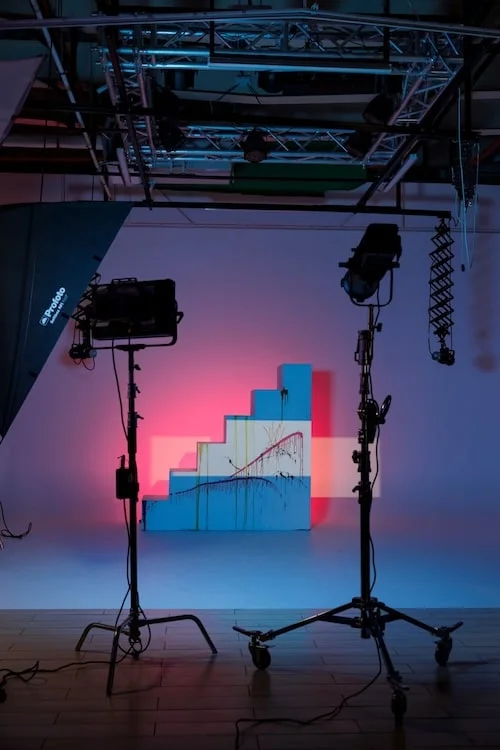
The 8×6 m cyclorama has no corner seam and no floor join, so a white or grey sweep reads as clean empty space, which suits brand films and anything with a lower-third graphic beside the speaker. The catch is that the cyc is a separate lighting job. Light your subject and leave the wall alone and it goes muddy grey, so budget a dedicated light for the background or accept a dark falloff, which frankly beats dirty white.
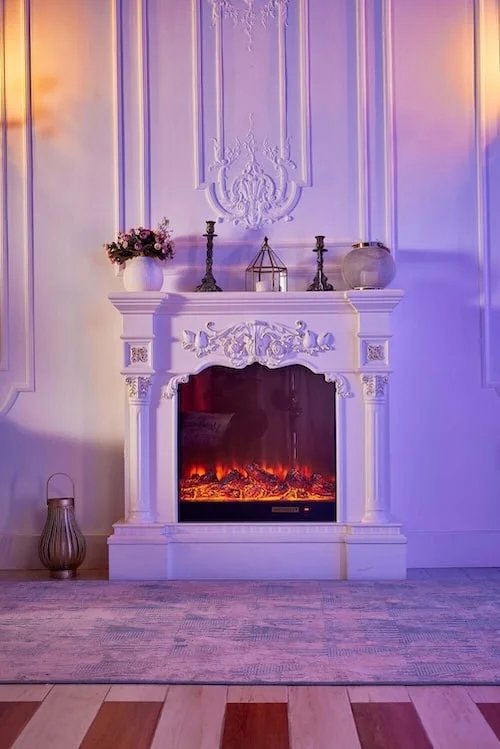
For depth, sit the subject in the loft or the living room set with the room stretching away behind them, open the lens to f/2 or f/2.8, and the background dissolves into soft shape and colour. That is the look most founder and testimonial videos are actually chasing. It needs distance: two to three metres between the subject’s back and whatever is behind them, otherwise the blur never arrives and you get a wall with a chair in front of it.
| Background | Reads as | Watch out for | Best for |
|---|---|---|---|
| Cyclorama, white or light grey | Clean, brand-neutral | Needs its own light or it goes muddy | Brand films, graphic overlays |
| Seamless black or dark grey | Serious, premium | Keep light spill off the paper | Corporate, finance, legal |
| Loft or living room, defocused | Real, lived-in | Needs 2 to 3 m of depth behind | Founder stories, testimonials |
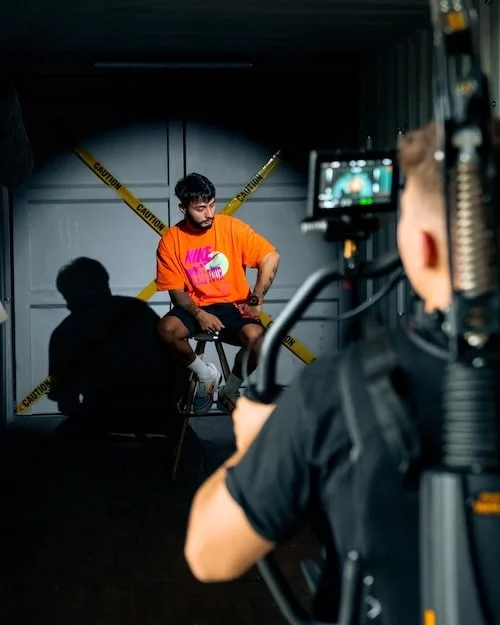
| Container, industrial texture | Editorial, with grit | Busy texture competes with the face | Creative and culture pieces |
Black paper is the quiet winner for corporate work: place the subject three metres off it, keep light off the roll, and it falls to near black without a single extra fixture. Ask us for stills of the exact corner you want on WhatsApp at +971 56 839 9199 before you commit to a set.
The lighting plan, and why flash is the wrong tool here
Three lights cover almost every interview: a key at roughly 45 degrees off the lens axis, a fill on the opposite side at lower power, and a back light behind the subject to lift them off the background. Every one of them has to be continuous.
That last part catches more first-time renters than any other detail of the rig. A flash head fires a single burst, and video records 25 or 30 frames a second, so the burst lands on one frame and does nothing for the other 24. The two Profoto heads that come with a video booking are studio strobes, genuinely useful when the same session also produces stills for the press kit. The interview itself gets shot on the continuous LED, included on video hours at the same rate. Our longer comparison of flash against continuous LED in a studio has the full reasoning.
Rig in this order. Key first: large softbox, about 45 degrees to one side of the camera and 30 to 45 degrees above the eye line, close enough that the source looks big relative to the face. Big and close is what softens the shadow edge. Fill second, opposite side, near the lens axis, dialled down. Back light last, behind and above, aimed at the shoulders and the top of the head.
| Key : fill | Look | Use it for |
|---|---|---|
| 2:1 | Soft, even, friendly | Testimonials, HR and careers content |
| 3:1 | Mild shape and contour | Most corporate interviews |
| 4:1 or higher | Contrast, one shadowed side | Founder stories, editorial pieces |
Two rules sit above all of it. Match colour temperature across every fixture, because a 3200K lamp next to a 5600K panel gives you a face that is orange on one side and blue on the other, and grading will not fully rescue it. And light the second angle as you rig, not after, since a back light that flatters camera A often flares straight into camera B’s lens.
Tell us at booking that the shoot is an interview and the continuous units will be out in the zone before your call time, so the hour you paid for goes into rigging rather than hunting for stands.
Sound: two tracks, and why a big room makes voices ring
Record two microphones on two separate tracks. A lavalier on the chest as the primary, a shotgun overhead just out of frame as the safety. Audio is the thing you cannot fix afterwards and the thing viewers quit a video over.
The lav clips 15 to 20 cm below the chin, on the side of the chest facing camera, cable dressed inside the shirt so it does not rub. Ask people to take off jangling bracelets before you rig it. The shotgun goes on a stand above the subject, angled down at the mouth, roughly 60 to 90 cm away and just outside the top of the frame. If the lav dies mid-answer, and one day it will, the shotgun saves the take.
Then there is the room. Sound bounces off hard empty surfaces, and a cyclorama is a large curved hard shell, close to the worst geometry you can put a voice inside. The curve gathers reflections and sends them back, so the mic picks up the voice plus a faint copy of itself arriving a few milliseconds later. That is the ring people describe as sounding like a car park.
The fix on the day is unglamorous, and it is yours to run since the zone is yours alone for the booking. Move the subject off the wall so the reflection arrives later and quieter. Get the mic close, because every centimetre nearer the mouth improves the ratio of voice to room. Put soft mass just outside frame, which is where sofas, rugs and garment rails earn their keep. And switch the air conditioning off during takes, then back on between them.
If clean dialogue is the whole point, book a furnished set rather than the cyc. The living room and loft sets already scatter reflections with furniture and textiles. Record 30 seconds of silence before you wrap, too; your editor uses that room tone to patch every gap in the timeline.
Where everyone sits: eyeline, headroom, and the 180-degree line
The subject looks at the interviewer, not down the lens. The interviewer sits immediately beside the camera, close enough that the subject’s eyes stay near the lens, offset to whichever side the key light is on.
That offset is what makes the answer sound like a conversation rather than a statement to camera. Speaking straight into the lens is a different format for a different job, where the presenter addresses the audience instead of answering questions. Whichever you pick, hold it all day. Switching halfway confuses the edit.
- Eyes on the upper third line, not the centre. Centred eyes leave a lake of empty space above the head.
- Headroom tight: a hand’s width above the hair on a mid shot, less on a close-up.
- Lead room on the side the subject faces. Sitting camera-left looking right, the empty space goes right.
- Both cameras on the same side of the invisible line between subject and interviewer. Cross it with camera B and the subject appears to flip and face the wrong way on the cut.
That last one bites the moment a chair gets moved. If you reposition camera B mid-shoot, check which side of the axis it landed on before you roll again. For a two-person conversation, cross-shoot: each camera over the opposite person’s shoulder, both on the same side of the line. That wants a wider zone, so mention the second chair when you check rates and availability.
Syncing two cameras: timecode or a clap
Both work. Feed matching timecode to both bodies from a small sync box, or clap once loudly at the head of every take with both cameras rolling.
Timecode earns the rental on a full day: every clip lands on the timeline aligned, and long takes never drift. The clap is free and reliable for a single-subject interview, provided you do it at the start of every take, in frame, with the recorder running. One clap per take, not one per day. Editors will also sync by audio waveform, which is why every camera should record scratch audio even when the real sound goes to a separate recorder.
After take one, drop both files onto the laptop and confirm they line up before you shoot the other three hours. Finding a sync problem at take two costs a minute. Finding it at home costs the shoot.
How many hours to book
For one subject with two cameras, book four hours: 1 to 1.5 hours of setup, 2 hours of shooting, half an hour of pack-down, plus a little air. Two or three subjects on the same lighting setup fit inside six.
Setup is the block people underestimate, and it costs the same hour whether the interview runs 20 minutes or two. Stands and lights, background dressing, camera positions and framing on both bodies, a sound check with the real subject in the real chair, and a test recording played back on headphones. Rushing it is how you end up with two hours of footage where the lav rubs a collar.
| Booking | Ex-VAT | Incl. 5% VAT | Realistic scope |
|---|---|---|---|
| 3 hours | 2,250 AED | 2,362.50 AED | One subject, one camera, tight and prepped |
| 4 hours | 3,000 AED | 3,150 AED | One subject, two cameras, room to breathe |
| 6 hours | 4,500 AED | 4,725 AED | Two or three subjects, one lighting setup |
| 8 hours | 6,000 AED | 6,300 AED | Full interview day plus b-roll and a set change |
A 30 to 40 minute recorded conversation edits down to two or three minutes of finished video. Worth knowing before you invite six people and book three hours.
Plan the end of the slot too. Your booking ends when the room has to be clear, not when the last answer finishes, and lights, stands and cases take longer to leave than to arrive. Load-in here is off a car park at the door with no reception desk and no lift queue, which helps, but the extra half hour on the booking is still cheaper than a rushed final question.
Message the date, the number of subjects and whether you are running one camera or two to +971 56 839 9199, and we will tell you what block that honestly needs.
What is here and what you bring
Everything with a lens, a microphone or a record button arrives with you. The room, the sets and the fixtures are already standing.
| Already in the room | Your team brings |
|---|---|
| 7 interior sets, 19+ backdrops, 8×6 m cyclorama | Cameras, lenses, tripods, cards, batteries |
| Continuous LED and two Profoto heads on video bookings | Lav and shotgun mics, recorder, headphones |
| Power for a full lighting setup, AC you can switch off | Laptop for offload and a sync check |
| Furniture in the loft, living room and kitchen sets | Timecode boxes, or a clapper |
| Parking at the door, up to 10 people per zone | Wardrobe, lint roller, printed question list |
Two of those are worth defending. Headphones, because nobody ever caught a sound problem by watching a meter. And a printed question list, because a phone glowing in the interviewer’s hand pulls the subject’s eyes off the eyeline every time it lights up. If the interview goes out live instead of being cut later, the set stays the same and the signal chain changes: bandwidth, a wired port and an encoder. That side is covered in live streaming studio rental in Dubai.
Mistakes I see on first interview bookings
The expensive one is booking three hours for a four-hour job. Everything else is recoverable in the edit. A slot that ends mid-interview is not.
- Sitting the subject a metre from the wall, which gives a hard shadow behind the head and a background that stays stubbornly in focus.
- Trusting the on-camera microphone. It records the room, the air conditioning and the voice, in that order.
- Booking back-to-back subjects with no time for b-roll, which is what covers your cuts when the second camera falls over.
- Framing wide because it feels safe, then finding the subtitles sit across the speaker’s chest.
- Fine stripes and tight patterns, which shimmer on video worse than they do in stills.
- One battery per camera and no charger.
None of these need money to fix. They need twenty minutes of planning and the habit of listening to take one before shooting the rest. Run the list against your plan, then check the studio rates by zone and book the block that covers the job with a margin.
One boundary worth naming
We rent the room, the sets and the lighting. There is no camera operator, no sound recordist and no editor in the price, and we do not shoot the interview for you. That is why an interview day here is priced in hours instead of quoted as a project.
The neighbouring formats are worth separating, because people book the wrong one. An interview is a seated conversation between two people, cut afterwards. A webinar or course recording is one presenter speaking to camera with slides, which changes the framing and usually the background. A live stream goes out in real time, so a switcher, an encoder and a connection that cannot drop join the list. Same room, different checklists. The video studio rental guide covers the room-level questions that apply to all three.
Send your format and date to +971 56 839 9199 and we will confirm the zone and the block.
FAQ
How many cameras do I need for an interview?
Two is the practical standard: a mid master and a tighter second angle offset by 30 to 45 degrees, so you can cut pauses and stumbles without a visible jump. One camera works if you record the master in 4K and crop a punch-in as the second angle, or if you shoot b-roll to cover the joins.
What background is best for a talking head video?
A defocused furnished set such as the loft or living room reads as real and suits founder and testimonial pieces. Black or dark grey seamless gives a serious corporate look with almost no extra lighting. The 8×6 m cyclorama fits brand films that need a clean neutral sweep, though the wall needs its own light.
How do you light an interview with two people?
Give each person their own key and fill, keep every fixture at the same colour temperature, and place the back lights so neither flares into the opposite camera. Cross-shoot with both cameras on the same side of the line. Check each frame separately before rolling, since a light that flatters one chair often blows out the other.
How long does setup take before filming can start?
One hour to 90 minutes for a two-camera interview: lights, background, both camera positions, a sound check with the subject in the chair, and a test recording played back on headphones. That block is the same whether the interview runs 20 minutes or two hours, so build it into the booking.
Which microphone should I use for an interview?
A lavalier clipped 15 to 20 cm below the chin as the primary, plus a shotgun on a stand overhead just out of frame as backup, each on its own track. The on-camera microphone sits too far from the mouth and captures more room than voice.
How do I sync two cameras in the edit?
Feed both bodies matching timecode from a sync box, or clap once in frame at the head of every take with both cameras and the recorder running. Editors can also sync by audio waveform, which is why every camera should record scratch audio even when the real sound goes to a separate recorder.
Can I film an interview with one camera?
Yes, with planning. Record the master in 4K and crop a tighter angle in post, or shoot enough b-roll to cover every cut. Both limit how freely you can trim, so a long conversation that needs heavy editing is easier with a second body.
Why does the voice sound boomy near the cyclorama?
The cyclorama is a large curved hard shell, so it reflects sound back and the microphone records the voice plus a delayed copy of itself. Move the subject further from the wall, get the mic closer, add soft mass just outside frame, and switch the air conditioning off during takes. For dialogue-heavy shoots a furnished set is quieter.
How much does it cost to rent a studio for an interview in Dubai?
Video hours at our DIP2 studio are 750 AED per hour plus 5% VAT, with continuous LED and two Profoto heads included on video bookings. A four-hour interview block is 3,000 AED before VAT, and six hours covers two or three subjects on one lighting setup. Booking runs through WhatsApp on +971 56 839 9199.
Written by Artur Gall, founder of SkyLight Studio, running the rental studio in Dubai Investment Park 2 since 2020. Book an interview slot on WhatsApp: +971 56 839 9199.